 MineArchive
Wheal Cunning
| Also known as | Wheal Cunning United |
|---|---|
| Location | West of St Just in Penwith, Cornwall |
| Commodity | Tin |
| Type | Metal |
| Worked | 1830–1876 |
| Maximum depth | Unknown. |
| Operators | Wheal Cunning United (1872–1876) |
Overview
An old tin mine west of St Just in Penwith, worked from 1830 to 1876 for a recorded 460 tons of tin ore. Reopened in 1872, it gave its name to Wheal Cunning United, a short-lived amalgamation that took in the neighbouring Boswedden, Wheal Castle and Boscean setts, and which Kelly's directory found in 1873 running three pumping engines, two stamping engines, two drawing engines and a 62-foot waterwheel on a costbook company of 200 shares. Within two years the united venture had shrunk back to Wheal Cunning alone, its plant was advertised for sale, and the mine closed in 1876.
History
Wheal Cunning lies west of St Just in Penwith, in the mining ground between the town and the coast that also held Boswedden, Wheal Castle, Wheal Call and Boscean. Atkinson's Mining Sites in Cornwall records it as an ancient tin mine worked from 1830 to 1876 with a total output of 460 tons of tin ore. The mine was reopened in 1872, and in that year the neighbouring setts were drawn together under its name: Boswedden -- itself an 1782 amalgamation of Wheal Call, Great Weeth and Wheal Castle, formally styled Boswedden and Wheal Castle from 1836 -- and Boscean were added, and the group worked as Wheal Cunning United. Kelly's directory of 1873 describes the united mine as adjoining the town of St Just, seven miles from Penzance, held on a 21-year lease at a royalty of one twenty-fifth of the tin and one twentieth of the copper, and notes that the Wheal Castle portion had been explored for half a mile out under the sea. There were three pumping engines, two stamping engines and two drawing engines, with great water power used for stamping and drawing; the company was on the costbook system with 200 shares. Richard Boyns of Boswedden House was purser and manager, with James Roach, William Hattam and Charles Clemens as captains. The amalgamation was short-lived. Two years later only Wheal Cunning was at work and much of the plant was advertised for sale; the mine closed in 1876. Later efforts at the Wheal Castle section in 1883-86 came to little.
Geology
Tin, with copper in the neighbouring setts, worked from lodes in the ground west of St Just; the 1873 lease reserved royalties on both metals.
Geological setting: Veins and Lodes (historical documentary reference)
Workings
Deep adit and shaft workings served in 1872-73 by three pumping engines, two stamping engines and two drawing engines, with a 62-foot waterwheel and, in the united sett, an incline shaft driven out under the sea from the Wheal Castle side, where the ground proved poor.
Closure
Wheal Cunning United broke up within two years of its 1872 formation: by 1874 only the Wheal Cunning section was at work and items from the mine were advertised for sale, and the mine closed in 1876. Work at the Wheal Castle section in 1883-86 came to little.
What remains
Unknown.
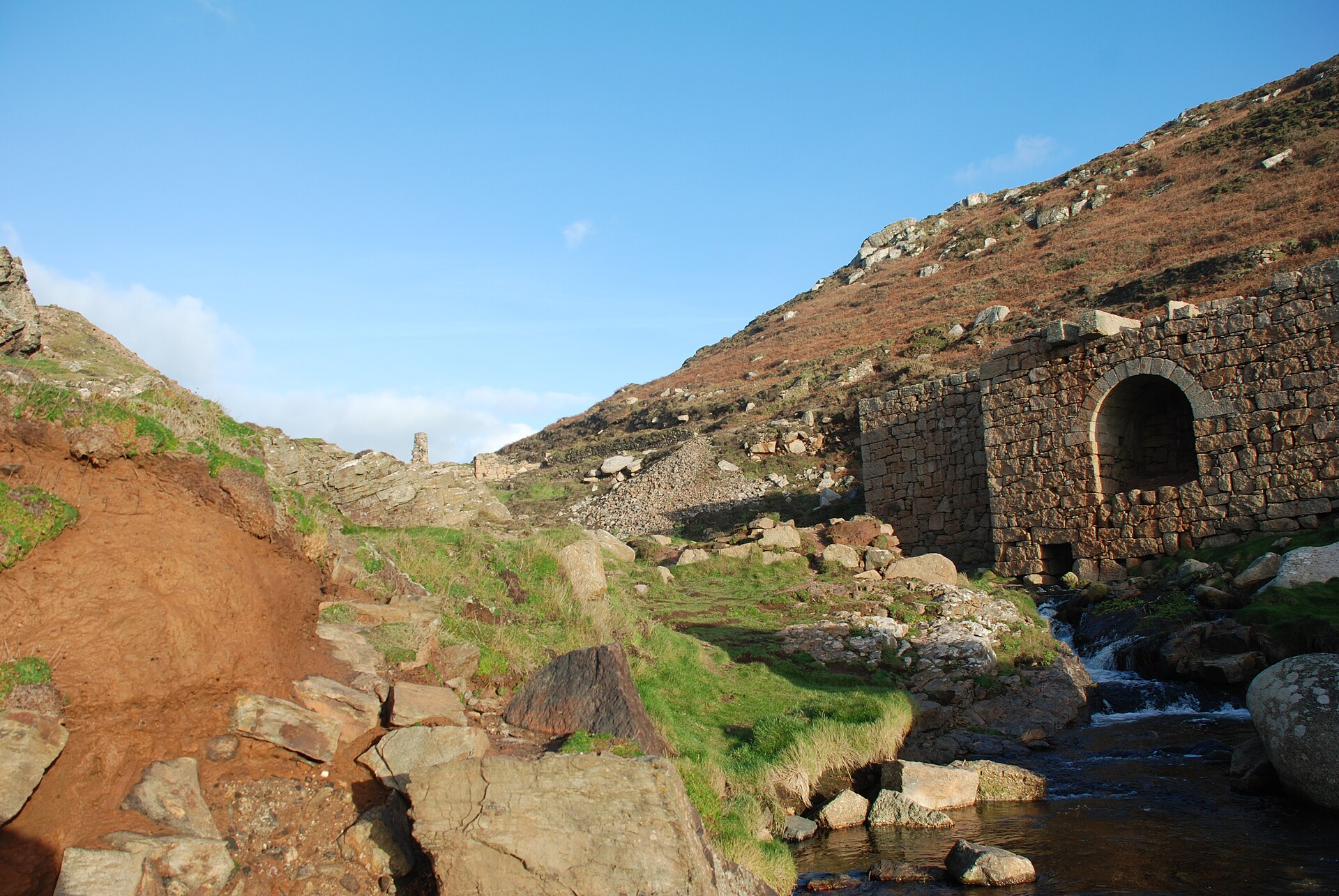
Unknown for Wheal Cunning itself. In the same valley the granite wheel pit and the engine houses of the Wheal Call and Boswedden sections of the united mine survive, some consolidated by the National Trust.
Redevelopment
Unknown.
Related mines
- Boscean Mine — Boscean was absorbed into Wheal Cunning United at the same 1872 amalgamation.
- Boswedden Mine — Boswedden, itself an amalgamation styled Boswedden and Wheal Castle from 1836, was brought in with Wheal Cunning to work as Wheal Cunning United in 1872.
People
- Richard Boyns · proprietor, 1872–1876 — via the operator record Wheal Cunning United
- Richard Boyns · manager, from 1873 — Purser and manager of Wheal Cunning United, of Boswedden House, St Just, in Kelly's directory of 1873.
- Charles Clemens · proprietor, 1872–1876 — via the operator record Wheal Cunning United
- Charles Clemens · agent, from 1873 — Named as one of the three captains of Wheal Cunning United in Kelly's directory of 1873.
- William Hattam · proprietor, 1872–1876 — via the operator record Wheal Cunning United
- William Hattam · agent, from 1873 — Named as one of the three captains of Wheal Cunning United in Kelly's directory of 1873.
- James Roach · proprietor, 1872–1876 — via the operator record Wheal Cunning United
- James Roach · agent, from 1873 — Named as one of the three captains of Wheal Cunning United in Kelly's directory of 1873.
Recorded claims
Individual factual claims, each attached to the source(s) that support it below. Where sources disagree, both are kept.
- Atkinson's Mining Sites in Cornwall records Wheal Cunning as an ancient tin mine worked from 1830 to 1876 with a recorded total output of 460 tons of tin ore. 1
- The mine was reopened in 1872, when Boswedden, Wheal Castle and Boscean were brought in with it to work as Wheal Cunning United. 2,1,3
- Kelly's directory of 1873 records three pumping engines, two stamping engines and two drawing engines at Wheal Cunning United, held on a 21-year lease at a royalty of one twenty-fifth of the tin and one twentieth of the copper, with a costbook company of 200 shares. 1
- The Wheal Castle portion of the united mine had been explored for half a mile out under the sea by 1873, and an incline shaft driven seaward found the ground very poor. 2,1
- The union broke up within two years: by 1874 only Wheal Cunning was at work, its plant was up for sale, and it closed in 1876. 2
Photographs & further reading
Working dates and output after Atkinson, with the mine's entry from Kelly's 1873 directory quoted in full.
View sourceSources
- (secondary) Wheal Cunning Mine, Cornwall — Cornwall Calling
- (secondary) Boswedden Mine — Explore Cornwall
- (secondary) Boswedden — Buddlepit Mine Database
Record created: 18 September 2026 · Last researched: 20 September 2026