 MineArchive
Stormsdown Mine
| Also known as | Sigford Mine, Stormsdown and Owlacombe Mine |
|---|---|
| Location | Owlacombe valley, near Sigford, north-east of Ashburton, Devon — 50.5432, -3.7377 (exact) |
| Commodities | Tin, Arsenic |
| Type | Metal |
| Worked | Before 1840 (trial adits)–1909 |
| Maximum depth | 60 fathoms (main shaft, 1909) |
| Operators | Edward Herbert Bayldon (1905–1912), Sigford Mines Limited (1912–1914) |
Overview
A tin and arsenic mine in the Owlacombe valley north-east of Ashburton, financed almost single-handed by Edward Herbert Bayldon, a stockbroker retired at 36, who sank the shaft to 60 fathoms between 1905 and 1909, installed the only Hathorn Davey differential pumping engine in a West Country mine, and lost about £46,500 before his death in 1912 ended the work; the plant was auctioned in 1914.
History
Mining in the Owlacombe valley is believed to go back to the sixteenth century, and shallow trial adits were driven at Stormsdown just before the 1840s on lodes worked in the medieval period; the collective Owlacombe mines closed in 1866. The significant working came in the twentieth century and was financed, unusually, by one man: Edward Herbert Bayldon, who had made his fortune as a London stockbroker, retired at 36 and moved to Dawlish. He bought the lease about 1899, and work on sinking the main shaft began in 1905, though Hamilton Jenkin has a company taking the Owlacombe sett, including Stormsdown, in 1906. By 1906 the shaft was 30 fathoms deep and drained by an adit, with levels at 12.5 and 15 fathoms below it, and the processing plant and dressing floors in the valley bottom were under construction, reached by a tramway and an 1,800-foot incline. In January 1907 the plant was ready and Ernest Terrell was appointed manager; a labourer, John H. Campion, aged 19, had been killed at the mine in July 1906.
Tin concentrate and arsenic were first produced in July 1907. The shaft was deepened to 15 fathoms below adit and a new pumping engine installed, a 200-horsepower Hathorn Davey compound differential engine, the only one put into a West Country mine, replacing an Evans seven-inch steam pump; the winding house held a Scott Mountain double-drum 30-horsepower electric winder, then cutting-edge, and a Bickle and Company horizontal engine. By 1909 the shaft was 60 fathoms deep, with levels at 42.5 and 57.5 fathoms. Of three lodes only one was worked; it was very arsenical, and Level 2 was the best for tin at 76 to 170 pounds to the ton, but the lode was patchy and barely ten pounds a ton came out overall. Up to 200 men were employed.
Work was suspended in July 1909 and most of the men laid off, pumping continuing while a buyer was sought. Bayldon paid for underground work to restart in 1911, with the ore stockpiled at the shaft head, and in July 1912 Sigford Mines Limited was formed with him as a director. He died in December 1912 and the mine died with him: the stockpiles were processed in 1913 and the mine and mill materials auctioned in March 1914. The mine had treated 21,694 tons of ore for 158 tons of tin concentrate worth £13,557 and 750 tons of arsenic worth £9,888, against an investment of about £70,000, most of it Bayldon's. Mining in the valley continued on a smaller scale in the 1930s.
Geology
Three east-west lodes on the eastern edge of the Dartmoor granite in the Owlacombe valley, only one of them worked, very arsenical and carrying patchy tin, richest on the second level at 76 to 170 pounds of tin to the ton.
Geological setting: Veins and Lodes (historical documentary reference)
Workings
A main shaft sunk from 1905 to 60 fathoms by 1909, drained by an adit at 30 fathoms with levels at 42.5 and 57.5 fathoms; a Hathorn Davey differential pumping engine, an electric winder and a Bickle horizontal engine in the winding and engine houses; a tramway and 1,800-foot incline to the dressing floors and arsenic plant by Owlacombe Bridge.
Closure
Suspended in July 1909 after four years of poor returns, restarted in 1911 on Bayldon's money and ended by his death in December 1912; the stockpiles were processed in 1913 and the plant auctioned in March 1914.
What remains
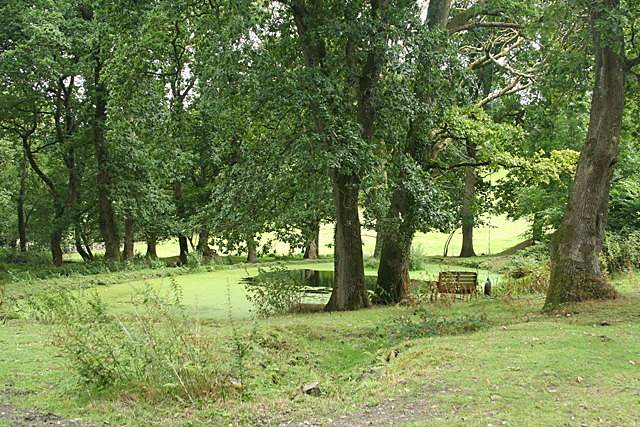
The shaft is overgrown and fenced, the engine house ruin stands on two levels above the boiler house foundations, the winding house foundations survive with a metal cowl and bolts, the adit still drains below, and a pond lies by the site; the ground is private.
The engine house ruin, winding house and boiler house foundations, the fenced shaft, the adit mouth, a spoil tip and the start of the incline; Stormsdown Cottages on the road were built for the mines.
Redevelopment
None.
Nearby mines
- Haytor Granite Quarry — 2.0 miles (3.3 km) N
- Bagtor Mine — 2.2 miles (3.5 km) N
- Silverbrook Mine — 2.2 miles (3.6 km) NE
- Hemsworthy Mine — 2.5 miles (4.0 km) NW
- Haytor Iron Mine — 2.5 miles (4.1 km) N
Straight-line distance, within 9 miles (15 km). Show on the map.
What's uncertain
Points where sources disagree or the record could not be settled; both accounts are kept. All open questions in the archive.
- The mine closed in 1912. (disputed) 2
Recorded claims
Individual factual claims, each attached to the source(s) that support it below. Where sources disagree, both are kept.
- The twentieth-century working was financed almost solely by Edward Herbert Bayldon, a London stockbroker retired at 36 to Dawlish, who bought the lease about 1899. 1
- Sinking of the main shaft began in 1905; it was 30 fathoms deep in 1906 and reached 60 fathoms in 1909, with levels at 42.5 and 57.5 fathoms below the adit at 30. 1
- Hamilton Jenkin has a company taking the Owlacombe sett, including Stormsdown, in 1906, and workings restarted at Stormsdown in 1906 with a tramway and incline to the plant near Owlacombe Bridge. 1,2
- John H. Campion, a labourer aged 19, was killed at Stormsdown and Owlacombe mine, tin and arsenic, owner E. H. Bayldon, on 26 July 1906. 3
- The engine house held a 200-horsepower Hathorn Davey compound differential pumping engine, the only one installed in a West Country mine, replacing an Evans seven-inch steam pump. 1,4
- Up to 200 men were employed until closure. 2
- Work was suspended in July 1909, restarted in 1911 on Bayldon's money, and Sigford Mines Limited was formed in July 1912 with Bayldon a director; he died in December 1912 and the plant was auctioned in March 1914. 1
- The mine closed in 1912. (disputed) 2
- The mine treated 21,694 tons of ore for 158 tons of tin concentrate worth £13,557 and 750 tons of arsenic worth £9,888, against about £70,000 invested. 1
- Mining in the valley continued on a smaller scale in the 1930s. 2
Photographs & further reading
An account of the mine from a Dartmoor Tinworking Research Group visit, with the shaft, engine house, winding house and adit located by grid reference.
View sourceThe engine house ruin and its neighbouring features.
View sourceSources
- (secondary) Stormsdown Mine — Dartmoor Explorations
- (observational) Ashburton: pond by mine site (photograph, 2010) — Geograph
- (secondary) NMRS deaths database: John H. Campion, Stormsdown and Owlacombe, 1906 — Northern Mine Research Society
- (secondary) Stormsdown Mine Engine House (Dartefacts) — Dartefacts
Record created: 18 October 2026 · Last researched: 21 October 2026