 MineArchive
Haytor Granite Quarry
| Location | Haytor Down, Dartmoor, Devon — 50.5720, -3.7280 (approximate) |
|---|---|
| Commodity | Granite |
| Type | Quarry |
| Worked | 1820–1858 |
| Operators | George Templer (1820–1829), Duke of Somerset (1829–1858) |
Overview
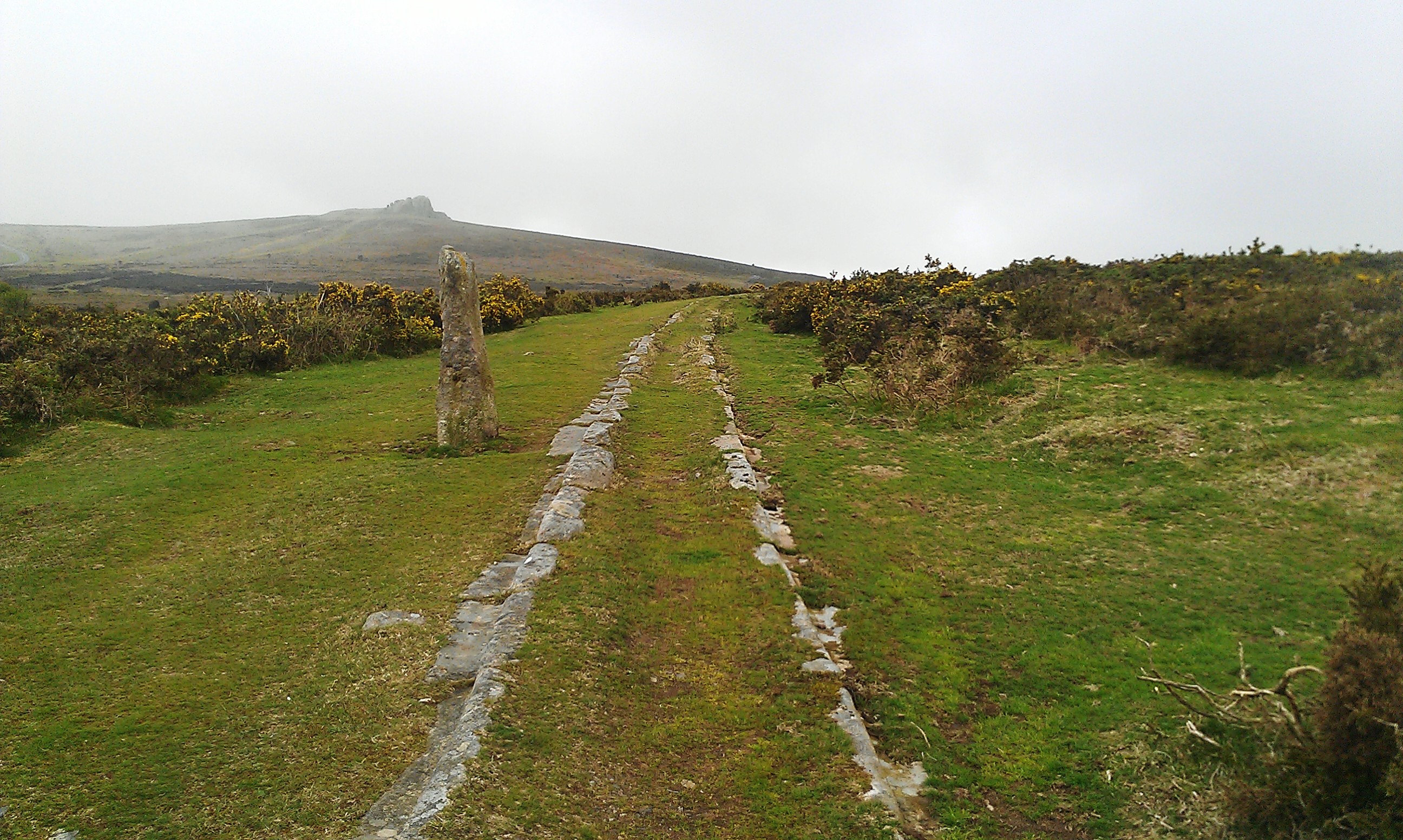
Haytor, high on Dartmoor, is remembered less for the stone it produced — though its granite built the arches of the 1831 London Bridge and parts of the British Museum — than for the extraordinary tramway built to move it: eight and a half miles of track made entirely from shaped granite blocks rather than iron rails.
History
Granite had been worked in small quantities on Haytor Down for generations, but quarrying was transformed from 1820 by the local landowner and businessman George Templer, who built a purpose-made tramway to carry stone down to the Stover Canal at Ventiford, for onward shipment from Teignmouth. The tramway, 8.5 miles long with a fall of around 1,300 feet, was built not with iron rails but with parallel lines of shaped granite blocks, their upper outside edges cut with flanges to guide the flangeless wheels of horse-drawn trucks; empty trucks were hauled up to the quarries by teams of horses, while loaded trucks ran back down to the canal by gravity alone. The tramway and its quarries supplied stone for major London building projects, most notably the arches of the new London Bridge, built between 1824 and 1831 (later dismantled and re-erected at Lake Havasu City, Arizona, in the 1960s), and for the British Museum. Templer sold the quarries and tramway to the Duke of Somerset in 1829 amid financial difficulties, but operations continued under the new ownership until increasing competition from more accessible Cornish granite quarries finally closed Haytor down in 1858. Templer also held an interest in the nearby Haytor Iron Mine, which had worked iron ore from lodes below Haytor Rocks since at least 1600; a plan to extend the granite tramway to serve the iron mine as well was proposed but never built.
Geology
The quarries worked coarse-grained Dartmoor granite, part of the Cornubian batholith intruded into the surrounding Devonian and Carboniferous rocks around 280-270 million years ago; the adjacent Haytor Iron Mine worked separate iron-bearing lodes, including magnetite, immediately below Haytor Rocks.
Workings
Granite was worked from open quarry pits on Haytor Down and hauled by horse-drawn truck along the 8.5-mile granite tramway to the Stover Canal; the unique trackway, laid directly on the ground rather than on sleepers, used shaped granite blocks with cut flanges in place of iron rails, with wooden 'point tongues' guiding trucks through the track's junctions.
Closure
Increasing competition from more accessible Cornish granite quarries made Haytor's stone commercially unviable, and both the quarries and their tramway closed in 1858.
What remains
Long sections of the granite tramway survive in place on Haytor Down, along with several flooded quarry pits and other quarrying remains, making it one of the best-preserved industrial tramways of its kind anywhere in Britain.
Related mines
- Merrivale Quarry — One of the three major granite quarries of Dartmoor, with Foggintor and Merrivale.
Nearby mines
- Bagtor Mine — 0.4 miles (0.7 km) NW
- Silverbrook Mine — 1.0 miles (1.7 km) E
- Hemsworthy Mine — 2.0 miles (3.3 km) W
- Yarner Copper Mine — 2.1 miles (3.3 km) N
- Kelly Mine — 3.5 miles (5.6 km) N
Straight-line distance, within 9 miles (15 km). Show on the map.
Recorded claims
Individual factual claims, each attached to the source(s) that support it below. Where sources disagree, both are kept.
- The granite tramway ran 8.5 miles from the quarries to the Stover Canal, with a fall of around 1,300 feet, built entirely from shaped granite blocks rather than iron rails. 1,2
- Granite from Haytor was used in the arches of the new London Bridge, built between 1824 and 1831, and in the British Museum. 1
- Increasing competition from more accessible Cornish granite quarries closed both the quarries and the tramway in 1858. 1
Sources
- (secondary) Haytor Granite Tramway — Wikipedia
- (primary) Haytor granite tramway, Ilsington — Historic England (Scheduled Monument record)
- (primary) HAYTOR MINES mine plan — British Geological Survey
Record created: 24 August 2026 · Last researched: 24 August 2026