 MineArchive
Smallcleugh Mine
| Also known as | Smallcleugh Lead Mine |
|---|---|
| Location | Nenthead, Cumbria — 54.7867, -2.3453 (approximate) |
| Commodities | Lead, Zinc |
| Type | Metal |
| Worked | c.1770–c.1900 |
| Maximum depth | Unknown. |
| Operators | London Lead Company (1787–1882), Nenthead and Tynedale Zinc Company (1882–1896), Vieille Montagne Zinc Company (1896–?) |
Overview
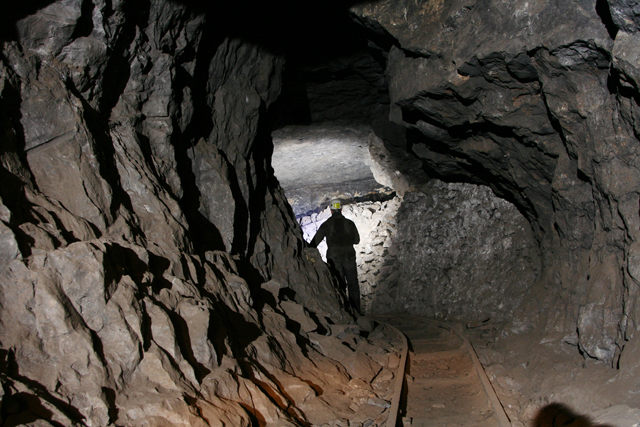
One of the major lead mines of the Nenthead orefield, worked from 1787 along the rich Smallcleugh Cross Vein by the London Lead Company, and best remembered today for the Ballroom Flat — a huge flat-lying ore chamber where the local Masonic Lodge held an underground dinner for 28 guests in 1901.
History
Work at Smallcleugh began around 1770 in search of the continuation of Hanginshaw's West of Nent Vein, but this early attempt was soon abandoned. The mine was restarted in 1787 by an agent of the London Lead Company, this time along the Smallcleugh Cross Vein, which proved immensely productive. Beyond the Cross Vein, the mine also worked a number of other rich veins, including Middlecleugh (with its 1st and 2nd Sun Veins), Longcleugh and Great Cross.
As at other Nenthead mines, ownership passed through several hands as lead mining in the district declined and diversified: the Nenthead and Tynedale Lead and Zinc Company and later the Belgian Vieille Montagne Zinc Company both worked the mine, extracting zinc ore from ground that had originally been worked purely for lead. Most large-scale operations at Smallcleugh had ended by around 1900. A brief attempt to reopen the mine in search of new ore reserves took place in 1963, but little large-scale mining resulted.
The mine's most celebrated moment came on 2 September 1901, when 28 members of the local Masonic Lodge held a formal dinner underground in a large stope, since known as the Ballroom Flat — a name that reflects both the scale of the occasion and the characteristic shape of Nenthead's ore deposits, which often occur as broad flat areas of mineralisation rather than following a narrow vein.
Geology
The mine worked hydrothermal veins and flat-lying replacement deposits in Carboniferous limestone, sandstone and shale, with vein widths ranging from a millimetre to as much as 10 metres. The ore assemblage is coarse-grained, combining gangue (spar) minerals with sulphide ores, chiefly galena and sphalerite; more than 30 other minerals have also been recorded from the mine, including rarities such as annabergite and namuwite that have made it notable among mineral collectors.
Workings
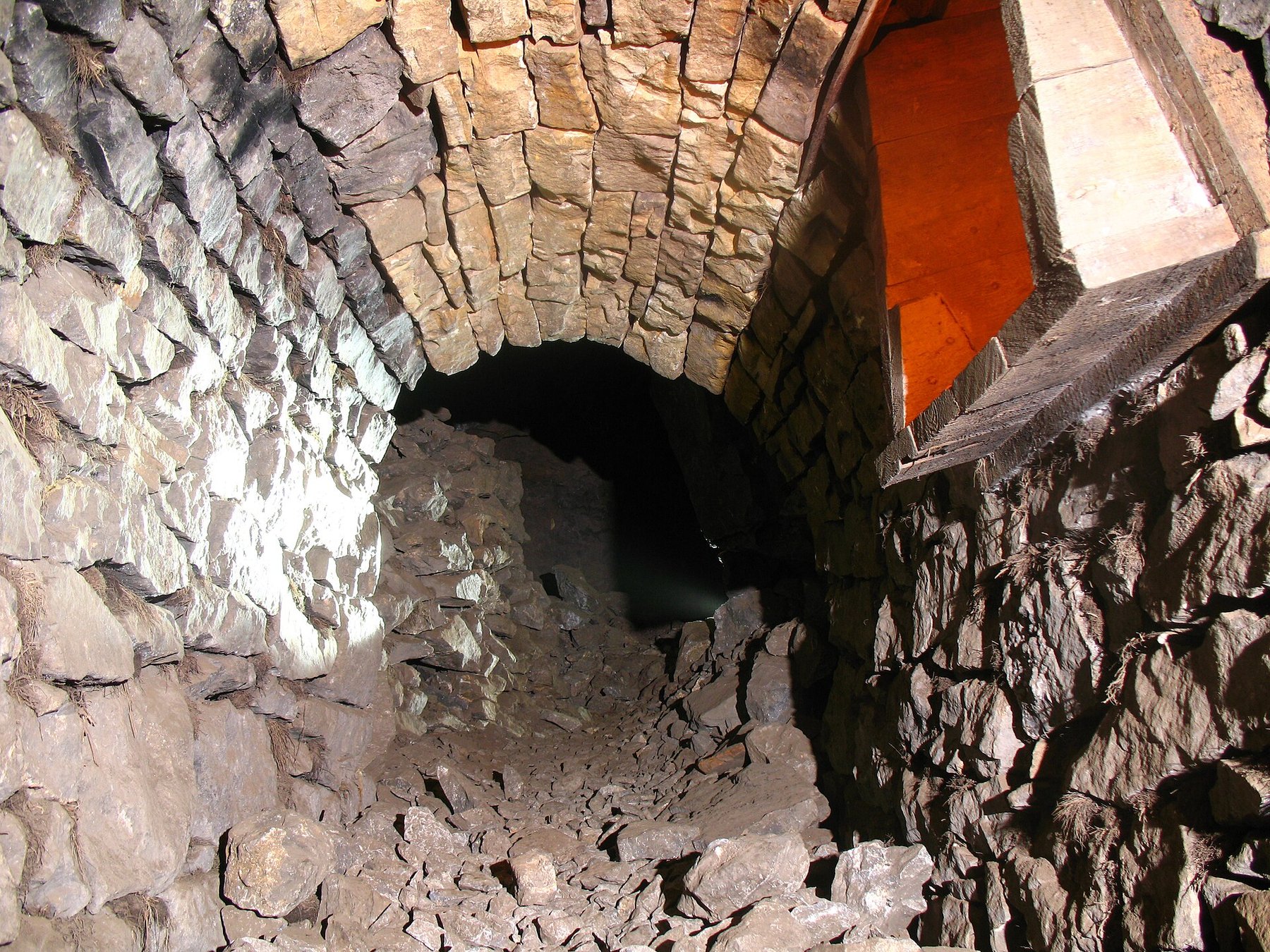
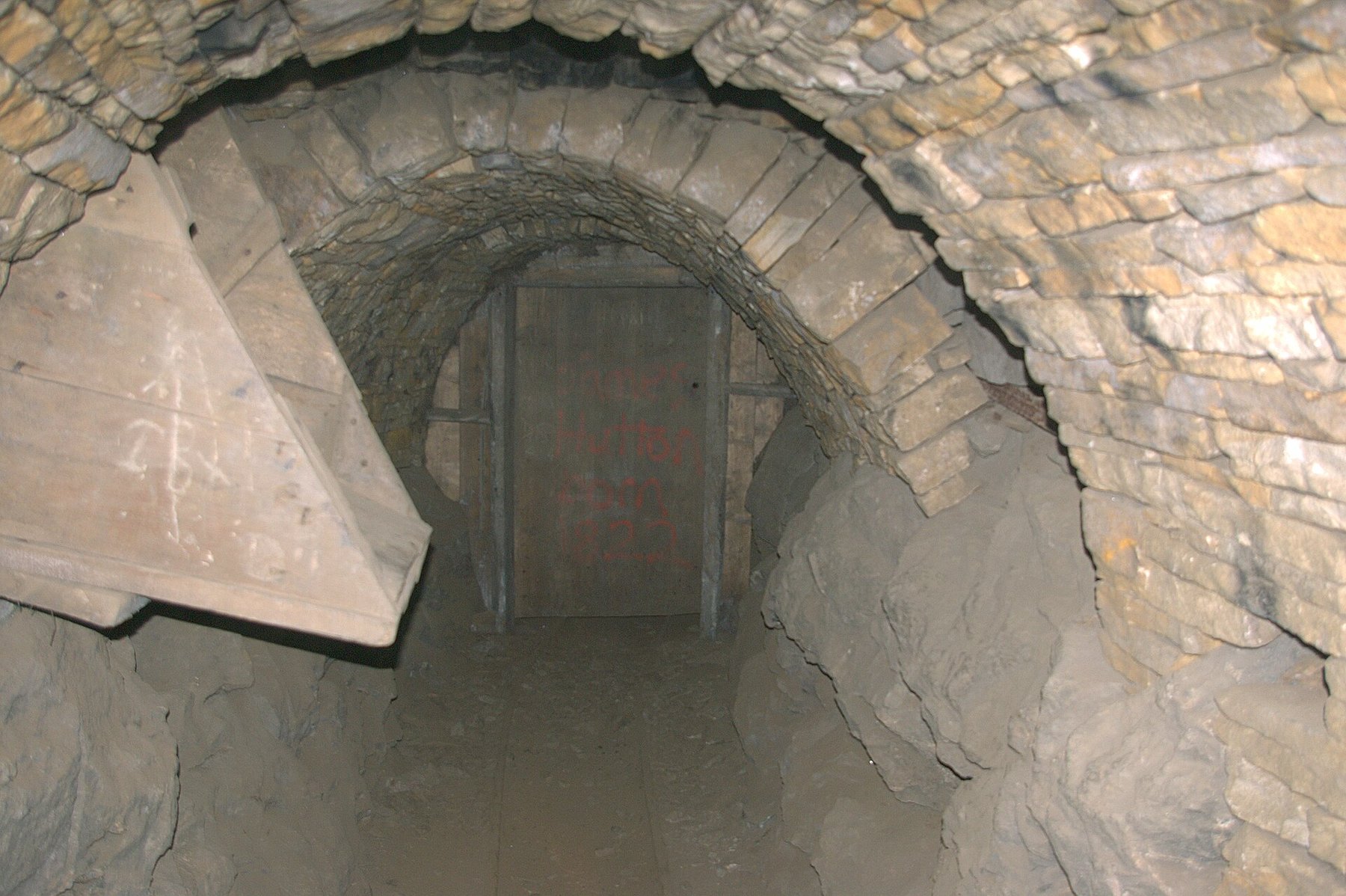
Chiefly the Smallcleugh Cross Vein, alongside the Middlecleugh (1st and 2nd Sun Veins) and Great Cross veins and the Longcleugh Vein, which is where the mine ends: the ground beyond it is the separate Longcleugh Mine, reached through the same portal. Underground flats carry names reflecting their history and character, including Wheel Flats, Old Fan Flats, New Fan Flats, North End Flats, and the Ballroom Flat, site of the 1901 Masonic dinner. The workings connect to the Middlecleugh, Rampgill, Carrs and Caplecleugh mines and are extensive enough to offer circular routes; a Hetheringtons crosscut and a horse level are among the ways through.
Closure
Most large-scale working had ended by about 1900, after the Vieille Montagne company's years on the ground. The mine was briefly reopened in 1963 in pursuit of new ore reserves, but little large-scale mining followed. Interest in the ground below has not gone away: in 2012 mine explorers at Nenthead reported drilling around the village to prove reserves said to lie 400 to 500 metres beneath the existing workings.
What remains
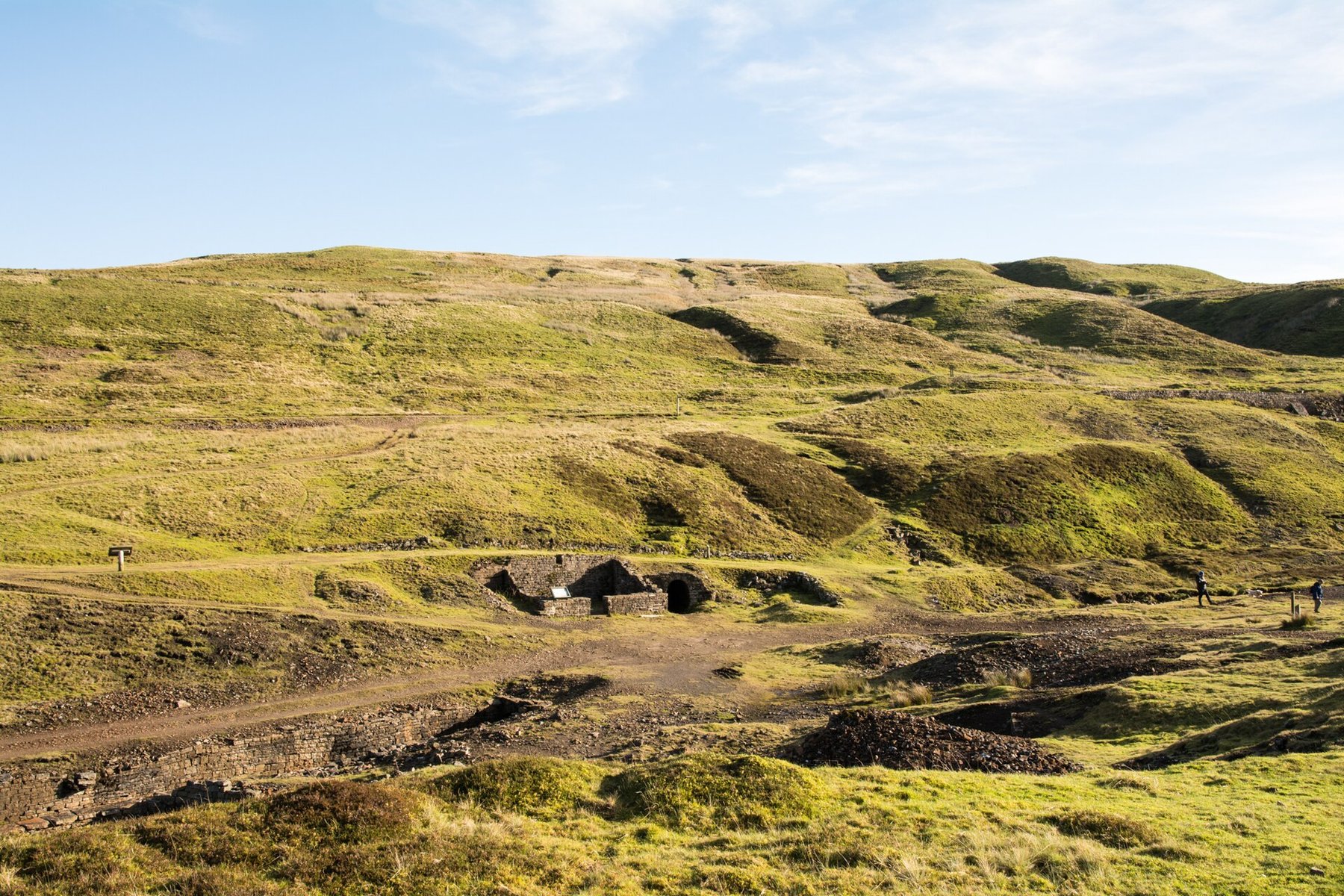
Much of Smallcleugh remains accessible to properly equipped underground explorers, and society meets have gone through it regularly - two and a half miles underground on a 2013 visit - though a 2013 report recorded major roof collapses blocking some routes and hazardous features such as a single rail bridging a drop to a lower level. On the surface the mine forms part of the Nenthead scheduled monument, described in its designation as the most intact mining landscape in the North Pennines, and part of the ground is the Smallcleugh geological SSSI at NY 787 429; the wider landscape sits within the North Pennines National Landscape and UNESCO Global Geopark. The 2018 condition survey of the monument found several Smallcleugh components at risk, among them the collapsing store at Hodgson's Shop, a leaking outlet pipe from the Smallcleugh Dam flooding the main track, and the deteriorating Smallcleugh Burn culvert and River Nent revetment wall in the dump area.
The Smallcleugh ground carries a dressing floor, the Smallcleugh (Hansome Mea) reservoir and the Smallcleugh Dam with its wooden launder, a north powder store, Hodgson's Shop and its mine portal, an ore hopper, and the ruined smithy that stands beside the Smallcleugh Level in the upper valley of the River Nent; a revetment wall carries the Nent past the dump area. All of it lies within the scheduled monument and is managed by the Nenthead Mines Conservation Society.
Related mines
- Carrs Mine — Carrs lies directly beneath Smallcleugh and worked the Smallcleugh Cross Vein; the two are connected underground and a through route from Smallcleugh into Carrs exists.
- Longcleugh Mine — One continuous set of workings entered through the Smallcleugh portal, but two mines: Smallcleugh runs as far as the Longcleugh Vein past the Ballroom Flat, and everything beyond it - Carr's Cross Vein, Cow Hill Cross Vein, Barron's Sump Chamber - is Longcleugh, which was originally worked by its own shafts. The two are routinely taken for one mine, and the Mining Remediation Authority holds them on a single abandonment plan with Cleugh Flatts.
- Middlecleugh Mine — Middlecleugh's sumps rise towards workings above Smallcleugh, its Second Sun Vein sump connects with Mitchells Flat in Smallcleugh, and parts of Middlecleugh can be reached from within it.
- Rampgill Mine — The Rampgill Horse Level served as the haulage way, by the Hanginshaw Branch Level, for the eastern workings of the Middlecleugh and Longcleugh veins in Smallcleugh.
Nearby mines
- Nenthead Mines — 0.2 miles (0.3 km) NE
- Caplecleugh Mine — 0.3 miles (0.4 km) SW
- Dowgang Mine — 0.4 miles (0.6 km) E
- Carrs Mine — 0.5 miles (0.7 km) SE
- Longcleugh Mine — 0.4 miles (0.7 km) E
Straight-line distance, within 9 miles (15 km). Show on the map.
What's uncertain
Points where sources disagree or the record could not be settled; both accounts are kept. All open questions in the archive.
- A 2012 discussion among mine explorers at Nenthead reported that Minco plc was drilling to prove ore reserves around the village, with the geology said to suggest substantial high-grade ore 400 to 500 metres below the existing workings and results not expected before 2014 or 2015. (uncertain) 7
Recorded claims
Individual factual claims, each attached to the source(s) that support it below. Where sources disagree, both are kept.
- Work at Smallcleugh, first attempted around 1770 and abandoned, was restarted in 1787 by an agent of the London Lead Company along the Smallcleugh Cross Vein. 1
- The mine was later worked by the Nenthead and Tynedale Lead and Zinc Company and then the Belgian Vieille Montagne Zinc Company, extracting zinc from ground originally worked for lead. 2
- On 2 September 1901, 28 members of the local Masonic Lodge held a dinner underground in the stope since known as the Ballroom Flat. 1
- More than 30 minerals have been recorded from the mine beyond its principal galena and sphalerite ores, including rarities such as annabergite and namuwite. 2
- A September 2013 visit recorded major collapses blocking some routes, and hazardous features including a single-rail crossing known as the 'Bridge of death'. 1
- Smallcleugh proper ran only as far as the Longcleugh Vein past the Ballroom Flat, together with the beginnings of the Middlecleugh Vein and Middlecleugh Second Sun Vein. The ground beyond it - Carr's Cross Vein, Cow Hill Cross Vein, Barron's Sump Chamber - is the separate Longcleugh Mine, and is taken for part of Smallcleugh only because the Smallcleugh portal is the way in. 3
- The workings connect underground to the Middlecleugh, Rampgill, Carrs and Caplecleugh mines, and are extensive enough to give circular routes through several flats. 3
- The Nenthead lead mines, ore works and smeltmill were scheduled in 1987, with amendments in 1997, as list entry 1015858. The designation calls the complex the most intact mining landscape in the North Pennines and rests its importance on the survival not only of buildings and dams but of the London Lead Company's network of roadways. 4
- Part of the site is a geological Site of Special Scientific Interest in its own right, the Smallcleugh SSSI at NY 787 429, within the 700-hectare Nenthead site owned by Cumbria County Council. 4
- The 2018 condition survey of the scheduled monument put nine components most at risk, several of them Smallcleugh's own: the store between the lower door and the mine portal at Hodgson's Shop was collapsing; a leaking outlet pipe from the Smallcleugh Dam was flooding the main track beneath its wooden launder; water overflowing the Rampgill leat into the dam in storms was washing the track surface down into the smelt mill; and the Smallcleugh Burn culvert and the River Nent revetment wall in the Smallcleugh dump area were both deteriorating. 4
- Conservation began under Cumbria County Council in the late 1980s and passed to the North Pennines Heritage Trust; North Pennine Archaeology mapped 418 components between 2000 and 2011, Northern Archaeological Associates mapped 900 more across nine areas in 2013, and after the Trust went into administration in 2012 the Nenthead Mines Conservation Society took on management of the site. 4
- The mine is covered at length in Fairbairn's The Mines of Alston Moor (British Mining No.47, 1993, pages 11, 34, 68, 70-75, 77, 78 and 166) and in Lawson's Smallcleugh Mine: Exploration History (British Mining No.100, 2015, pages 41-45), with Lawson's earlier study of the eighteenth-century figure Thomas Dodds (British Mining No.61, 1998) devoting several pages to it; its returns run through the Lists of Mines of 1859-61 and 1863-74 and the Mineral Statistics of 1848-74 and 1882-92, and it was given in evidence to the 1864 Royal Commission on mines outside the Coal Mines Act. 5
- A Northern Mine Research Society meet in August 2013 went in by the Smallcleugh Flats and Hetheringtons crosscut to reach the Ballroom Flat and out by Hetheringtons crosscut, the Flat crosscut and the horse level, covering about two and a half miles underground. 6
- A 2012 discussion among mine explorers at Nenthead reported that Minco plc was drilling to prove ore reserves around the village, with the geology said to suggest substantial high-grade ore 400 to 500 metres below the existing workings and results not expected before 2014 or 2015. (uncertain) 7
- The Mining Remediation Authority catalogue holds several plans of the mine, among them a Smallcleugh plan redrawn by R. E. Hewer in 1982 and a composite of the London Lead Company's maps of Smallcleugh and Middlecleugh. 8
Photographs & further reading
The society's account of the mine and a long series of dated trip reports through it, setting out the veins and flats and where Smallcleugh ends and Longcleugh begins.
View sourceA volunteer archaeological condition survey of the scheduled Nenthead complex, listing the nine components most at risk, several of them on the Smallcleugh ground.
View sourceThe society's directory entry, listing the monographs, company histories, statutory returns and Ordnance Survey sheets that document the mine.
View sourceSources
- (observational) Smallcleugh Lead Mine - Cumbria, Sept 2013 — 28DaysLater Urban Exploring Forums
- (secondary) Smallcleugh Mine, Nenthead, Alston Moor, Eden, Cumbria — Collection Place
- (observational) Smallcleugh Mine — Mine Explorer Society — Mine Explorer Society
- (secondary) Nenthead Mines OREsome Summary Report, August 2018 — North Pennines National Landscape
- (secondary) Smallcleugh Mine — record trail and bibliography — Northern Mine Research Society
- (observational) Smallcleugh Mine, Nenthead — society meet, August 2013 — Northern Mine Research Society
- (observational) Smallcleugh mine, Nenthead, Christmas 2012 (Derelict Places) — Derelict Places
- (primary) BGS / Mining Remediation Authority mine plans: Smallcleugh Mine, Nenthead, Cumbria — BGS / Mining Remediation Authority mine plans
Record created: 26 August 2026 · Last researched: 28 September 2026