 MineArchive
Rutland Ironstone Quarries
| Also known as | Cottesmore Ironstone Quarries, Exton Park Ironstone Quarries, Cottesmore Iron Ore Mines |
|---|---|
| Location | Cottesmore and Exton Park, Rutland — 52.7135, -0.6662 (approximate) |
| Commodity | Iron |
| Type | Iron |
| Worked | 1882–1973 (last ore to Corby 1980) |
| Maximum depth | Overburden of 60 to 100 feet had to be stripped to reach the ore |
| Operators | Sheepbridge Coal and Iron Company (1882–1950), United Steel Companies (1950–1973) |
Overview
A century of ironstone quarrying in England's smallest county, worked at the end by Sundew — at 1,675 tons the largest walking dragline in the world, which finished the job and then walked twenty miles to Corby, crossing ten roads, a railway and a river on the way.
History
The Sheepbridge Coal and Iron Company started quarrying at Cottesmore in 1882, and the Midland Railway built a two-mile mineral branch from Ashwell to serve it in 1884. Ore came down the escarpment by a three-foot gauge tramway and a rope-worked incline that lowered loaded wagons to the exchange sidings. As the workable ground got deeper the hand and steam methods gave way to face shovels and draglines on expanding quarry railway systems. The larger chapter came after the Second World War, when United Steel Companies developed Exton Park from 1950 — the last ironstone railway system built in the East Midlands and the third largest in England, active from 1951. A nine-mile circle of track around Exton Park was completed in 1956, laid largely in cuttings so that it would not be seen from the hall.
Geology
Rutland's ore is a low-grade Jurassic ironstone, one of the family of bedded English ironstones that also includes the Northampton Sand of the East Midlands and the Frodingham bed of Lincolnshire, though it is a distinct horizon from either. Like them it was never rich — the industry depended on the ore lying shallow, in bulk, and near a railway. What made Rutland different was the depth of cover: sixty to a hundred feet of overburden had to be moved to reach it, which is why the county ended up hosting some of the largest excavating machinery in Britain.
Geological setting: Sedimentary Beds and Seams (well documented example), Sedimentary Ironstones (historical documentary reference)
Workings
Opencast, on a scale that needed exceptional plant. Overburden was stripped by large electrically powered excavators fed from the quarries' own sub-station, the greatest of them the W1400 walking dragline built by Ransomes and Rapier and named Sundew: 1,675 tons, and at the time it was built in 1957 the largest walking dragline in the world. Ore went out over the quarry railway systems to Ashwell Sidings on the Oakham to Melton main line, via exchange sidings on the site now occupied by the Rocks by Rail museum.
Closure
The end came from the steelworks rather than the quarries. When Scunthorpe converted to richer imported ore in the early 1970s the Rutland quarries closed, in 1973. Corby remained the only customer for home-produced ore, and the last load went there on 4 January 1980. Sundew did not stay: in the summer of 1974 the dragline walked from Exton Park to Corby, crossing ten roads, a railway line and the River Welland on the way.
What remains
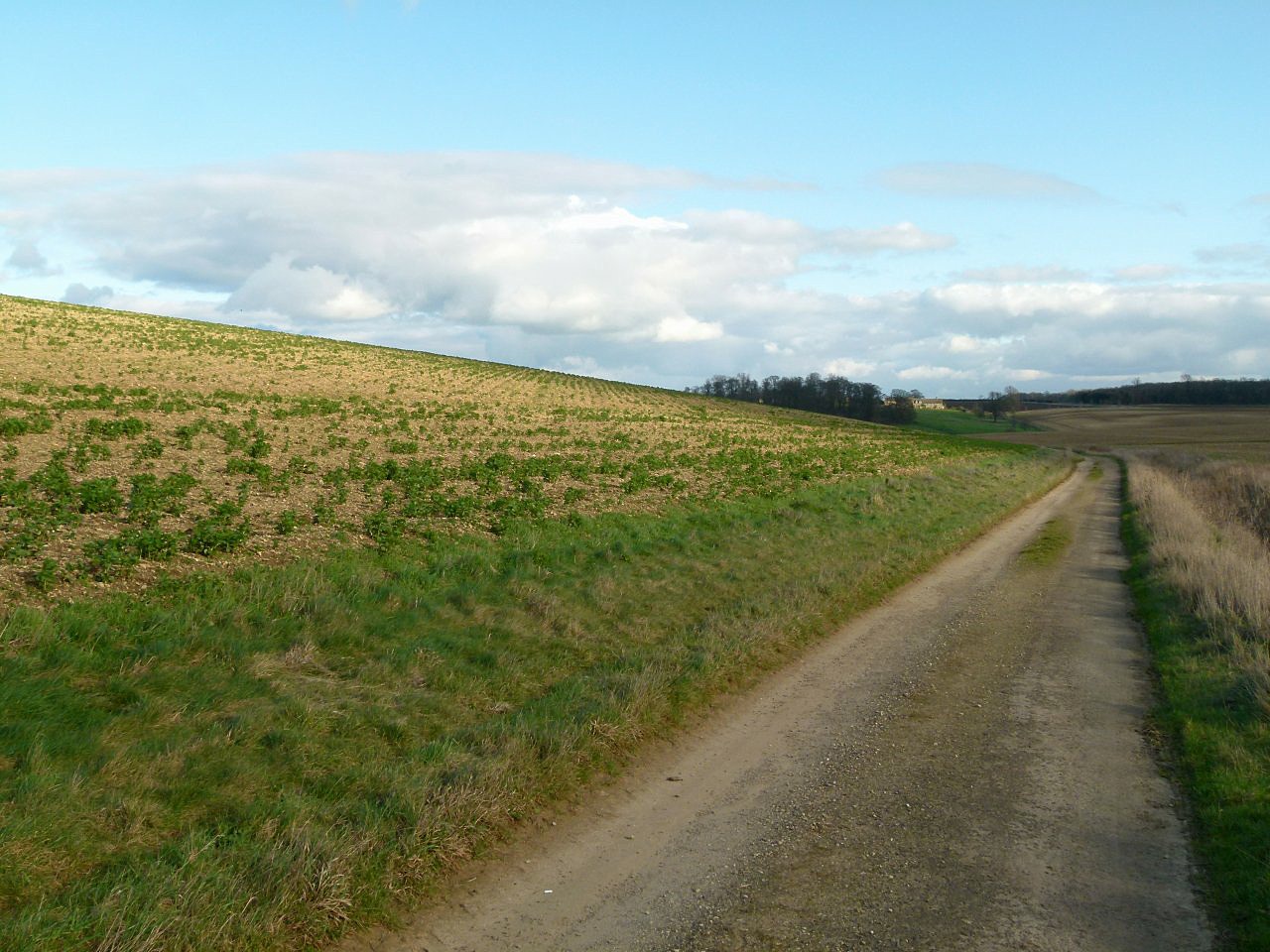
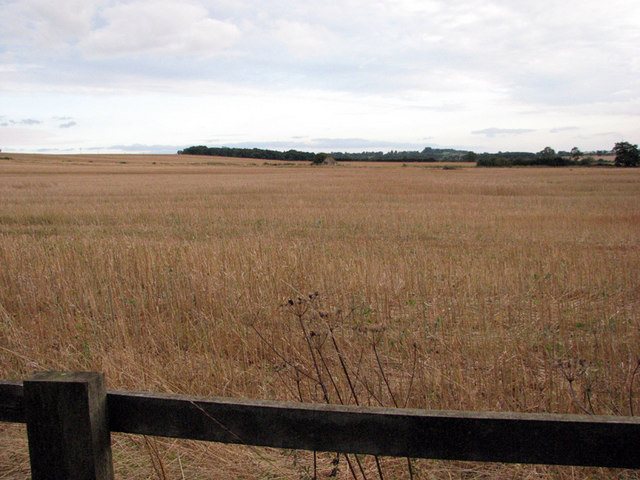
Restored, and remarkably completely. The cuttings have been filled and the quarried land put back to farmland; it is genuinely hard to see now what was here.
Very little in the ground — a few railway bridges and earthworks around Cottesmore and the line of the old branch. The industry survives instead at Rocks by Rail, the living ironstone museum on the former exchange sidings, which holds the driver's cab of Sundew.
Redevelopment
Agricultural restoration, with the museum on the old sidings the only working reminder.
Nearby mines
- Cottesmore Ironstone Quarry — 0.4 miles (0.6 km) N
- Clipsham Quarry — 4.6 miles (7.4 km) E
- Ketton Quarry — 6.6 miles (10.6 km) SE
Straight-line distance, within 9 miles (15 km). Show on the map.
Recorded claims
Individual factual claims, each attached to the source(s) that support it below. Where sources disagree, both are kept.
- The Sheepbridge Coal and Iron Company began quarrying at Cottesmore in 1882, and the Midland Railway opened a two-mile mineral branch from Ashwell in 1884. 1
- Ore was moved by a three-foot gauge tramway and a rope-worked incline that lowered loaded wagons down the escarpment to main-line wagons. 1
- United Steel Companies developed Exton Park from 1950 — the last ironstone railway system built in the East Midlands and the third largest in England — with a nine-mile circle of track completed in 1956, laid largely in cuttings to reduce its visual impact. 1
- Overburden of 60 to 100 feet required large electrically powered excavators, the greatest being the 1,675-ton W1400 walking dragline Sundew, built by Ransomes and Rapier in 1957 and at the time the largest walking dragline in the world. 1
- The quarries closed in 1973 when Scunthorpe converted to higher-grade imported ore; Corby remained the only consumer and the last load of home-produced ore went there on 4 January 1980. 1
- In the summer of 1974 Sundew walked from Exton Park to Corby, crossing ten roads, a railway line and the River Welland. 1,2
- The cuttings have been filled in and the quarried land restored to farmland; Sundew's driver's cab survives at the Rocks by Rail museum on the former exchange sidings. 1,2
Sources
- (primary) Iron Ore in Rutland — Rocks by Rail: The Living Ironstone Museum
- (secondary) Rocks by Rail: The Living Ironstone Museum — Discover Rutland
- (secondary) History — Rocks by Rail — Rocks by Rail: The Living Ironstone Museum
Record created: 24 August 2026 · Last researched: 24 August 2026