 MineArchive
Cottesmore Ironstone Quarry
| Location | Cottesmore, Rutland — 52.7186, -0.6642 (approximate) |
|---|---|
| Commodity | Iron |
| Type | Ironstone |
| Worked | 1882–1964 |
| Maximum depth | A surface quarry, not a shaft mine -- ore was reached by removing up to six feet of overburden rather than by any underground working. |
| Operators | Sheepbridge Coal and Iron Company (1882–1964) |
Overview
Rutland's first ironstone quarry, opened in 1882 by the Sheepbridge Coal and Iron Company, worked continuously in various locations around the village of Cottesmore for over eighty years and remembered today at the Rocks by Rail heritage museum on its former railhead.
History
The Sheepbridge Coal and Iron Company leased land at Cottesmore in 1880 and began quarrying ironstone from the top of the escarpment there in 1882, working initially by hand: labourers removed up to six feet of overburden and horses and carts carried the ore to Ashwell station until a dedicated Midland Railway mineral branch from Ashwell to Cottesmore opened in 1884. A three-foot-gauge tramway and a rope-worked incline were later built to lower loaded wagons down the escarpment's steep eastern slope to the mainline exchange sidings. During the First World War a second quarry face was opened to meet increased wartime demand, worked in part by German prisoners of war, though demand collapsed after the war ended. Steam locomotives replaced horse haulage on the tramway from November 1922, and mechanical excavators arrived in 1933, allowing quarrying to expand steadily around the village -- by the mid-20th century workings surrounded Cottesmore on three sides, lowering the surrounding fields by ten to twenty feet and erasing old paths and landmarks in the process. The 1959 village guide records that 'many of the men and boys now work at the pit', reflecting how central quarrying had become to the local economy. Operations continued until 1964, by which point extraction had shifted to a related, larger operation at nearby Exton Park (see interest note on the wider Rutland ironstone field), and the last ironstone train left the county only in May 1973.
Geology
Ironstone of the Rutland escarpment, quarried from its top from 1882.
Workings
Open surface quarrying, removing overburden by hand in the earliest years and later by mechanical excavator (from 1933), with ore hauled out on a three-foot-gauge tramway -- steam-worked from 1922 -- and lowered down the escarpment via a rope-worked incline to the mainline exchange sidings.
Closure
Cottesmore's own workings closed in 1964; the wider Rutland ironstone industry continued at the related Exton Park mines until the last ironstone left the county in May 1973.
What remains
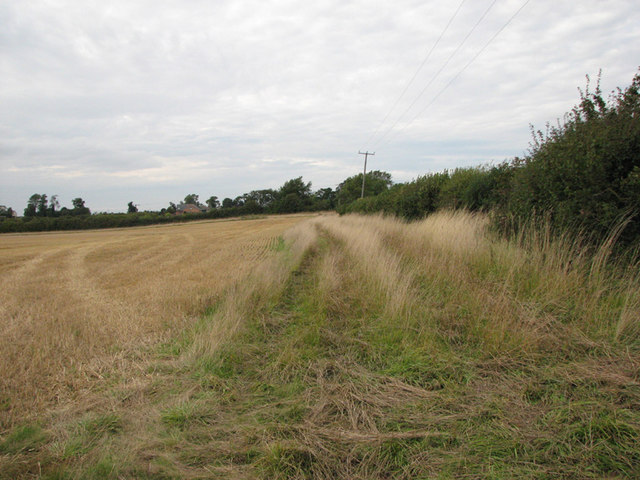
The site of the former railhead is now occupied by Rocks by Rail: The Living Ironstone Museum, which recreates the ironstone tramway system from quarry face to exchange sidings; quarried fields elsewhere have been restored to agriculture, though traces of the historic rail infrastructure remain visible in the surrounding landscape.
Traces of the historic quarry railway system remain visible in the landscape around the village; the former railhead site is preserved as the Rocks by Rail heritage museum.
Nearby mines
- Rutland Ironstone Quarries — 0.4 miles (0.6 km) S
- Clipsham Quarry — 4.5 miles (7.3 km) E
- Ketton Quarry — 6.8 miles (11.0 km) SE
Straight-line distance, within 9 miles (15 km). Show on the map.
Recorded claims
Individual factual claims, each attached to the source(s) that support it below. Where sources disagree, both are kept.
- The Sheepbridge Coal and Iron Company leased land at Cottesmore in 1880 and began ironstone quarrying at the top of the escarpment there in 1882. 1,2
- A second quarry face was opened during the First World War to meet increased demand, worked in part by German prisoners of war. 1
- Steam locomotives replaced horse haulage on the quarry tramway from November 1922, and mechanical excavators were introduced in 1933. 2
- Cottesmore's own quarrying operations continued until 1964, though the source describing the 1926 closure of an earlier, separate quarry face refers to that wartime extension specifically, not the site as a whole -- the wider Rutland ironstone industry continued at Exton Park until the last ironstone train left the county in May 1973. 2
Photographs & further reading
The Rocks by Rail heritage museum's own detailed account of the Rutland ironstone industry, covering Cottesmore and its later sister operation at Exton Park.
View sourceSources
- (primary) Iron Ore in Rutland — Rocks by Rail: The Living Ironstone Museum
- (secondary) Quarrying — Cottesmore History & Archaeological Group
- (observational) Cottesmore, former ironstone quarries — Geograph Britain and Ireland (John Sutton)

Record created: 30 August 2026 · Last researched: 30 August 2026