 MineArchive
Rothwell Haigh Colliery
| Also known as | Rothwell Colliery, Fanny Pit |
|---|---|
| Location | Rothwell, Leeds, West Yorkshire — 53.7629, -1.4734 (approximate) |
| Commodity | Coal |
| Type | Coal |
| Worked | pre-1797–9 December 1983 |
| Maximum depth | Unknown. |
| Operators | J. & J. Charlesworth, National Coal Board (1947–1983) |
Overview
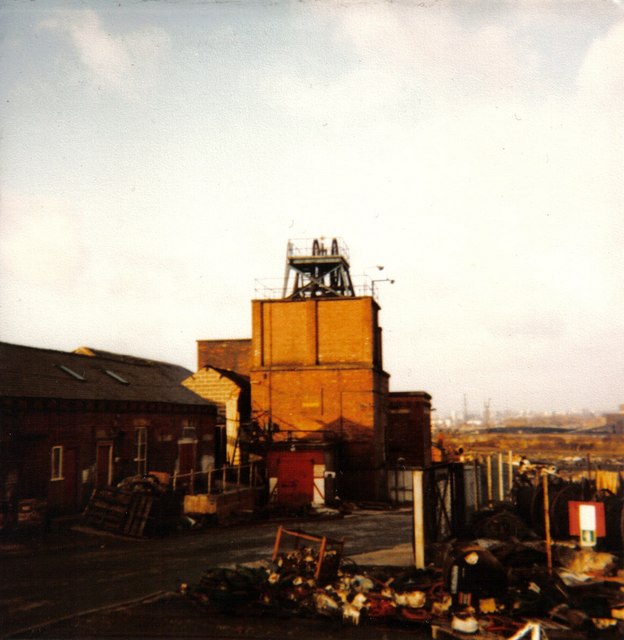
A colliery on Rothwell Haigh, south-east of Leeds, worked by J. and J. Charlesworth through its Beeston, Rose and Fanny pits; the Fanny Pit, sunk about 1867, kept it going until the last shafts closed on 9 December 1983, and the site is now Rothwell Country Park.
History
Rothwell Haigh Colliery lay about 3 miles south-east of Leeds, on the site now taken by Rothwell Country Park, which had been part of the Royal Hunting Park of Rothwell until it was de-parked in 1530. Two early accidents are on record: one on 19 April 1797 that killed thirteen men and boys, among them a father and four sons, and an explosion at the Victoria Pit, first called the Garden Pit and renamed for the Queen's accession, on 24 January 1840 that killed seven.
The Durham Mining Museum lists J. and J. Charlesworth, later J. and J. Charlesworth Ltd, as owners of the Beeston and Fanny pits and the Rose workings. In the 1890s the Beeston pit employed about 460 to 500, the Rose Deep about 310, and in 1910 the Beeston employed 575 and the Rose 568. About 1867 the Charlesworth family sank the Fanny Pit, said to be named for a daughter; millions of gallons of water had to be pumped from the shaft every week, but it proved highly profitable. In 1923 the Beeston employed 605, the Fanny 670 and the Rose 370.
A second Fanny shaft was sunk in 1921 and deepened in 1924-25, and 160 ponies were kept in underground stables there in 1922. The pit was nationalised in 1947 and turned to raising coal quickly for the power stations, which brought in an underground locomotive system. The last of the colliery's shafts closed on 9 December 1983 after producing over 75 million tons of coal. The spoil heap was lowered and ponds and paths laid out from 1997, and Rothwell Country Park was opened on the site on 24 June 2000.
Geology
The Beeston seam was worked at the Beeston pit and the Middleton Main at the Rose. Water in quantity had to be pumped from the Fanny shaft.
Workings
The pits named in the Durham Mining Museum's returns are the Beeston, the Rose and the Fanny. Fanny Pit had a No. 2 upcast shaft and a branch railway carried its coal.
Closure
The last of the colliery's shafts closed on 9 December 1983, when the reserves at Rothwell Haigh were exhausted; it had produced over 75 million tons.
What remains
The colliery site is Rothwell Country Park, 52 hectares of parkland and a Local Wildlife Site with a pond trail and a pithead and sculpture trail.
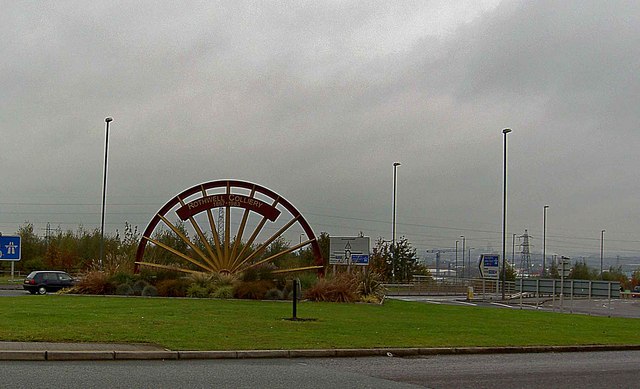
A winding-wheel memorial to the colliery stands on the roundabout at junction 44 of the M1, and the end of the branch railway that served the Fanny Pit survives in the country park.
Redevelopment
Leeds City Council, Groundwork Leeds and local people turned the site into Rothwell Country Park from 1997; it opened on 24 June 2000.
Related mines
- Robin Hood Colliery — Both were J. and J. Charlesworth collieries in the Rothwell district.
Nearby mines
- Water Haigh Colliery — 1.6 miles (2.6 km) SE
- Robin Hood Colliery — 2.2 miles (3.6 km) SW
- Lofthouse Colliery — 3.3 miles (5.3 km) S
- East Ardsley Colliery — 3.5 miles (5.7 km) SW
- Savile Colliery — 3.5 miles (5.7 km) SE
Straight-line distance, within 9 miles (15 km). Show on the map.
Recorded claims
Individual factual claims, each attached to the source(s) that support it below. Where sources disagree, both are kept.
- The Durham Mining Museum lists J. and J. Charlesworth, later J. and J. Charlesworth Ltd, as the owners. 1
- The Charlesworth family sank the Fanny Pit about 1867, naming it for a daughter; a second shaft was sunk in 1921 and deepened in 1924-25. 2
- In 1923 the Beeston pit employed 605 people, the Fanny 670 and the Rose 370. 1
- 160 ponies were kept in underground stables at the Fanny Pit in 1922. 2
- The pit was nationalised in 1947 and an underground locomotive system was introduced to raise coal quickly for the power stations. 2
- The last of the colliery's shafts closed on 9 December 1983 after producing over 75 million tons of coal. 2
- An accident on 19 April 1797 killed thirteen men and boys, among them a father and four sons. 3
- An explosion at the Victoria Pit, first called the Garden Pit, on 24 January 1840 killed seven, two men and five lads. 4
- The Fanny Pit had a No. 2 upcast shaft. 5
- A branch line served the Fanny Pit, and its disused end survives in Rothwell Country Park. 6
- A half winding wheel lettered Rothwell Colliery stands as a memorial on the roundabout at junction 44 of the M1. 7
- Rothwell Country Park opened on the colliery site on 24 June 2000. 2
Photographs & further reading
Owners, output and employment by pit from 1894 to 1923 and a long list of those killed at the colliery.
View sourceLocal history of the site from the Roman enclosure and the Fanny Pit to the 1983 closure and the country park.
View sourceAccount of the 1840 explosion with the names and ages of the seven dead.
View sourceSources
- (primary) Durham Mining Museum - Rothwell Haigh Colliery — Durham Mining Museum
- (secondary) Rothwell Country Park - Rothwell Wiki — Rothwell Wiki
- (secondary) Rothwell Haigh Colliery Accident - Leeds - 1797 (Northern Mine Research Society) — Northern Mine Research Society
- (secondary) Rothewell Haigh Colliery Victoria Pit Explosion - Leeds - 1840 (Northern Mine Research Society) — Northern Mine Research Society
- (observational) Rothwell Colliery (Geograph 1565109) — Geograph
- (observational) Disused rail track in Rothwell Country Park (Geograph 6934013) — Geograph
- (observational) Mining memorial to Rothwell colliery (Geograph 1548432) — Geograph
Record created: 29 September 2026 · Last researched: 29 September 2026