 MineArchive
Water Haigh Colliery
| Location | Woodlesford, West Yorkshire — 53.7530, -1.4370 (approximate) |
|---|---|
| Commodity | Coal |
| Type | Coal |
| Worked | 1908 (sinking)–1970 |
| Maximum depth | Unknown. |
| Operators | Henry Briggs, Son and Company Limited (1908–1947), National Coal Board (1947–1970) |
Overview
A Woodlesford pit sunk by Henry Briggs from 1908 at the cost of six lives in a shaft collapse, worked for sixty years until 1970.
History
Water Haigh Colliery was sunk on the south side of the railway at Woodlesford, near Leeds, a relative latecomer among the pits of the Rothwell district. From 1908 Henry Briggs, Son and Company Ltd sank two deep shafts on land largely owned by the Calverley family of Oulton Hall, driving down towards the Silkstone and Beeston seams; two shallower shafts already on the site, once used by Charlesworth's Newmarket colliery to work the Haigh Moor seam, became disused. In all four pits were in course of sinking to open the new field. The sinking was hard from the start. No. 1 shaft was twenty feet across, and its first ten yards went through ground so treacherous that the sides had to be secured with brickwork and concrete as the work advanced. The strata were sandstones, shales and fireclays, dry as they were cut but later running with water down the shaft sides - a real danger, because the fireclays take up water and grow much heavier. A cast-iron water ring two feet six inches wide was bedded in hard rock at sixty-nine yards, the shaft above it was lined in cemented brickwork, and a concrete block forty feet square was formed around the shaft thirty-one feet from the surface, carried on iron skeleton rings and hangers backed with timber. At that point it was thought the difficult part had been passed. At 109 yards the sinking was stopped, a bricking crib fixed two yards off the bottom and the permanent brickwork begun on it. Thirty-nine yards of shaft were then hanging on the iron rings, and the rings had to come out as the brickwork rose. On the morning of 7 May 1910 seven men, under the chargeman W. Hellewell, were at work on a scaffold bolted to the top of the brickwork - nineteen feet six inches across, of pitch-pine baulks eight inches square and three-inch planking, held by eight wrought-iron bolts of twenty tons' breaking strain apiece and reckoned good for forty tons. By eight o'clock they had taken out a skeleton ring and the last segment was in the bucket when Hellewell saw something that made him uneasy and sent W. Macnamara up for the master sinker. Macnamara was a few yards up the shaft when the side came in. Six men were killed, and another was killed in a second accident in the same shaft six months later. The first Silkstone coal was wound up No. 1 shaft on 20 April 1911, and from then Water Haigh produced millions of tons, working the Silkstone, Beeston, Haigh Moor and Eleven Yard seams. In 1933 a shotfiring explosion in the Top Silkstone seam killed three more men. Owned by Henry Briggs until nationalisation in 1947, the colliery at its peak employed over a thousand men, its coal carried away on the Aire and Calder Navigation, by railway and by lorry. As the Beeston and Eleven Yard seams neared exhaustion the National Coal Board announced closure, and after a brief reprieve won by the miners' union, coal production ended on 24 April 1970.
Geology
Worked the Middle Coal Measures of the Yorkshire coalfield, drawing on the Silkstone, Beeston, Haigh Moor and Eleven Yard seams.
Workings
Four pits were in course of sinking to open the field: two deep shafts of 1908 to the Silkstone and Beeston seams, and two older, shallower shafts of Charlesworth's Newmarket colliery that went out of use. No. 1 shaft was twenty feet in diameter, its first ten yards secured with brickwork and concrete through treacherous ground, with a cast-iron water ring bedded at sixty-nine yards and cemented brickwork above it. Coal was raised in double-decker cages hauled by stationary steam engines, and conveyor faces replaced the tub system after nationalisation.
Closure
The colliery passed to the National Coal Board in 1947. With the Beeston and Eleven Yard seams nearing exhaustion, closure was announced on 5 December 1969; a two-month reprieve won by the National Union of Mineworkers delayed the end, and coal production ceased on 24 April 1970.
What remains
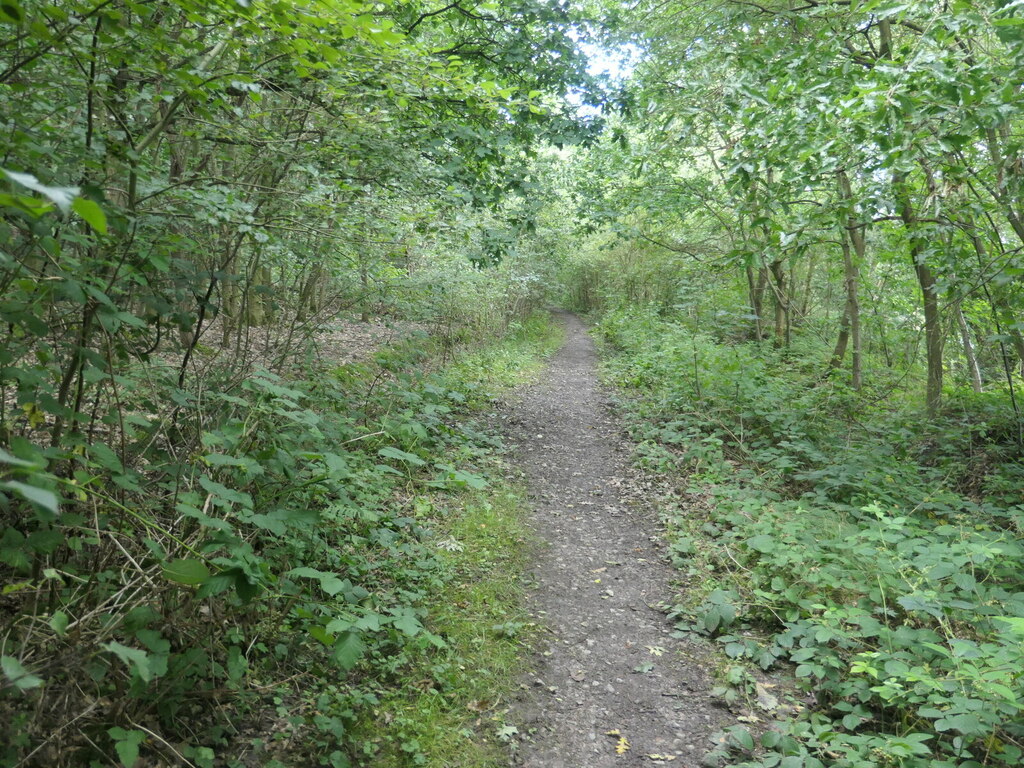
The colliery has been cleared; the site off Fleet Lane is now part of Water Haigh Woodland Park on the River Aire.
A short stretch of roadway with rusting iron fence posts off Fleet Lane is said to be all that survives of the surface buildings.
Redevelopment
The site forms part of Water Haigh Woodland Park, a nature area beside the River Aire.
Related mines
- Whitwood Colliery — Both worked by Henry Briggs, Son and Company Ltd of Whitwood.
Nearby mines
- Savile Colliery — 3.1 km SE
- Allerton Bywater Colliery — 4.1 km E
- Altofts Colliery — 4.7 km SE
- Robin Hood Colliery — 5.0 km W
- Whitwood Colliery — 5.1 km SE
Straight-line distance, within 15 km. Show on the map.
Disasters & major incidents
-
Water Haigh Colliery shaft disaster, 1910
7 May 1910 · Winding / Shaft Accident · 6 fatalities
During the sinking of Water Haigh Colliery at Woodlesford, near Leeds, the sides of No. 1 shaft collapsed on the morning of 7 May 1910, burying and killing six men before the pit had raised any coal. -
Water Haigh Colliery explosion, 1933
27 July 1933 · Explosion · 3 fatalities
On the evening of 27 July 1933 a shot fired in the Top Silkstone seam at Water Haigh Colliery ignited firedamp; three of the six men burned in the explosion died of their injuries.
Recorded claims
Individual factual claims, each attached to the source(s) that support it below. Where sources disagree, both are kept.
- Sinking of two deep shafts began in 1908, on land largely owned by the Calverley family of Oulton Hall, for Henry Briggs, Son and Company Ltd. 1
- The first coal from the Silkstone seam was wound up No. 1 shaft on 20 April 1911. 1
- Worked the Silkstone, Beeston, Haigh Moor and Eleven Yard seams. 1
- Owned by Henry Briggs, Son and Company Ltd until nationalisation in 1947, the colliery produced coal until 24 April 1970. 1
- The workings are recorded in the mine-plans catalogue of the British Geological Survey. 2
- No. 1 shaft was twenty feet in diameter and its first ten yards were sunk through very treacherous ground, the sides secured with brickwork and concrete as the work progressed. A cast-iron water ring two feet six inches wide was embedded in hard rock at sixty-nine yards, with cemented brickwork above it and a concrete block forty feet square formed around the shaft thirty-one feet from the surface on iron skeleton rings and hangers backed with timber. 3
- Sinking was stopped at 109 yards and permanent brickwork begun on a bricking crib, leaving thirty-nine yards of shaft carried on iron skeleton rings that had to be removed as the brickwork rose. On the morning of 7 May 1910 seven men under the chargeman W. Hellewell were working from a bolted scaffold when, the last segment of a ring having just been removed, Hellewell sent W. Macnamara up for the master sinker; the side came in as Macnamara climbed. Six men were killed, and a seventh died in a second accident in the same shaft six months later. 3
Photographs & further reading
Sinking, ownership and closure of the colliery, with a historic photograph.
View sourceDetailed local history of the colliery, its owners, working life, accidents and closure.
View sourceSources
- (secondary) Water Haigh Colliery — Woodlesford Station Local History
- (primary) Water Haigh Colliery abandonment plans (BGS mine-plans catalogue) — British Geological Survey
- (secondary) Water Haigh Colliery Sinking Accident, 1910 — Northern Mine Research Society
- (secondary) Water Haigh Colliery (1908-1970) — Northern Mine Research Society
- (secondary) Water Haigh Colliery: the 1910 Disaster — Woodlesford Station Local History
Record created: 23 September 2026 · Last researched: 23 September 2026