 MineArchive
Altofts Colliery
| Also known as | West Riding Colliery |
|---|---|
| Location | Lower Altofts, near Normanton, beside Altofts railway junction, West Yorkshire — 53.7139, -1.4083 (approximate) |
| Commodity | Coal |
| Type | Coal |
| Worked | 1851–7 October 1966 |
| Maximum depth | The Silkstone seam at about 414-430 yards. |
| Operators | Pope and Pearson (1851–1947), National Coal Board (1947–1966) |
Overview
Pope and Pearson's West Riding Colliery at Altofts, sunk from 1851 beside the railway junction, home of the model village of Silkstone Buildings and of William Garforth's pioneering coal-cutters and rescue work after the 1886 explosion, and worked until 1966.
History
Altofts Colliery, known to its owners as the West Riding Colliery, was a venture of the London coal factors Richard and John Buckingham Pope, who had sold coal from the Cliffe Colliery at Crigglestone since the early 1840s, and their partner George Pearson of Pontefract. A first lease was agreed in 1850, and Richard Pope cut the first sod of a shaft on his twenty-first birthday in February 1851; the pit was named California and sunk beside Altofts railway junction. In 1858 the partners took up a patent coal-washing machine, and in 1863 they leased the Silkstone seam, 4 feet 7 inches thick at about 414 yards, sinking to it in 1864-65 and building a model colliery village, Silkstone Buildings, with its own co-operative society from about 1866. William Garforth, appointed manager in the 1860s, introduced undercutting machines in the Haigh Moor seam and about 1892 brought his own Diamond deep undercutter into regular use. On 2 October 1886, after the day shift had left, an explosion in the Silkstone seam killed 20 of the 28 men below ground outright, two more dying later; it originated in the West Chain road, near where men were blasting stone with gunpowder at the end of Roper's Drift (see Disasters, below). Recovering the dead took until mid-October. By 1905 the West Riding pits worked the Diamond, Flockton, Haigh Moor and Silkstone seams, and 1,574 worked there in 1933. Nationalised in 1947, when it raised 322,000 tons, the colliery worked the Altofts, Flockton, Haigh Moor and Warren House seams in 1954; its last coal was drawn from the Fox Pit drift on 7 October 1966.
Geology
The Silkstone (4 feet 7 inches, at about 414 yards), Haigh Moor, Diamond, Flockton, Black Bed, Stanley Main, Altofts and Warren House seams of the Yorkshire coalfield.
Workings
Shafts sunk from 1851 beside Altofts junction, deepened to the Silkstone in 1864-65, with a drift (Fox Pit) that drew the last coal in 1966; worked longwall, with early machine undercutting and a coal-washing plant from 1858. The pits were furnace-ventilated in 1886.
Closure
Coal drawing from the shafts had ended before the last coal came out of the Fox Pit drift on 7 October 1966.
What remains
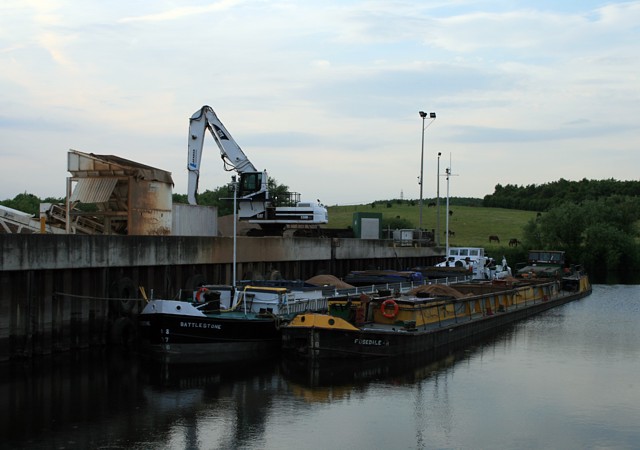
The pits have gone. Fairies Hill Wharf, built to load coal from the Whitwood and Altofts collieries, fell out of use when they closed in the late 1960s and was photographed in use by barges in 2008.
The colliery village at Lower Altofts, Silkstone Buildings, built for Pope and Pearson's workforce from the mid-1860s, still survived in 1977.
Nearby mines
- Whitwood Colliery — 1.6 km E
- Wheldale Colliery — 4.0 km E
- Ackton Hall Colliery — 4.3 km SE
- Snydale Colliery — 4.5 km S
- Allerton Bywater Colliery — 4.9 km NE
Straight-line distance, within 15 km. Show on the map.
People
- William Garforth · agent, from 1886 — Agent at Altofts at the 1886 explosion.
- Richard Pope · partner, from 1851 — Cut the first sod of the colliery's first shaft on his twenty-first birthday in February 1851.
Recorded claims
Individual factual claims, each attached to the source(s) that support it below. Where sources disagree, both are kept.
- The lease was agreed in 1850 and Richard Pope cut the first sod of a shaft in February 1851; the pit was named California and sunk beside Altofts railway junction. 1
- Pope and Pearson leased the Silkstone seam (4 ft 7 in, about 414 yards) in 1863, sank to it in 1864-65 and built Silkstone Buildings, with a co-operative society from about 1866. 1
- On 2 October 1886 an explosion in the Silkstone seam killed 20 of 28 men below ground, two more dying later; it originated in the West Chain road, while men at the end of Roper's Drift were blasting stone with gunpowder. 2,3
- William Garforth, manager and later agent, introduced machine undercutting in the Haigh Moor seam and brought his own Diamond deep undercutter into regular use about 1892. 2,1
- The West Riding pits employed 1,574 in 1933 and 1,224 in 1947, when they raised 322,000 tons. 4
- The last coal was drawn from the Fox Pit drift on 7 October 1966. 1
- Fairies Hill Wharf was built to load coal from the Whitwood and Altofts collieries and fell into disuse when they closed in the late 1960s. 5
- The national catalogue holds plans filed as 'West Riding (Altofts)', including the Black Bed seam abandoned in 1953. 6
Photographs & further reading
A family history of the Pope and Pearson collieries and village at Altofts, from notes by Owen Pope.
View sourceThe inspector's report on the 1886 explosion in the Silkstone seam.
View sourceSources
- (secondary) History of coal in the West Riding of Yorkshire: Altofts (Pope and Pearson) — pratclif.com (after notes by Owen Pope)
- (secondary) Altofts Colliery Explosion – Normanton – 1886 — Northern Mine Research Society
- (secondary) Report, Altofts Colliery Explosion, 1886 (pitwork pages) — Durham Mining Museum
- (secondary) West Riding and Silkstone Collieries (Durham Mining Museum) — Durham Mining Museum
- (observational) Fairies Hill Wharf (Geograph photo 867646, 2008) — Geograph Britain and Ireland
- (primary) BGS / Mining Remediation Authority mine plans catalogue: West Riding (Altofts) — British Geological Survey
Record created: 17 September 2026 · Last researched: 17 September 2026