 MineArchive
Prestongrange Colliery
| Also known as | Prestongrange Museum, Prestongrange Industrial Heritage Museum, Morrison's Haven |
|---|---|
| Location | Between Musselburgh and Prestonpans, East Lothian — 55.9531, -3.0049 (approximate) |
| Commodities | Coal, Fireclay |
| Type | Coal |
| Worked | 12th century–1962 |
| Maximum depth | The 1830 shaft was the deepest in Scotland when it was sunk |
| Operators | Newbattle Abbey (1100–1500), Prestongrange Coal and Iron Company (1874–1947), National Coal Board (1947–1962) |
Overview
The first colliery anywhere in Scotland to appear in writing — monks of Newbattle Abbey were working coal here in the 1100s — and, eight centuries later, the site of the only Cornish beam engine in the country, bought second-hand from Cornwall to keep the pit dry.
History
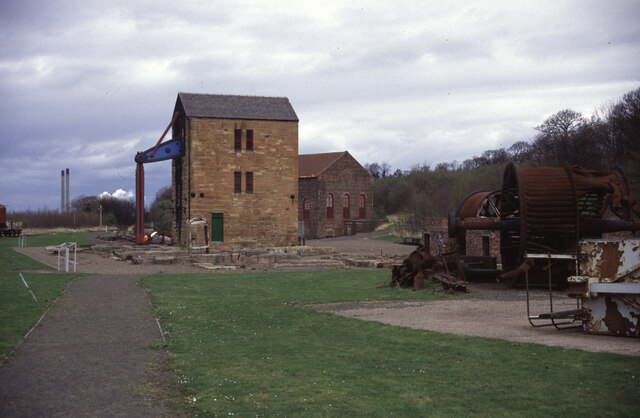
Monks from Newbattle Abbey mined coal at Prestongrange in the 12th century, and the first written account of a colliery in Scotland refers to this ground. Industry accumulated on the same shore for the next eight hundred years: a 16th-century harbour at Morrison's Haven, a 17th-century glass works, potteries in the 18th and 19th centuries, and finally a colliery and brickworks. The modern pit began in 1830 when the engineer Matthias Dunn sank the first shaft, at the time the deepest in Scotland. In 1874 the Prestongrange Coal and Iron Company bought a second-hand Cornish beam engine — built by J. E. Mare and Company of Plymouth and already worked out in Cornwall — and Harvey and Company of Hayle supplied it with a new beam and shipped it north to pump the pit out. A brickworks used the fireclay from beneath the coal, and a Hoffmann continuous kiln was built in 1937. The colliery closed in 1962, after roughly 130 years of the modern working.
Geology
The pit worked the Carboniferous coals of the East Lothian coast, in a coalfield that runs out under the Firth of Forth. As at most Scottish collieries the seams were underlain by fireclay — the fossil soil the coal forest grew in — which is why brickmaking and coal mining sat side by side here rather than being separate industries.
Geological setting: Sedimentary Beds and Seams (well documented example)
Workings
The 1830 shaft was the deepest in Scotland when sunk. Pumping was the site's defining engineering problem and the reason for its most famous survival: the Cornish beam engine lifted water in three stages at 2,955 litres a minute, and ran until 1954, when electric pumps replaced it — eight years before the colliery itself closed.
Closure
Prestongrange stopped winding in 1962. Some accounts give 1963.
What remains
Preserved and open to the public. The beam engine stands in its house, the only Cornish engine in Scotland, and the site is an open-air industrial heritage museum with free entry.
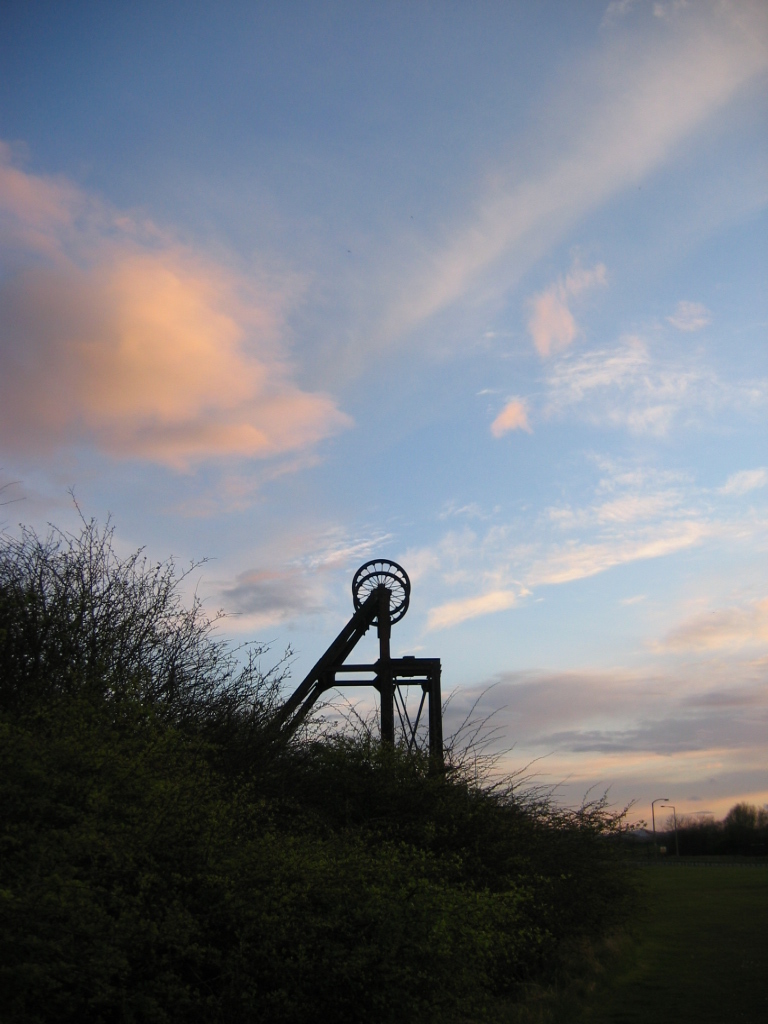
Exceptional for a Scottish colliery: the beam engine and its engine house, winding gear, the remains of the 1937 Hoffmann kiln (listed Category B), and traces of the harbour, glass works and potteries that preceded the pit.
Redevelopment
The site opened as a museum on 28 September 1984 — originally the Scottish Mining Museum, before the main museum moved to Lady Victoria Colliery in Midlothian. It was renamed Prestongrange Industrial Heritage Museum in 1992 and is run by East Lothian Council.
Related mines
- Prestonlinks Colliery — The two large mines at Prestonpans, Prestongrange to the west of the town and Prestonlinks to the east; Prestonlinks outlasted it to become the last underground pit working in East Lothian.
- Wallyford Colliery — Both Edinburgh Collieries Company pits, and both had brickworks on the colliery site.
Nearby mines
- Wallyford Colliery — 1.1 miles (1.7 km) S
- Prestonlinks Colliery — 1.5 miles (2.4 km) NE
- Meadowmill Mine — 1.7 miles (2.8 km) E
- Bankton Colliery — 2.1 miles (3.3 km) E
- Carberry Colliery — 2.4 miles (3.9 km) S
Straight-line distance, within 9 miles (15 km). Show on the map.
Recorded claims
Individual factual claims, each attached to the source(s) that support it below. Where sources disagree, both are kept.
- Monks from Newbattle Abbey mined coal at Prestongrange in the 12th century, in what is the first written account of a colliery in Scotland. 1,2
- The site also carried a 16th-century harbour, a 17th-century glass works, 18th and 19th-century potteries and a 19th and 20th-century colliery and brickworks. 1
- The final colliery's first shaft was sunk in 1830 by the engineer Matthias Dunn and was the deepest in Scotland at the time. 1
- The Cornish beam engine was built by J. E. Mare and Company of Plymouth and first used in Cornwall; the Prestongrange Coal and Iron Company acquired it in 1874, Harvey and Company of Hayle supplying a replacement beam and shipping it north. 1
- The engine pumped 2,955 litres a minute in three stages and ran until 1954, when electric pumps replaced it. It is the only Cornish beam engine in Scotland. 1,2
- A Hoffmann continuous brick kiln was built on the site in 1937 and is listed Category B. 1,2
- The colliery closed in 1962, after around 130 years of the modern working. 1
- The site opened as a museum on 28 September 1984 — originally the Scottish Mining Museum, before the main museum moved to Lady Victoria Colliery — and was renamed Prestongrange Industrial Heritage Museum in 1992 under East Lothian Council. 1
Photographs & further reading
The local museum service's account of the site's layered industrial history.
View sourceOpening times and visitor information for the site, which is free to enter.
View sourceSources
- (secondary) Prestongrange Museum — Wikipedia
- (secondary) Prestongrange Museum — Show Mines of Great Britain
- (observational) Prestongrange Colliery — AditNow
- (primary) Mine plans S2564, S2473, S2565, S3151 and others: Prestongrange — British Geological Survey / Mining Remediation Authority mine plans catalogue
Record created: 24 August 2026 · Last researched: 24 August 2026