 MineArchive
Plas Power Colliery
| Location | Glan yr Afon, Southsea, west of Wrexham — 53.0597, -3.0474 (exact) |
|---|---|
| Commodity | Coal |
| Type | Coal |
| Worked | 1875 (coal from 1877)–1938 |
| Maximum depth | Unknown. |
| Operators | Broughton and Plas Power Coal Company (1875–1938) |
Overview
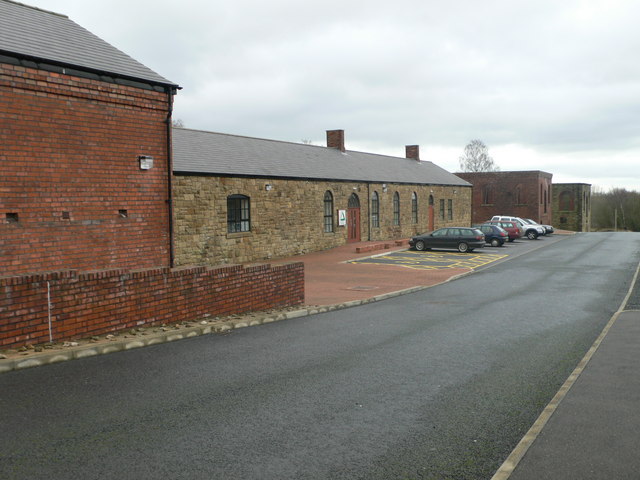
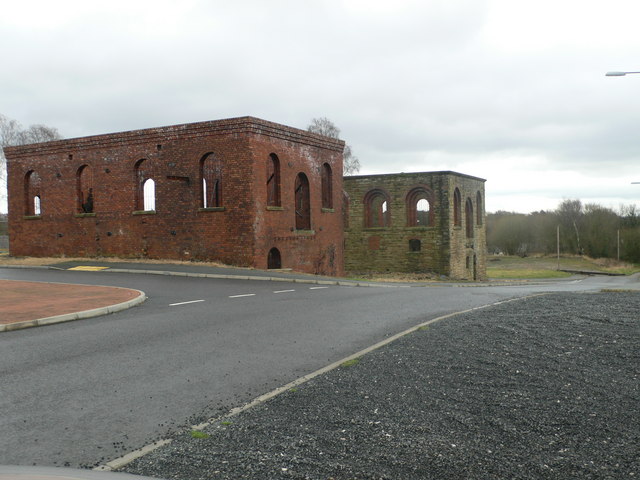
One of the larger north Wales collieries, sunk at Glan yr Afon west of Wrexham from 1875 and producing from 1877 until it closed in 1938. It was a modern pit for its day: its owners were pioneers of electricity underground, and the generating station they built here powered their collieries at Gatewen and Fron as well as this one. Its two ruined winding houses, power house, heapstead and workshops still stand on an industrial estate at Southsea.
History
The Old Broughton Coal Company began sinking at Glan yr Afon in 1875 and the pit was producing two years later. By 1880 the owners were the Plas Power Coal Company, and in 1881 the concern was renamed the Broughton and Plas Power Coal Company under Henry Robertson and W. H. and C. E. Derby, working Gatewen alongside Plas Power. In 1885 the colliery was the scene of rioting when local miners, resentful of Irish migrant workers, drove them from the pit. The Inspector of Mines list for 1896 records 734 men underground and 138 on the surface with William Jones as manager; by 1908 there were 932 below and 189 above under G. J. Findlay, who had managed both the company's pits since the 1890s. Employment reached 1,057 in 1918 and the company is credited with 1,099 men at its peak, raising over 2,000 tons a week of Welsh steam coal. Its 1923 return gives 975 underground and 182 on the surface, producing gas, house and steam coal from the Brassey, Crank, Powell and Drowsall seams.
What distinguished the colliery was electricity. The company was a pioneer of electric power underground, and rather than give each pit its own plant it built a central generating station at Plas Power to supply Gatewen and Fron as well. Such stations were an intermediate step, soon overtaken as commercial power stations spread, and the surviving power house at Plas Power is a tall single-storey building of red brick with a slate roof, round-headed windows, a large circular opening over the north doorway that carried the power cables out, and brackets on its walls where the insulators were fixed. The company expanded in 1912, taking over Gatewen, Bersham and Smelt collieries. Deaths at the pit were the ordinary ones of a north Wales colliery, among them the night manager Mesbach Roberts, killed in June 1900 while testing the roof with his stick on his rounds, and three men buried by a fall of some 230 tons on a Saturday repairing shift in January 1931 (see Disasters, below). By the late 1930s the coal was harder and dearer to win, and the colliery closed in 1938 with 462 men underground and 188 on the surface under the manager A. McNeish; some 620 men were laid off.
Geology
The colliery worked the Denbighshire coalfield west of Wrexham, taking gas, house and steam coal from the Brassey, Crank, Powell and Drowsall seams according to its 1923 return. The 1931 fall happened in ground described at the inquiry as extremely wet, with metal sheets set overhead to keep the water off the men.
Geological setting: Sedimentary Beds and Seams (well documented example)
Workings
Two winding shafts with their engine houses, a heapstead and workshops, and the central power house that generated for this pit and for Gatewen and Fron. Electricity was used underground at a date when that was still unusual. Repairing shifts set girders in wet ground under sheet-metal cover, and the pit worked with firemen, byemen and timbermen in the usual north Wales pattern.
Closure
Closed in 1938, the coal having become more difficult and expensive to work; about 620 men were laid off. At the end the pit employed 462 underground and 188 on the surface under the manager A. McNeish. Coflein's record of the power house gives the closure as 1838, which is plainly a slip for 1938; its record of the colliery itself gives 1938.
What remains
Part derelict and part in industrial use. Coflein records two ruined winding houses, a power house, a heapstead and workshops, with ancillary buildings and a large tip; a photographer in January 2008 found the colliery site turned into a small industrial estate between Southsea and Tanyfron, with old colliery buildings standing among the modern units and a climbing centre on part of the ground. The spoil bing is still a landmark.
Substantial: two ruined winding houses, the power house, heapstead, workshops, ancillary buildings and a large tip.
Redevelopment
A small industrial estate and a climbing and adventure centre on the colliery site.
Related mines
- Bersham Colliery — Bersham was taken over by the Broughton and Plas Power Coal Company in 1912, joining Plas Power and Gatewen under the same owners.
- Gatewen Colliery — Gatewen and Plaspower were the two collieries of the Broughton and Plaspower Coal Company, returned together in its Colliery Year Book entries from 1894 under the same manager.
- Vron Colliery — Both came under the Broughton and Plaspower Coal Company, which took charge of Vron before 1908 and returned the two together in its Colliery Year Book entries.
Nearby mines
- Broughton Colliery — 0.3 miles (0.5 km) NE
- Brymbo Colliery — 0.7 miles (1.2 km) NW
- Brynmally Colliery — 0.8 miles (1.2 km) E
- Talwrn Colliery — 0.7 miles (1.2 km) W
- Gatewen Colliery — 0.9 miles (1.4 km) E
Straight-line distance, within 9 miles (15 km). Show on the map.
Disasters & major incidents
-
Plas Power Colliery Roof Fall, 1931
24 January 1931 · Collapse / Roof Fall · 3 fatalities
Three men on a Saturday afternoon repairing shift at Plas Power Colliery were buried instantly by a fall of roof estimated at 230 tons as they prepared to set a girder in extremely wet ground; it took a rescue party, one of them the father of a dead man, about twelve hours to reach the bodies.
Recorded claims
Individual factual claims, each attached to the source(s) that support it below. Where sources disagree, both are kept.
- The colliery was opened by the Old Broughton Coal Company in 1875/77; the first shaft was sunk in 1875 and coal was produced two years later. 1,2
- By 1880 the owners were the Plas Power Coal Co., and in 1881 the company was named the Broughton and Plas Power Coal Co.; in 1912 it took over Gatewen, Bersham and Smelt collieries. 1,2
- The company was a pioneer in the use of electricity underground, and the generating station at Plas Power was built to supply its other collieries at Gatewen and Fron as well as Plas Power itself. 1,3
- The pit employed 734 underground and 138 on the surface in 1896, 932 and 189 in 1908, 1,057 in all in 1918, and 975 and 182 in 1923; the company's peak is given as 1,099 men producing over 2,000 tons a week. 1,2
- The 1923 return records gas, house and steam coal produced from the Brassey, Crank, Powell and Drowsall seams under the manager Noel E. Webster. 1
- The colliery was the scene of rioting in 1885 when local miners, unhappy with Irish migrant workers, forced them to leave. 1
- The colliery closed in 1938, the coal having become harder and more expensive to work; 462 men were underground and 188 on the surface at the end, and about 620 were laid off. 1,4,2
- Two ruined winding houses, a power house, heapstead and workshops survive, with ancillary buildings and a large tip; the site is part derelict and part in industrial use. 4,5,6
- The power house is a tall single-storey red brick building with a semi-basement, a slate roof and round-headed windows, with a large circular opening above the north doorway that carried the power cables and metal brackets on the walls for insulators. 3
- The BGS mine-plans catalogue holds a Mining Remediation Authority abandonment plan titled 'Plas Power' (catalogue 12014, Key Plan, dated 1937). 7
Photographs & further reading
A working history of the pit assembled from Inspector of Mines lists, with managers and manpower by year and full accounts of its fatal accidents.
View sourceThe Royal Commission's architectural description of the surviving generating station that powered three collieries.
View sourceSources
- (secondary) Plas Power Colliery (Welsh Coal Mines) — Welsh Coal Mines
- (secondary) Broughton and Plas Power Coal Co (Grace's Guide) — Grace's Guide
- (primary) Coflein NPRN 85031: Plas Power Colliery power house — Royal Commission on the Ancient and Historical Monuments of Wales
- (primary) Coflein NPRN 85027: Plas Power Colliery, Southsea, Wrexham — Royal Commission on the Ancient and Historical Monuments of Wales
- (observational) Plas Power: the colliery site as an industrial estate (Geograph photograph, 19 January 2008) — Geograph / Eirian Evans
- (observational) Old industrial buildings, Plas Power (Geograph photograph, 19 January 2008) — Geograph / Eirian Evans
- (primary) BGS / Mining Remediation Authority mine plans: PLAS POWER — British Geological Survey / Mining Remediation Authority
Record created: 9 September 2026 · Last researched: 9 September 2026