 MineArchive
Bersham Colliery
| Location | Rhostyllen, Wrexham — 53.0266, -3.0235 (exact) |
|---|---|
| Commodity | Coal |
| Type | Coal |
| Worked | 1864 (sinking, as Glan-yr-afon)–1986 |
| Maximum depth | 1,269 feet (387m) |
| Operators | Bersham Coal Company (1864–1871) |
Overview
A North Wales colliery that survived two fatal 19th- and early 20th-century explosions to become, alongside Point of Ayr, one of the region's last two working pits.
History
The Bersham Coal Company sank a colliery called Glan-yr-afon on this site in 1864, but it lay idle for six years before Messrs Barnes and Company reopened it in 1871, deepening the shafts to reach the Main Coal seams; production of that seam began in 1874. On 5 September 1880, a major underground explosion killed nine men, including colliery manager William Patterson. A second explosion, on 3 August 1909, was caused when a shot fired at the far end of the No.2 West Level ignited a pocket of firedamp; it killed eight men — firemen Joseph Matthias, Edward Owen, John Jones and James Roberts, colliers Thomas Evans and Evan Parry, hacker Robert Lloyd, and Henry Valentine, who was brought out alive but died a few days later. A new headgear was installed at No.2 Shaft in 1930 after fire destroyed the original timber structure. At its peak the wider Wrexham coalfield, of which Bersham was part, supported 38 separate collieries producing over 2.5 million tonnes of coal a year for local brickworks and steelworks including Brymbo and Shotton. Following the 1974 miners' strike, Bersham became one of only two remaining North Wales collieries, alongside Point of Ayr, and it finally closed in December 1986 with the loss of 480 jobs.
Geology
Bersham worked coal seams of the Denbighshire (Wrexham) coalfield, reaching the Main Coal seam at depth from 1874.
Workings
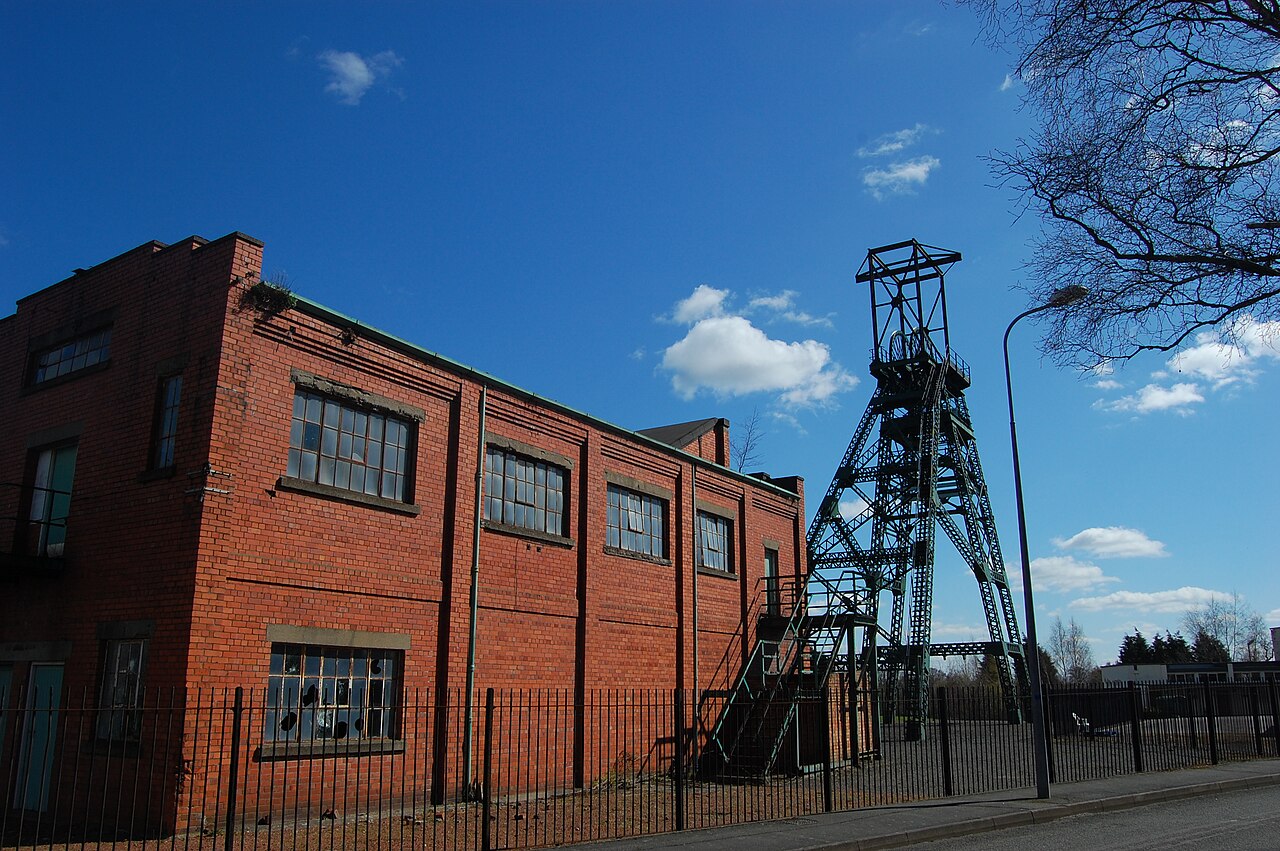
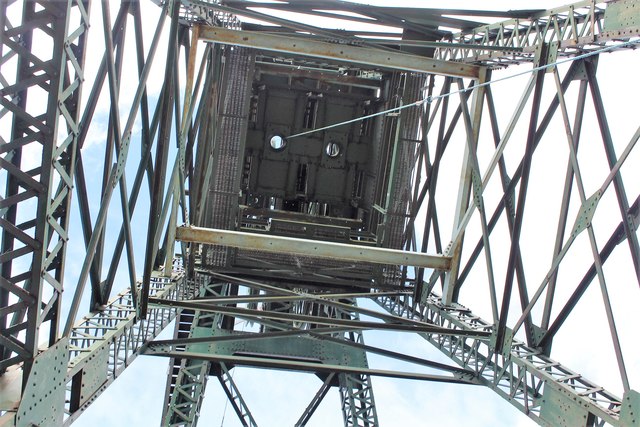
Coal was raised via No.2 Shaft, reaching 1,269 feet (387m) deep, served from 1930 by a replacement steel headgear installed after fire destroyed the original timber structure.
Closure
Bersham closed in December 1986 with the loss of 480 jobs, having become, alongside Point of Ayr, one of only two working collieries left in North Wales after 1974.
What remains
The No.2 headgear, with its wheel, and the winding engine house survive and are preserved by volunteers from the North Wales Miners Association Trust.
The No.2 shaft headgear and its winding engine house, both preserved as a visitor attraction.
Related mines
- Gatewen Colliery — When fire destroyed Bersham's wooden headgear in 1933, the headgear from Gatewen — closed the year before — was taken there and used.
- Plas Power Colliery — Bersham was taken over by the Broughton and Plas Power Coal Company in 1912, joining Plas Power and Gatewen under the same owners.
- Point of Ayr Colliery — The last two working collieries in north Wales, closing within a few years of each other.
Nearby mines
- Hafod Colliery — 1.0 miles (1.6 km) S
- Vauxhall Colliery — 1.8 miles (2.9 km) S
- Brynmally Colliery — 2.0 miles (3.3 km) N
- Gatewen Colliery — 2.2 miles (3.6 km) N
- Broughton Colliery — 2.5 miles (4.0 km) N
Straight-line distance, within 9 miles (15 km). Show on the map.
Disasters & major incidents
-
Bersham Colliery explosion
3 August 1880 · Explosion · 9 fatalities
A shot fired into the coal at the far end of No. 2 West Level on the evening of 3 August 1880 ignited a blower. The colliers tried to brush it out with brattice cloth, failed, and went up for the manager. He came down with eight others to seal the district off, and partly opened an air door to clear the smoke. That cut the ventilation to the North Level, gas built up quickly and reached the flames. Nine of the nine men who had gone down died. -
Bersham Colliery explosion, 1909
3 August 1909 · Explosion · 8 fatalities
A shot fired at the far end of the No.2 West Level ignited a pocket of firedamp at Bersham Colliery on 3 August 1909, killing eight men.
Recorded claims
Individual factual claims, each attached to the source(s) that support it below. Where sources disagree, both are kept.
- The Bersham Coal Company sank Glan-yr-afon colliery here in 1864; it lay idle for six years before Barnes and Company reopened and deepened it from 1871, reaching the Main Coal seam by 1874. 1,2
- An underground explosion on 5 September 1880 killed nine men, including colliery manager William Patterson. 3
- A new steel headgear was installed at No.2 Shaft in 1930 after fire destroyed the original timber-built structure. 1
- Bersham became one of only two remaining North Wales collieries, alongside Point of Ayr, after the 1974 miners' strike, before closing in December 1986 with the loss of 480 jobs. 1,2
- The BGS mine-plans catalogue holds a Mining Remediation Authority abandonment plan titled 'Bersham' (catalogue NW776, Cefn, dated 1987). 4
- Located at about 53.027 N, 3.024 W. 1
Photographs & further reading
The sinking as Glan-yr-afon in 1864, the deepening by Barnes and Company, the shaft diameters and depths, and the 1880 explosion with the names, ages and families of the nine men killed.
View sourceThe Northern Mine Research Society's account, with the ventilation figures for the day, the sequence from the shot that lit the blower to the blast, and the inquest evidence of the colliers, the consulting engineer and the assistant inspector. Reached through the Internet Archive because the society's live site redirects deep links to its home page.
View sourceThe colliery from the 1864 sinking to the 1986 closure, with the workforce figures and the growth of Rhostyllen, Rhosllannerchrugog and Johnstown around it.
View sourceSources
- (secondary) Bersham Colliery — Wikipedia
- (secondary) Bersham Colliery Rhostyllan — Welsh Coal Mines
- (secondary) Bersham Colliery Explosion - Wrexham - 1880 — Northern Mine Research Society
- (primary) BGS / Mining Remediation Authority mine plans: BERSHAM — British Geological Survey / Mining Remediation Authority
- (observational) The headgear at Bersham Colliery from below (Geograph 5927138) — Geograph Britain and Ireland, Richard Hoare
- (secondary) Bersham Colliery Explosion, Wrexham, 1880 — Northern Mine Research Society, via the Internet Archive
Record created: 21 August 2026 · Last researched: 11 September 2026