 MineArchive
Hafod Colliery
| Also known as | Hafod-y-bwch Colliery, Ruabon New Colliery, Hafod-y-Bwch Colliery |
|---|---|
| Location | Esclusham, near Ruabon, Wrexham — 53.0119, -3.0272 (exact) |
| Commodity | Coal |
| Type | Coal |
| Worked | 1863–1968 |
| Maximum depth | Unknown. |
| Operators | Ruabon Coal Company (1863–?), Ruabon Coal & Coke Co. Ltd (1905–1946), National Coal Board (1947–1967) |
Overview
A long-lived Denbighshire coalfield colliery near Ruabon, sunk in 1863 as the Ruabon New Colliery and also recorded as Hafod-y-bwch, struck by a fatal explosion in 1873 and worked until 1968.
History
Hafod Colliery was sunk in 1863 on ground at Esclusham near Ruabon, initially known as the Ruabon New Colliery to distinguish it from an earlier Ruabon Colliery, and also recorded under the name Hafod-y-bwch, the property of the Ruabon Coal Company. On 11 December 1873, an explosion killed five men: Timothy Prichard, 34, a dataller; David Williams, 37, the master dataller; Thomas Davis, 26, and William Wynne, 25, both colliers; and Anthony Boyer, 18, a filler. The colliery worked with locked safety lamps specifically because of its known gas risk, but the inquiry found that David Williams, the man in charge, had improperly opened his own lamp to inspect a newly built door intended to divert airflow and disperse accumulated gas -- the resulting exposed flame is what ignited the explosion. Ownership later passed to the Ruabon Coal & Coke Co. Ltd, which held the colliery from 1905 to 1915 and again from 1920 to 1946, and to the National Coal Board from 1947. Between 1966 and 1968, colliery management, the NUM and the officials' union NACODS, together with the local community, campaigned to save Hafod even after a new seam had been successfully developed, but area management announced its closure regardless, and the colliery closed in 1968. The site is now Bonc yr Hafod Country Park.
Geology
Coal of the Denbighshire field near Ruabon; the seams worked are not recorded.
Workings
Worked with locked safety lamps because of a known risk of gas.
Closure
Closure came in 1968 despite a campaign by management, unions and the local community to save the colliery, which had included the successful development of a new seam.
What remains
The former colliery site is now Bonc yr Hafod Country Park.
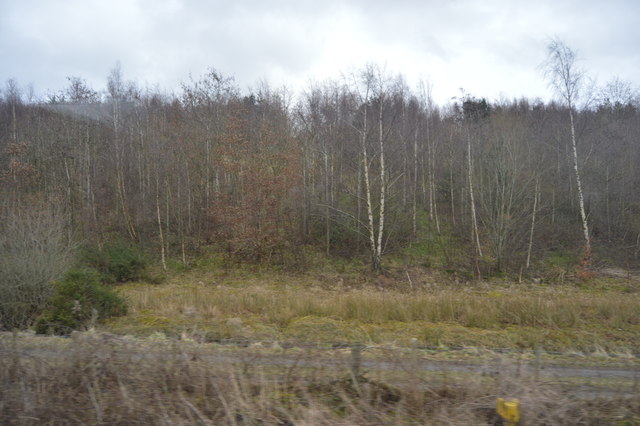
The former spoil tip, locally known as 'Picnic Mountain' (Mynydd Picnic) and rising about 150 metres, was landscaped in the mid-1990s with some 80,000 trees planted; it now forms the wooded, 90-acre Bonc yr Hafod Country Park, part of the Johnstown Special Area of Conservation for its great crested newt population, and includes memorial sculptures to the colliery's workforce.
Related mines
- Vauxhall Colliery — Two of the ring of Ruabon collieries worked in the same decades; Hafod, sunk in 1863 as the New Ruabon Colliery, outlasted Vauxhall by forty years.
Nearby mines
- Vauxhall Colliery — 0.8 miles (1.3 km) SW
- Bersham Colliery — 1.0 miles (1.6 km) N
- Wynnstay Colliery — 2.3 miles (3.8 km) SW
- Brynmally Colliery — 3.0 miles (4.9 km) N
- Gatewen Colliery — 3.3 miles (5.2 km) N
Straight-line distance, within 9 miles (15 km). Show on the map.
Disasters & major incidents
-
Hafod Colliery Explosion (1873)
11 December 1873 · Explosion · 5 fatalities
The colliery's own master dataller improperly opened his safety lamp to inspect a ventilation door, igniting an explosion that killed five men.
Recorded claims
Individual factual claims, each attached to the source(s) that support it below. Where sources disagree, both are kept.
- Hafod Colliery was sunk in 1863 as the Ruabon New Colliery, also recorded as Hafod-y-bwch, the property of the Ruabon Coal Company; ownership later passed to the Ruabon Coal & Coke Co. Ltd (1905-15, 1920-46) and the National Coal Board from 1947. 1
- On 11 December 1873, an explosion killed five men -- Timothy Prichard, David Williams, Thomas Davis, William Wynne and Anthony Boyer -- after the master dataller, David Williams, improperly opened his own safety lamp to inspect a newly built ventilation door, despite the colliery otherwise working with locked lamps because of a known gas risk. 2
- Despite a 1966-68 campaign by management, unions and the local community, and the successful development of a new seam, the colliery closed in 1968; the site is now Bonc yr Hafod Country Park. 1
- The colliery's spoil tip was landscaped in the mid-1990s and replanted with about 80,000 trees, becoming the 90-acre Bonc yr Hafod Country Park. 3
Photographs & further reading
The country park's own history: the landscaping of the former spoil tip and its present-day wildlife and recreational use.
View sourceSources
- (secondary) Denbighshire Collieries — Clwyd Family History Society
- (secondary) Hafod-y-bwch Colliery Explosion - Ruabon - 1873 — Northern Mine Research Society
- (secondary) Bonc yr Hafod — Wikipedia
Record created: 31 August 2026 · Last researched: 31 August 2026