 MineArchive
Pennyvenie Colliery
| Also known as | Pennyvenie Nos. 2, 3 and 7 |
|---|---|
| Location | Pennyvenie, near Dalmellington, Doon Valley, East Ayrshire — 55.3325, -4.3740 (approximate) |
| Commodity | Coal |
| Type | Coal |
| Worked | From 1872–1978 |
| Maximum depth | No. 2 shaft 88 fathoms (about 528 ft); No. 3 shaft 39 fathoms (about 234 ft) |
| Operators | Dalmellington Iron Company (1872–1931), Bairds & Dalmellington Ltd (1931–1947), National Coal Board (1947–1978) |
Overview
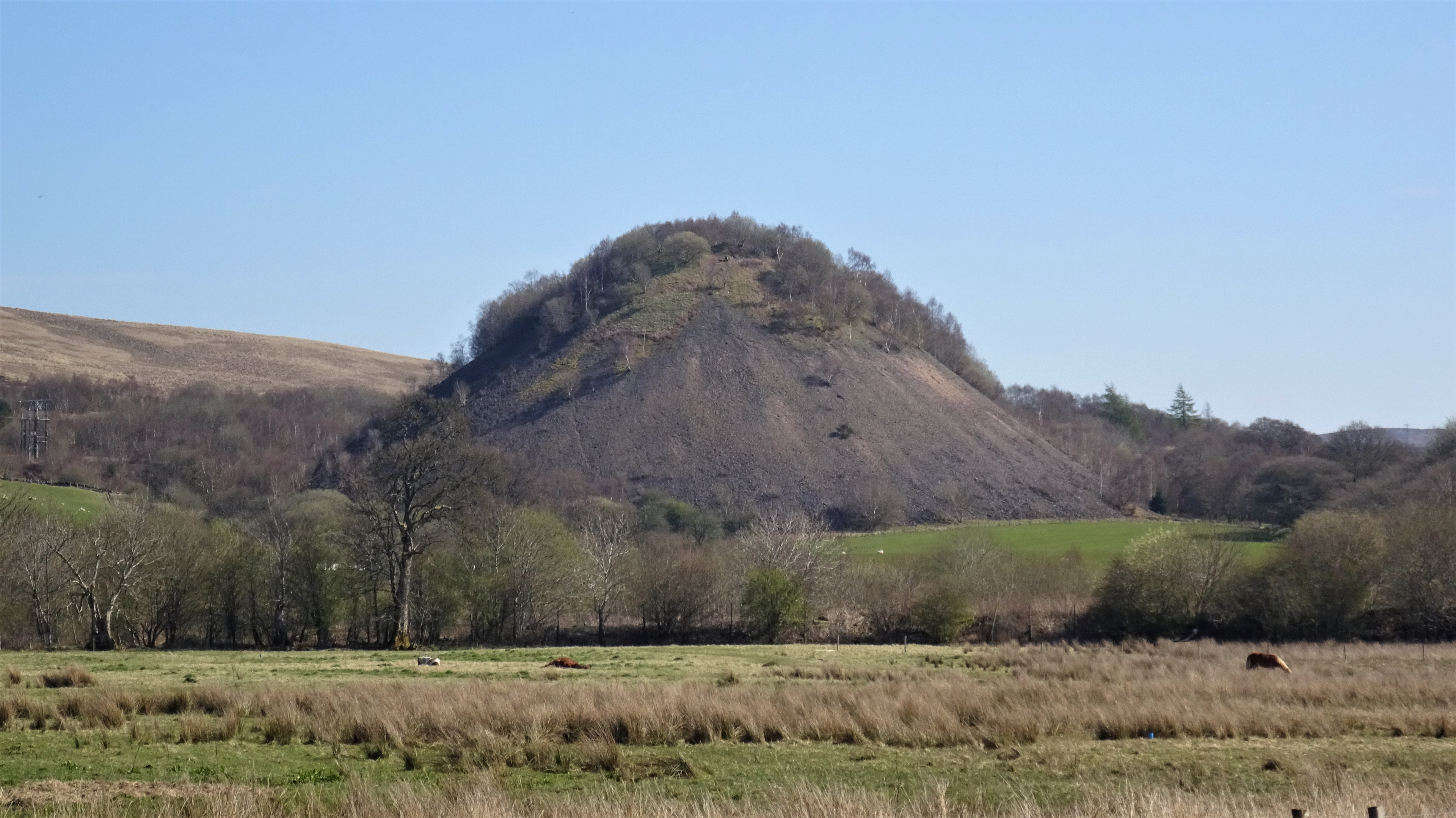
The last deep pit working in the Doon Valley, and the end of an industry that had defined it for a century: when Pennyvenie shut in 1978 after ninety-seven years, deep coal mining in this corner of Ayrshire stopped with it. The bing above Dalmellington is still the most conspicuous thing on the hillside.
History
Coal was raised at Pennyvenie from 1872 by the Dalmellington Iron Company, which had been founded in 1847 to work the local blackband ironstone and needed coal for its furnaces at Waterside. The pit grew by numbered shafts rather than all at once: Nos. 2 and 3 were opened in 1881, No. 6 came and went between 1926 and 1937, and No. 7 was sunk in the mid-1940s. The company was merged into Bairds & Dalmellington Ltd in 1931, and the colliery passed to the National Coal Board on nationalisation in 1947. Under the NCB it worked house, gas, manufacturing and steam coal, employing an average of 581 men and a peak of 725 in 1961 — the same year No. 3 shaft closed. No. 7 kept going until 1978, by which time Pennyvenie was the only pit still working in the Dalmellington area. Its closure, after ninety-seven years of production, ended deep coal mining in the Doon Valley.
Geology
Pennyvenie worked the Ayrshire Coal Measures on the eastern side of the Doon Valley, the same sequence that had brought the Dalmellington Iron Company here in the first place for its blackband ironstone. The coals were versatile rather than specialised, sold as house, gas, manufacturing and steam coal from the same colliery. Enough remained in the shallower ground after 1978 to make opencast working of the Pennyvenie ground worthwhile in later decades.
Geological setting: Sedimentary Beds and Seams (well documented example)
Workings
The colliery was a group of numbered shafts rather than a single pit. No. 2, opened in 1881, was 88 fathoms deep; No. 3, opened the same year, 39 fathoms, and closed in 1961. No. 6 operated between 1926 and 1937 and its exact site is no longer recorded. No. 7, opened in the mid-1940s, was the last to work and closed with the colliery in 1978. Coal was won by longwall advancing, and the pits were served by the Dalmellington Iron Company's own railway system, which ran down the valley past Minnivey and Waterside.
Closure
Pennyvenie closed in 1978 after ninety-seven years — the last working deep mine in the Dalmellington area, and the end of deep coal mining in the Doon Valley. The Mining Remediation Authority's plan for the site records the spoil tip as abandoned in 1979.
What remains
The pit bing above Dalmellington remains the most visible feature of the site and is a landmark on the hillside; photographs from 2023 show it still bare and unvegetated in places. The surrounding ground was subsequently worked opencast, and the former railway network through the valley is partly preserved by the Scottish Industrial Railway Centre at Minnivey.
The Pennyvenie pit bing; the colliery's railway route through the valley, part of which is preserved at the Scottish Industrial Railway Centre.
Redevelopment
The wider Pennyvenie ground was worked opencast after the deep mine closed.
Related mines
- Beoch Colliery — Beoch's coal was taken to Pennyvenie for screening, along a track to Pennyvenie No. 4.
- Dalmellington Iron Works — Both were Dalmellington Iron Company workings in the Doon Valley; Pennyvenie's coal and ironstone fed the Waterside furnaces.
- Sundrum Colliery — Both Dalmellington Iron Company pits in Ayrshire, passing together to Bairds and Dalmellington in 1931.
Nearby mines
- Benbain Colliery — 1.7 miles (2.8 km) NE
- Beoch Colliery — 1.7 miles (2.8 km) NE
- Waterside Colliery — 2.4 miles (3.9 km) W
- Dalmellington Iron Works — 3.4 miles (5.4 km) W
- Dunaskin Ironworks — 3.4 miles (5.5 km) W, South Ayrshire
Straight-line distance, within 9 miles (15 km). Show on the map.
Recorded claims
Individual factual claims, each attached to the source(s) that support it below. Where sources disagree, both are kept.
- Production began at Pennyvenie in 1872 under the Dalmellington Iron Company. 1,2
- No. 2 shaft opened in 1881 at 88 fathoms and No. 3 the same year at 39 fathoms, closing in 1961; No. 6 worked from 1926 to 1937 and its location is no longer recorded; No. 7 opened in the mid-1940s and worked until closure. 1,2
- The colliery passed to Bairds & Dalmellington Ltd on the 1931 merger and to the National Coal Board on nationalisation in 1947. 2
- Pennyvenie produced house, gas, manufacturing and steam coal, with an average workforce of 581 and a peak of 725 men in 1961. 2
- Pennyvenie closed in 1978 after ninety-seven years, the last pit still working in the Dalmellington area. 1,2
- The Mining Remediation Authority holds 48 plans under the Pennyvenie name, including one recording the spoil tip as abandoned on 1 January 1979. 3
Sources
- (secondary) Pennyvenie Colliery Nos 2, 3, 7 — RailScot
- (primary) Pennyvenie Colliery (nos. 2, 3, 7) — Historic Environment Scotland / trove.scot
- (primary) Mine plan TS15 — Pennyvenie — Mining Remediation Authority, via the BGS OGC API
Record created: 25 August 2026 · Last researched: 25 August 2026