 MineArchive
Dalmellington Iron Works
| Location | Waterside, near Dalmellington, East Ayrshire — 55.3449, -4.4565 (approximate) |
|---|---|
| Commodities | Iron, Coal |
| Type | Metal |
| Worked | 1847–1921 |
| Maximum depth | Not applicable: an ironworks and its associated surface plant. |
| Operators | Dalmellington Iron Company (1835–1921), Bairds & Dalmellington Ltd (1931–1947) |
Overview
Dalmellington Iron Works, at Waterside in the Doon Valley, exploited local ironstone and coal on an industrial scale from 1847, running fourteen blast furnaces at its peak before the ironworks closed in 1921 — though the coal interests it spawned would go on to control most of Ayrshire's coalfields.
History
The Dalmellington Iron Company was established around 1835 by John Houldsworth, his brothers, and family associates, initially to run ironworks in Lanarkshire as well as Ayrshire; the Waterside ironworks itself, with its engine house dated 1847, opened the following year to exploit the plentiful iron ore and coal of the Doon Valley. By 1860 the company operated fourteen blast furnaces across its two sites, with a combined annual capacity of around 120,000 tons of pig iron. The company was formally registered on 28 May 1885, holding extensive freehold and leasehold mineral rights across Ayrshire. A strike in 1921, combined with ageing plant, brought closure of the Waterside ironworks that year; the furnaces were later demolished, and from 1928 a brickworks was established on the site, its two kilns — a 14-chamber transverse arch kiln and a 24-chamber Belgian kiln — powered using the converted 1847 blowing engine house. In 1931 the Dalmellington Iron Company's Ayrshire coal interests merged with those of William Baird & Co to form Bairds & Dalmellington Ltd, in which Baird held a 75% stake; the new company went on to control around 70% of the entire Ayrshire coalfield, before its mines were nationalised into the National Coal Board in 1947.
Geology
The works were put where they were because everything they needed lay together in the Doon Valley: blackband ironstone, coal to coke it and limestone for flux, all in the Carboniferous sequence of the Ayrshire coalfield. It is the classic Scottish hot-blast combination, and the reason a company from Lanarkshire built furnaces at Waterside in the 1840s rather than carrying ore to them.
Geological setting: Sedimentary Beds and Seams (well documented example)
Workings
The 1847 blowing engine house, built to power the ironworks' furnace blast, survives and was later adapted to power the brickworks' machinery; an undercroft beneath it, at least 2.3m below the present floor, contains cast-iron girders and cover plates from the original beam-engine installation.
Closure
A strike in 1921, on top of ageing plant, closed the Waterside ironworks that year and the furnaces were later demolished. The company's coal interests outlived the iron: from 1928 a brickworks worked the site, and in 1931 the Ayrshire collieries merged with William Baird & Co's to form Bairds & Dalmellington Ltd, nationalised into the National Coal Board in 1947.
What remains
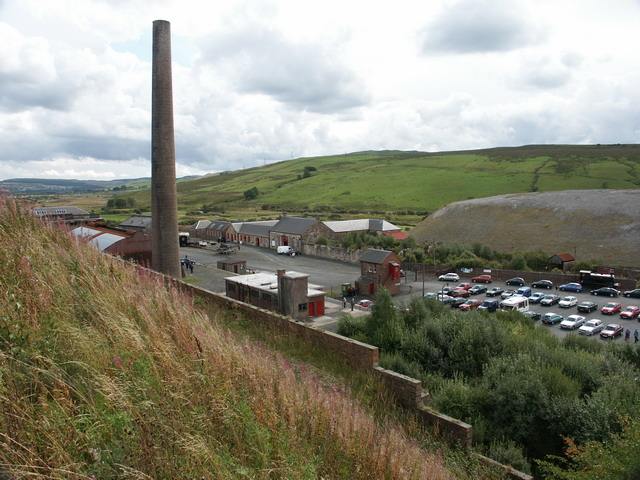
The Waterside brickworks that succeeded the ironworks operated until 1976; a heritage centre was established on the site in the 1990s, preserving the Victorian engine house and its 1847 date-stone alongside the later kiln structures.
The 1847 blowing engine house with its date-stone, adapted after 1928 to drive the brickworks machinery, and beneath it an undercroft at least 2.3 m below the present floor holding cast-iron girders and cover plates from the original beam-engine installation; and the brickworks' two kilns, a fourteen-chamber transverse arch kiln and a twenty-four-chamber Belgian kiln.
Redevelopment
The Waterside brickworks that succeeded the ironworks ran until 1976, and a heritage centre was established on the site in the 1990s around the Victorian engine house and the kilns.
Related mines
- Pennyvenie Colliery — Both were Dalmellington Iron Company workings in the Doon Valley; Pennyvenie's coal and ironstone fed the Waterside furnaces.
- Waterside Colliery — Waterside was the operational hub — washery, locomotive shed and railway network — serving the Dalmellington Iron Company's workings around this ironworks.
Nearby mines
- Dunaskin Ironworks — 0.1 miles (0.2 km) W, South Ayrshire
- Waterside Colliery — 1.6 miles (2.5 km) SE
- Houldsworth Colliery — 2.0 miles (3.2 km) W
- Rankinston Colliery — 3.1 miles (4.9 km) N
- Pennyvenie Colliery — 3.4 miles (5.4 km) E
Straight-line distance, within 9 miles (15 km). Show on the map.
What's uncertain
Points where sources disagree or the record could not be settled; both accounts are kept. All open questions in the archive.
- A 2011 report describes the surviving 1847 engine house and brickworks kilns as 'complete but out of use', with an undercroft beneath the engine house — investigated by removing part of its cement floor — found to extend at least 2.3 metres down and to contain cast-iron girders and cover plates from the original beam-engine blast system. (uncertain) 2
Recorded claims
Individual factual claims, each attached to the source(s) that support it below. Where sources disagree, both are kept.
- By 1860 the Dalmellington Iron Company operated fourteen blast furnaces across its Lanarkshire and Ayrshire sites, with a combined annual capacity of around 120,000 tons of pig iron. 1
- In 1931 the company's Ayrshire coal interests merged with William Baird & Co's to form Bairds & Dalmellington Ltd, which came to control around 70% of the entire Ayrshire coalfield before nationalisation in 1947. 1
- A 2011 report describes the surviving 1847 engine house and brickworks kilns as 'complete but out of use', with an undercroft beneath the engine house — investigated by removing part of its cement floor — found to extend at least 2.3 metres down and to contain cast-iron girders and cover plates from the original beam-engine blast system. (uncertain) 2
- The Dalmellington Iron Company was established around 1835 by John Houldsworth, his brothers and family associates, and was formally registered on 28 May 1885 holding extensive freehold and leasehold mineral rights across Ayrshire. 1
Photographs & further reading
A report on the surviving 1847 engine house and brickworks kilns, including an investigation of the engine house's undercroft.
View sourceThe company's founding, its registration in 1885, its mineral holdings across Ayrshire and the 1931 merger with William Baird & Co.
View sourceSources
- (secondary) Dalmellington Iron Co — Graces Guide
- (observational) Dalmellington, Waterside Ironworks, Dunaskin Brickworks — 2011 — 28DaysLater
Record created: 20 August 2026 · Last researched: 9 September 2026