 MineArchive
Pantdreiniog Quarry
| Location | Bethesda, Gwynedd — 53.1835, -4.0611 (exact) |
|---|---|
| Commodity | Slate |
| Type | Slate |
| Worked | From around 1825–1930 |
| Maximum depth | Reached 40 yards by 1845. |
| Operators | Bangor and Pant-Dreiniog Slate Co. Ltd (1872–1884), North Wales Quarries Ltd (1903–1910) |
Overview
A Bethesda slate quarry with a working life stretching from 1825 to 1930, remembered above all for its remarkable second act: bought and reopened by the labour leader William John Parry as a workers' cooperative to employ men locked out of the neighbouring Penrhyn quarry during the Great Strike of 1900-03, Britain's longest industrial dispute.
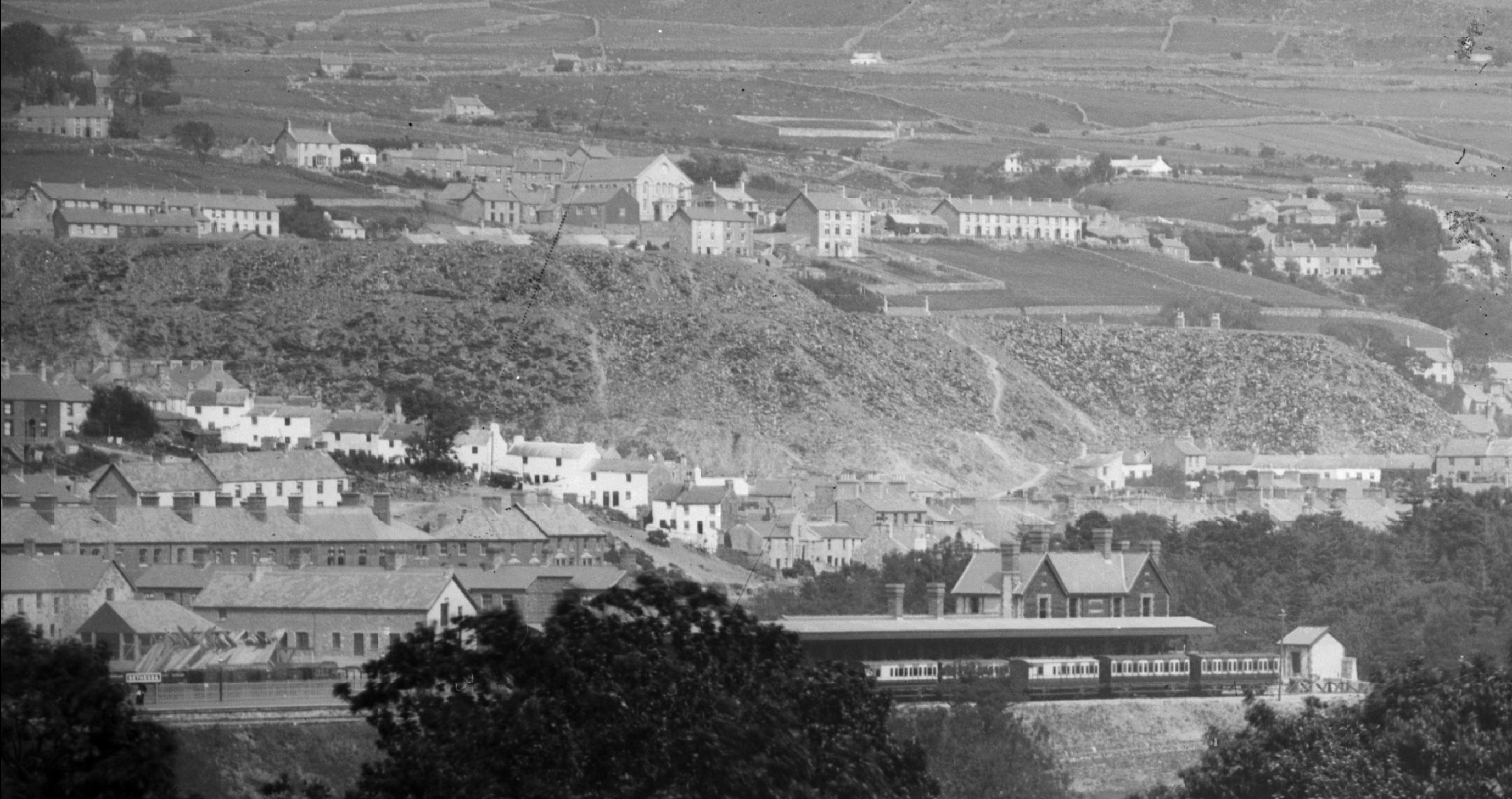
History
Pantdreiniog quarry was working by around 1825, reaching 40 yards in depth by 1845. Under William Owen's ownership from 1860, output peaked at 3,000 tons a year before falling to 1,372 tons (worked by 30 men) by 1864; the operation expanded during the 1860s by absorbing the adjacent Coetmor Quarry before closing later that decade. The Bangor and Pant-Dreiniog Slate Co. Ltd reopened it in 1872 with 50 workers producing 1,500 tons a year, and by 1884 the quarry was producing distinctive blue, purple and red slates as well as ordinary grey; but trade was so poor between 1881 and 1886 that the quarry worked in only one of those years, leaving its workforce dependent on charitable relief. The quarry's defining chapter began in 1896, when William John Parry -- founder and first secretary of the North Wales Quarrymen's Union, known to contemporaries as the 'Quarryman's Champion' -- purchased Pantdreiniog specifically to give employment to strikers from the nearby Penrhyn quarry. When the Great Strike began at Penrhyn on 22 November 1900 -- a lockout of some 2,800 men that became the longest-running industrial dispute in British history, lasting until November 1903 -- Parry restarted Pantdreiniog in March 1901 as a genuine workers' cooperative, which initially turned a profit and paid its members 32 shillings and sixpence a week. In summer 1903 Parry launched North Wales Quarries Ltd, funded chiefly by over £15,000 from the union itself, operating Pantdreiniog together with two neighbouring sites as the 'Bethesda Co-operative Quarries' under the chairmanship of the sitting MP Richard Bell. Two new steam locomotives acquired in 1903 and 1907 were named Richard Bell and J C Grey after leading union and political figures of the cause. Production resumed in May 1906, but falling slate prices forced the layoff of 55 workers by 1909 and the cooperative's closure in October 1910. A final company, Pant Dreiniog Slate Quarry Company Ltd, worked the site from 1919 to 1930, in its later years experimenting with grinding waste slate into unfired dust for bricks, slabs, rubber goods, cement, paint and pottery, and even prefabricated housing built from slate-slab walls in steel frames -- ventures that collapsed around the time of Parry's own death in 1927. The quarry closed permanently in 1930.
Geology
Slate of the Bethesda belt; the vein is not named on the record.
Workings
Worked via a series of pits reaching 40 yards deep by 1845, served by 2-foot gauge tramways; a steam-powered incline worked the eastern pit edge until 1896, when Parry's reopening replaced it with a northern lift system extended to the mill and waste tips. Steam locomotives (Richard Bell, 1903; J C Grey, 1907, both 0-4-0ST Bagnall-built Mercedes-class engines) hauled slate onward via the LNWR to Deganwy from 1903.
Closure
Closed for the final time in 1930 under the Pant Dreiniog Slate Quarry Company Ltd, after post-war diversification into slate-waste products and prefabricated housing failed around founder William John Parry's 1927 death.
What remains
The waste tips that once stood three sides high around Bethesda's own housing were used as a landfill between 1957 and 1976 before being remediated and converted to open land in the 1980s.
Remediated former waste-tip ground now open land around Bethesda; no working structures are recorded as surviving.
Related mines
- Coetmor Quarry — Pantdreiniog superseded Coetmor and absorbed the adjacent quarry into its own workings during the 1860s; the Royal Commission's Bethesda study and Wikipedia's account of Pantdreiniog both record the takeover, and the tip below the 1884 railway terminus is attributed to Coetmor by the former.
- Penrhyn Quarry — Pantdreiniog was purchased specifically to give employment to strikers locked out of Penrhyn during the Great Strike of 1900-03.
Nearby mines
- Coetmor Quarry — 0.3 miles (0.4 km) W
- Penrhyn Quarry — 1.2 miles (1.9 km) S
- Marchlyn Quarry — 3.1 miles (5.0 km) SW
- Dinorwig Slate Quarry — 4.3 miles (6.8 km) S
- Vivian Quarry — 4.7 miles (7.6 km) SW
Straight-line distance, within 9 miles (15 km). Show on the map.
Culture
- The Pantdreiniog Co-operative Quarry (Labour)
Bought by W. J. Parry in 1896 and run as a co-operative for locked-out Penrhyn quarrymen in 1901-03.
Recorded claims
Individual factual claims, each attached to the source(s) that support it below. Where sources disagree, both are kept.
- William John Parry, founder and first secretary of the North Wales Quarrymen's Union, purchased Pantdreiniog in 1896 to employ strikers from the neighbouring Penrhyn quarry; when the Great Strike began at Penrhyn on 22 November 1900 -- a lockout of some 2,800 men that became the longest-running industrial dispute in British history, lasting until November 1903 -- Parry restarted Pantdreiniog in March 1901 as a workers' cooperative. 1,2
- In summer 1903 Parry founded North Wales Quarries Ltd, funded chiefly by over £15,000 from the union itself, chaired by the sitting MP Richard Bell; two steam locomotives acquired in 1903 and 1907 were named Richard Bell and J C Grey after leading figures of the cause. 1
- The final operating company, active from 1919 to 1930, experimented with grinding waste slate for unfired bricks and slabs, rubber goods, cement, paint and pottery, and even prefabricated housing using slate-slab walls in steel frames -- ventures that collapsed around founder William John Parry's death in 1927. 1
- The quarry's waste tips stood three sides high around Bethesda's own housing -- with company operators buying and burying row houses on Cilfodan Street beneath tailings in the 1880s -- and the site later served as a landfill from 1957 to 1976 before remediation in the 1980s. 1
- Located at about 53.184 N, 4.061 W. 1
Sources
- (secondary) Pantdreiniog quarry — Wikipedia
- (secondary) William John Parry — Wikipedia
- (observational) Bethesda railway station and Pantdreiniog quarry, c.1885 — National Library of Wales (John Thomas) / Wikimedia Commons

Record created: 30 August 2026 · Last researched: 30 August 2026