 MineArchive
Marchlyn Quarry
| Location | Above Llanberis, Dinorwic, Gwynedd — 53.1435, -4.0937 (exact) |
|---|---|
| Commodity | Slate |
| Type | Slate |
| Worked | to 1969 (with Dinorwic) |
| Maximum depth | Unknown. Worked as galleries on the mountainside rather than from a shaft. |
Overview
A late and high working of the Dinorwic slate quarry above Llanberis, opened further upslope than the main galleries alongside the other outlying pits at Wellington and Hafod Owen. Dinorwic as a whole was the second largest slate quarry in the world after Penrhyn, covering some 700 acres in stepped galleries, and it closed in 1969. Marchlyn's ground was afterwards taken into the Dinorwig pumped-storage scheme, whose upper reservoir is Marchlyn Mawr.
History
Quarrying at Dinorwic began with attempts in 1787 and grew into the second largest slate quarry in Wales, and so in the world, after neighbouring Penrhyn. At its height at the start of the twentieth century it covered roughly 700 acres, arranged as a series of vast stepped galleries on the mountainside, each with its own waste tips and linked by a complex network of internal tramways and inclines. The quarry eventually had over twenty galleries in each of its two main working sections, Vivian and Dinorwig proper, with additional pits further upslope — Wellington, Hafod Owen, and the later Marchlyn quarry.
Dinorwic closed in 1969. Six years later the Alfred McAlpine, Brand and Zschokke consortium was awarded what was then the largest civil engineering contract the UK government had given, to convert the quarry into a pumped-storage power station. Around twelve million tons of slate had to be removed to create the tunnels and machine halls. The scheme uses two lakes for its storage, Marchlyn Mawr high above and Llyn Peris below, so the ground the Marchlyn quarry worked became part of the upper reservoir system. The quarry workshops were preserved and are now the National Slate Museum.
Geology
The Cambrian slates of the Llanberis belt, worked at Dinorwic as stepped galleries cut into the mountainside rather than from underground chambers as at Blaenau Ffestiniog. Marchlyn lies further upslope than the main workings, on ground high enough that it now sits within the catchment of Marchlyn Mawr, the upper reservoir of the Dinorwig scheme.
Geological setting: Slate and Regional Metamorphism (well documented example)
Workings
Marchlyn was one of the outlying pits of the Dinorwic quarry, worked above the main galleries alongside Wellington and Hafod Owen. Dinorwic as a whole was a system rather than a single hole: over twenty galleries in each of its two main sections, each gallery with its own waste tips, tied together by internal tramways and inclines.
Closure
Marchlyn closed with Dinorwic in 1969, and its ground was subsequently taken into the Dinorwig pumped-storage scheme built from 1975.
What remains
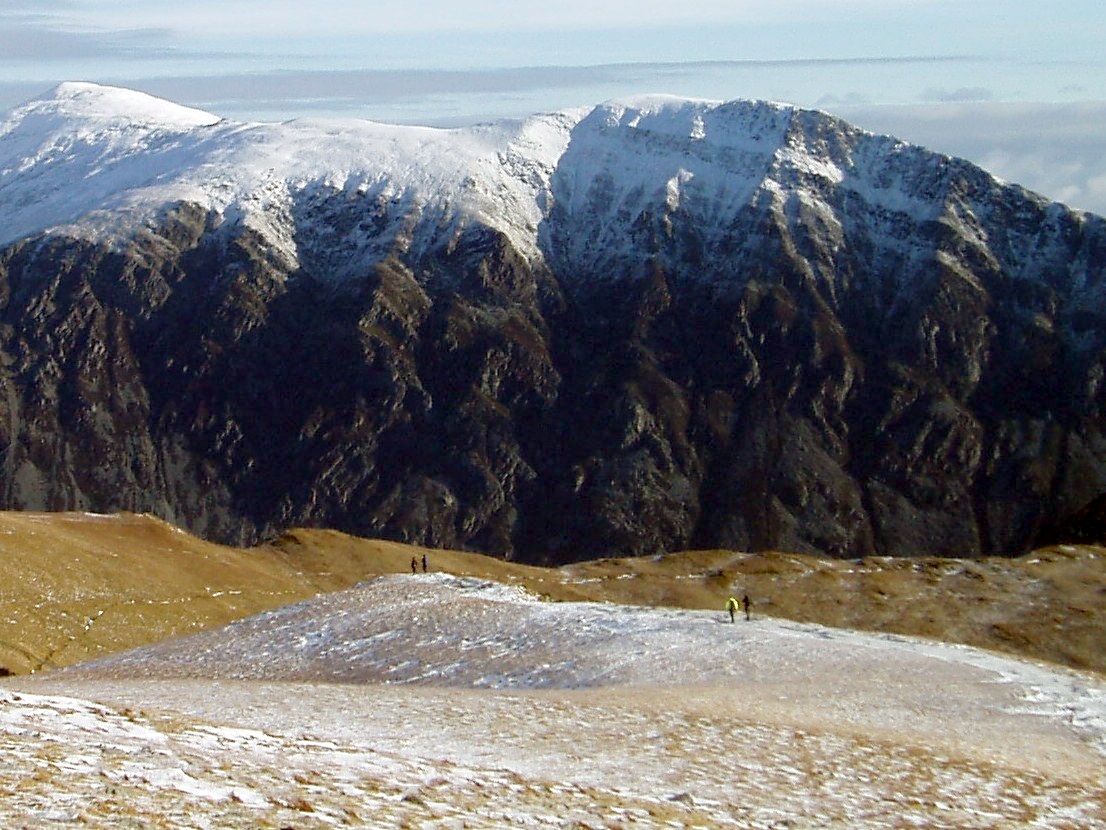
The ground is part of the Dinorwig power station scheme, with Marchlyn Mawr as its upper reservoir. The quarry workshops below were preserved and are now the National Slate Museum. Bwlch y Marchlyn, the pass above the workings, is walked from Llanberis.
The ground is part of the Dinorwig power station scheme, with Marchlyn Mawr as its upper reservoir; the quarry workshops below survive as the National Slate Museum.
Redevelopment
The Dinorwig pumped-storage power station, built from 1975 under what was then the largest civil engineering contract awarded by the UK government, uses Marchlyn Mawr as its upper reservoir and Llyn Peris as its lower; some twelve million tons of slate were removed to create its tunnels and machine halls.
Related mines
- Dinorwig Slate Quarry — Marchlyn is one of Dinorwic's outlying pits, worked upslope of the main galleries alongside Wellington and Hafod Owen, and closed with the quarry in 1969.
Nearby mines
- Dinorwig Slate Quarry — 1.2 miles (2.0 km) S
- Vivian Quarry — 1.6 miles (2.7 km) SW
- Penrhyn Quarry — 2.0 miles (3.2 km) NE
- Glynrhonwy Quarry — 2.2 miles (3.5 km) SW
- Llanberis Copper Mine — 2.5 miles (4.0 km) S
Straight-line distance, within 9 miles (15 km). Show on the map.
Recorded claims
Individual factual claims, each attached to the source(s) that support it below. Where sources disagree, both are kept.
- Marchlyn was one of the outlying pits of Dinorwic, worked further upslope than the main galleries alongside Wellington and Hafod Owen, and was the later of them. 1
- Dinorwic began with attempts in 1787 and became the second largest slate quarry in Wales after Penrhyn, covering roughly 700 acres in stepped galleries with over twenty galleries in each of its two main sections; it closed in 1969. 1
- In 1975 the Alfred McAlpine, Brand and Zschokke consortium was awarded the largest civil engineering contract then given by the UK government to convert the quarry into a pumped-storage scheme; around twelve million tons of slate were removed for the tunnels and machine halls, and the station uses Marchlyn Mawr and Llyn Peris as its reservoirs. 2
Photographs & further reading
An account of Dinorwic's galleries, sections and outlying pits, including Marchlyn, and of the quarry's closure in 1969.
View sourceSources
- (secondary) Dinorwic quarry — Penmorfa: the slate quarries of North Wales
- (secondary) Building Electric Mountain — People's Collection Wales
- (observational) Bwlch Y Marchlyn — Geograph Britain and Ireland
Record created: 9 September 2026 · Last researched: 9 September 2026