 MineArchive
Norman's Quarry
| Also known as | Normans Quarry, Norman's Quarr |
|---|---|
| Location | North-east of Acton, Langton Matravers, Dorset — 50.6100, -2.0132 (approximate) |
| Commodity | Limestone |
| Type | Stone |
| Worked | Early 20th century–1995 |
| Maximum depth | Unknown. |
Overview
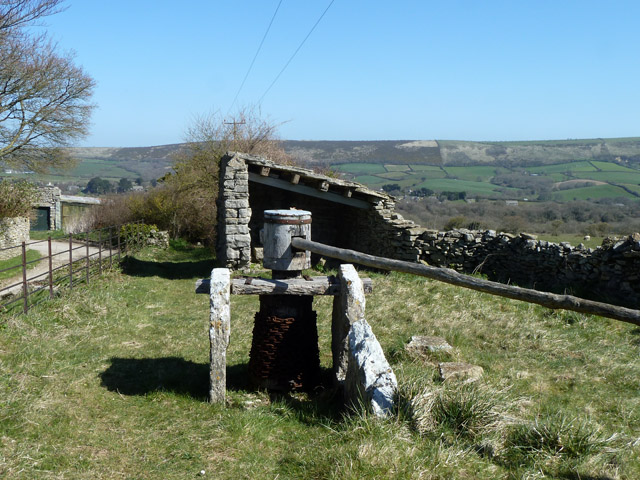
A Purbeck stone quarr north-east of Acton, sunk by the Norman family in the early twentieth century and preserved by the National Trust complete with its capstan, its rails for the carts and its half-concealed shaft — a rare surviving example of how Purbeck stone was actually got.
History
Purbeck stone was not quarried from great open pits but from quarrs: a shaft sunk through the overburden to the stone beds, and the stone drawn up it by a capstan turned by a horse walking a circle at the surface. Norman's Quarry, north-east of Acton and just outside Langton Matravers, is one of the best-recorded examples. It was sunk in the early twentieth century by the Norman family and worked until the Second World War.
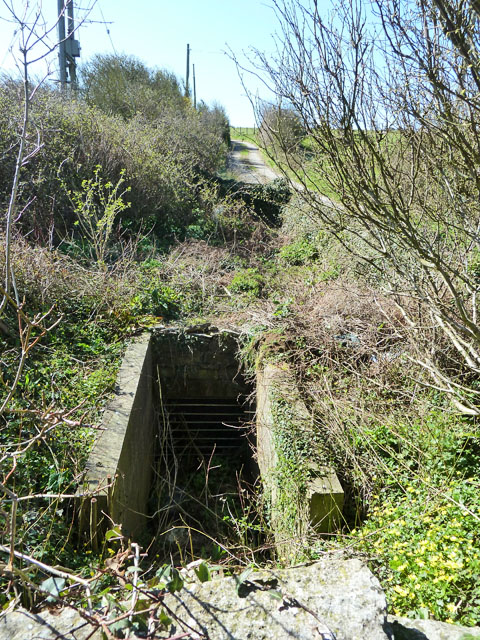
It did not quite end there. Ernie Norman was the last quarryman, and his widow reopened the workings in 1995. The National Trust has preserved the site, which stands opposite Stonecroft on the road out of Langton Matravers, complete with its capstan, its spack, the rails for the carts and the half-concealed shaft.
Geology
The quarr worked the Purbeck beds of the Isle of Purbeck — the limestones that have been cut here since Roman times, of which the celebrated Purbeck Marble, a freshwater limestone packed with fossil snail shells that takes a polish, is one bed among many. The stone beds lie under an overburden that has to be shafted through, which is why the Purbeck quarr takes the form it does rather than being an open pit.
Geological setting: Sedimentary Beds and Seams (well documented example)
Workings
A shaft through the overburden to the stone, with a horse-turned capstan at the surface to wind the stone up it, and rails for the carts that took it away. All of that survives: the capstan, the spack, the rails and the shaft, which is now half concealed.
Closure
Worked until the Second World War according to the general accounts of Purbeck quarrying; the workings were reopened in 1995 by the widow of Ernie Norman, the last quarryman.
What remains
Preserved by the National Trust as an example of a typical Purbeck quarr, opposite Stonecroft on the way out of Langton Matravers, with its capstan, spack, cart rails and half-concealed shaft in place. It stands on a public footpath route between Langton Matravers and Acton.
The capstan, the spack, the rails for the carts and the half-concealed shaft, together with the winding gear and quarr houses, restored as an example of a typical quarr.
Redevelopment
None: the site is preserved rather than redeveloped, in National Trust hands.
Related mines
- Purbeck Marble Quarries — Norman's is one of the Purbeck quarrs of the Acton and Langton Matravers ground that the Purbeck Marble Quarries record covers, and is named on it as a well-recorded example of the type.
Nearby mines
- Purbeck Marble Quarries — 0.4 miles (0.6 km) SW
- Winspit — 2.0 miles (3.2 km) SW
- Tilly Whim Caves — 2.7 miles (4.4 km) SE
- Furzebrook and Norden Ball Clay Pits — 4.1 miles (6.6 km) NW
- Kimmeridge Oil Shale Workings — 5.1 miles (8.2 km) W
Straight-line distance, within 9 miles (15 km). Show on the map.
What's uncertain
Points where sources disagree or the record could not be settled; both accounts are kept. All open questions in the archive.
- This archive's own account of the Purbeck marble quarries has Norman's sunk in the early twentieth century by the Norman family and worked until the Second World War; the Dorset Life account has the workings reopened in 1995 by the widow of the last quarryman, which implies working later than that. (disputed) 1
Recorded claims
Individual factual claims, each attached to the source(s) that support it below. Where sources disagree, both are kept.
- The National Trust has preserved Norman's Quarry, opposite Stonecroft, complete with its capstan, spack, rails for carts and half-concealed shaft. 1
- Ernie Norman was the last quarryman at Norman's Quarry, and his widow reopened the workings in 1995. 1
- This archive's own account of the Purbeck marble quarries has Norman's sunk in the early twentieth century by the Norman family and worked until the Second World War; the Dorset Life account has the workings reopened in 1995 by the widow of the last quarryman, which implies working later than that. (disputed) 1
- In the Purbeck quarrs the deeper beds were worked from underground, the stone brought to the surface by a horse-drawn capstan; in 1897 there were 197 men working in 58 quarrs. Purbeck stone is still quarried in the Acton area west of Swanage, where the rock was formerly mined from underground shafts and is now taken from open pits down to about ten metres. 2
Photographs & further reading
A walk through the village and its quarry landscape which passes Norman's Quarry and records what the National Trust has preserved there, and who the last quarryman was.
View sourceSources
- (secondary) Langton Matravers, from Dorset Life — Dorset Life
- (secondary) Purbeck - Into the Quarries — Dorset Ancestors
Record created: 8 September 2026 · Last researched: 9 September 2026