 MineArchive
Furzebrook and Norden Ball Clay Pits
| Also known as | Purbeck Ball Clay Pits |
|---|---|
| Location | Furzebrook and Norden, Isle of Purbeck, Dorset — 50.6467, -2.0859 (approximate) |
| Commodity | Ball Clay |
| Type | Clay |
| Worked | Worked from the 18th century–1999 (last underground working) |
| Operators | Pike Brothers (1791–?), Fayle & Co. (1806–?) |
Overview
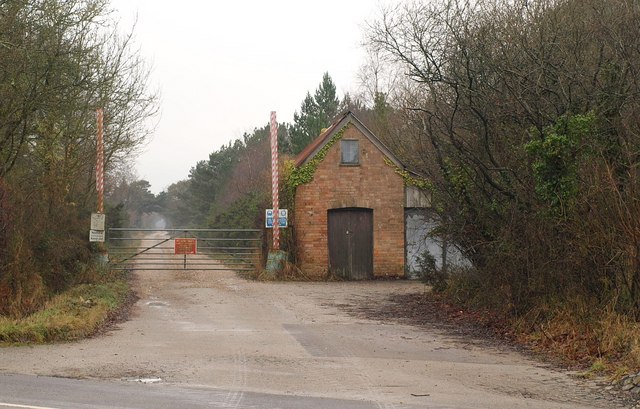
A group of open-cast and shallow underground ball clay workings across north Purbeck, centred on Furzebrook (worked by Pike Brothers) and Norden (worked by Fayle & Co.), which supplied fine, plastic clay to potteries across Britain via a distinctive network of narrow-gauge clay tramways.
History
The Pike family's clay business began around 1760 in Chudleigh, Devon, before extending into Purbeck; William Pike signed a contract to supply Josiah Wedgwood's pottery in 1791. Fayle & Co.'s side of the story began when Benjamin Fayle, another Wedgwood collaborator, acquired an existing Norden clay operation after its original owner faced financial ruin. By the 19th century extraction across north Purbeck had consolidated around these two firms — Pike Brothers at Furzebrook and Fayle & Co. at Norden — each running its own narrow-gauge tramway to a shipping wharf.
Fayle's Middlebere Tramway, originally called the Iron Rail Way, opened in 1806 to Middlebere Pier on Poole Harbour and was Dorset's first railway, worked by horse into the 20th century; a later, separate Fayle's Tramway of around 1907 ran 5¾ miles from Norden across the heath to Newton, connecting to Goathorn Pier. Pike Brothers built their own line from Furzebrook to a quay on the River Frome at Ridge around 1840, originally laid to a gauge of around 4ft and narrowed to 2ft 8in by 1865, the year steam locomotives were introduced alongside the line's original gravity working of loaded wagons downhill.
Pike Brothers and Fayle & Co. merged in 1954, and the region's private narrow-gauge tramways closed shortly after — the Furzebrook Railway in 1957 — as local haulage moved to road transport; part of the Furzebrook line's route had already been lost to military requisition during the Second World War. Underground mining continued at Norden for decades afterwards, finally ceasing there in 1999, though open-cast extraction has continued at some sites since.
Geology
Purbeck's ball clay was laid down around 45 million years ago, during the Lutetian stage of the Eocene, when an ancient River Solent washed kaolinite — weathered from decomposed granite on Dartmoor, far to the west — into low-lying basins north of the Purbeck Hills, where it settled in seams alongside sands, gravels and carbonaceous plant debris. The resulting ball clay typically contains 20–80% kaolinite, 10–25% mica and 6–65% quartz, and belongs to the same broad Eocene sequence, the Bagshot Beds, as the sands of the neighbouring Poole Formation, with which it was sometimes blended for particular pottery bodies.
Workings
Clay was dug from a scatter of open pits and underground workings across the heathland between Furzebrook and Norden, worked to markedly varying depths: named underground mines included Norden No.6 and No.7 and, at Greenspecks and Aldermoor, workings that were shallower than Creech Barrow, the deepest of the Purbeck clay mines at around 800 feet underground. Clay was hauled by horse- and later steam-worked narrow-gauge tramways to Furzebrook, where it was left to weather and 'ripen' in the open before onward shipment.
Closure
Pike Brothers and Fayle & Co. merged in 1954 and transferred local clay haulage to road transport; the Furzebrook Railway itself closed in 1957, part of its route to Ridge having already been lost to military use during the Second World War. Underground clay mining continued at Norden, latterly at the No.6 and No.7 mines, until operations finally ceased in 1999; open-cast working has continued at some sites since, including a processing plant at Furzebrook later operated by Imerys.
What remains
Much of the worked ground has reverted to heath, and one flooded pit at Furzebrook — coloured a distinctive turquoise by suspended clay particles — survives as the Blue Pool nature reserve and tearooms, a visitor attraction since the 1930s. At Norden, the former No.7 mine structure has been rebuilt on the site of the old clay works and now forms part of the Purbeck Mineral and Mining Museum, next to Norden station on the Swanage Railway.
Nearby mines
- Kimmeridge Oil Shale Workings — 3.0 miles (4.9 km) SW
- Norman's Quarry — 4.1 miles (6.6 km) SE
- Purbeck Marble Quarries — 4.1 miles (6.6 km) SE
- Winspit — 4.8 miles (7.8 km) SE
- Tilly Whim Caves — 6.8 miles (10.9 km) SE
Straight-line distance, within 9 miles (15 km). Show on the map.
Recorded claims
Individual factual claims, each attached to the source(s) that support it below. Where sources disagree, both are kept.
- William Pike signed a contract to supply clay to Josiah Wedgwood's pottery in 1791. 1
- Fayle & Co.'s Middlebere Tramway, opened in 1806, was Dorset's first railway. 2
- A flooded former clay pit at Furzebrook survives as the Blue Pool, a nature reserve and tearooms whose turquoise colour comes from suspended clay particles. 3
- Purbeck's ball clay was deposited around 45 million years ago, in the Lutetian stage of the Eocene, when an ancient River Solent washed kaolinite weathered from decomposed Dartmoor granite into low-lying basins, forming seams containing roughly 20-80% kaolinite, 10-25% mica and 6-65% quartz within the same broad Eocene sequence, the Bagshot Beds, as the neighbouring Poole Formation. 4
- The Pike family's clay business began around 1760 in Chudleigh, Devon, later extending into Purbeck, while Benjamin Fayle, a fellow Wedgwood collaborator, acquired an existing Norden clay operation after its original owner faced financial ruin. 5,6
- Pike Brothers' line from Furzebrook to Ridge, built around 1840, was originally laid to a gauge of around 4ft, narrowed to 2ft 8in by 1865, the year steam locomotives were introduced alongside the line's original gravity working of loaded wagons downhill. 7
- A later, separate Fayle's Tramway of around 1907 ran 5¾ miles from Norden across the heath to Newton, connecting to Goathorn Pier, distinct from the earlier 1806 Middlebere Tramway to Middlebere Pier. 5,6
- Pike Brothers and Fayle & Co. merged in 1954 and transferred local clay haulage to road transport; the Furzebrook Railway itself closed in 1957, part of its route to Ridge having already been lost to military requisition during the Second World War. 7,5
- Underground clay mines varied considerably in depth: Creech Barrow, the deepest of the Purbeck clay mines, reached around 800 feet, while underground working continued at Norden's No.6 and No.7 mines until operations there finally ceased in 1999. 6,8
- The former Norden No.7 mine structure has been rebuilt on the site of the old Norden clay works and now forms part of the Purbeck Mineral and Mining Museum beside Norden station on the Swanage Railway. 6,8
Sources
- (secondary) Clay History — Purbeck Mining Museum
- (secondary) Purbeck's clay railways — Dorset Life
- (observational) Blue Pool, Dorset — Wikipedia
- (secondary) Purbeck Ball Clay — Wikipedia
- (secondary) The History of Ball Clay Production (6): Purbeck — The Ball Clay Heritage Society
- (secondary) Purbeck Mineral and Mining Museum — Wikipedia
- (secondary) Furzebrook Railway — Wikipedia
- (observational) How ball clay mining shaped Dorset's landscape and economy — Great British Life (Dorset)
- (primary) Mine plan search: FURZEBROOK / NORDEN clay — BGS / Mining Remediation Authority mine plans catalogue
Record created: 25 August 2026 · Last researched: 27 August 2026