 MineArchive
McLaren Colliery
| Also known as | Abertysswg Colliery, Pwll Llaca Pit |
|---|---|
| Location | Abertysswg, Rhymney Valley, Caerphilly — 51.7278, -3.2647 (approximate) |
| Commodity | Coal |
| Type | Coal |
| Worked | 1897–1969 |
| Maximum depth | Unknown. |
| Operators | Tredegar Iron and Coal Company (1897–1947), National Coal Board (1947–1969) |
Overview
A Rhymney Valley steam-coal colliery on the Monmouthshire side of the valley, whose first shaft was sunk in 1897 and around which the village of Abertysswg was built. It belonged to the Tredegar Iron & Coal Company and took its name from one of that company's directors. An explosion in the No. 1 pit in September 1902 killed seventeen. The pit worked until 1969, producing steam coal for the steel industry.
History
The village of Abertysswg came into being between 1895 and 1900 through the industrialisation the colliery brought, and the first shaft was sunk in 1897. The pit was originally called Pwll Llaca; the McLaren Colliery later re-used the shaft, and it was eventually renamed Abertysswg Colliery.
The colliery belonged to the Tredegar Iron & Coal Company — a glass negative of about 1901 in the national collection shows the works as part of that company, with the screen plant, a bank of coke ovens and rows of 'Tredegar' wagons lined up on the sidings. On Wednesday 3 September 1902 an explosion in the No. 1 pit killed seventeen men (see Disasters, below), among them William Baker of Prospect Place, Tredegar, and William H. Brown.
The pit produced steam coal for the steel industry until it closed in 1969, having worked for seventy-two years. A miners' memorial stands in the village.
Geology
The colliery worked the steam coals of the Rhymney Valley, on the Monmouthshire side, in the eastern part of the South Wales Coalfield — the same measures that the Tredegar and New Tredegar collieries a few miles away were sunk for, and the reason its coal went to the steel industry rather than the domestic trade.
Geological setting: Sedimentary Beds and Seams (well documented example)
Workings
A shaft colliery sunk from 1897, at the end of Westville in the village. The c.1901 photograph of the works shows a screen plant and a bank of coke ovens on the site, with the company's own wagons on sidings — a colliery equipped to prepare and coke its coal as well as raise it. It produced steam coal for the steel industry.
Closure
The colliery closed in 1969, after seventy-two years.
What remains
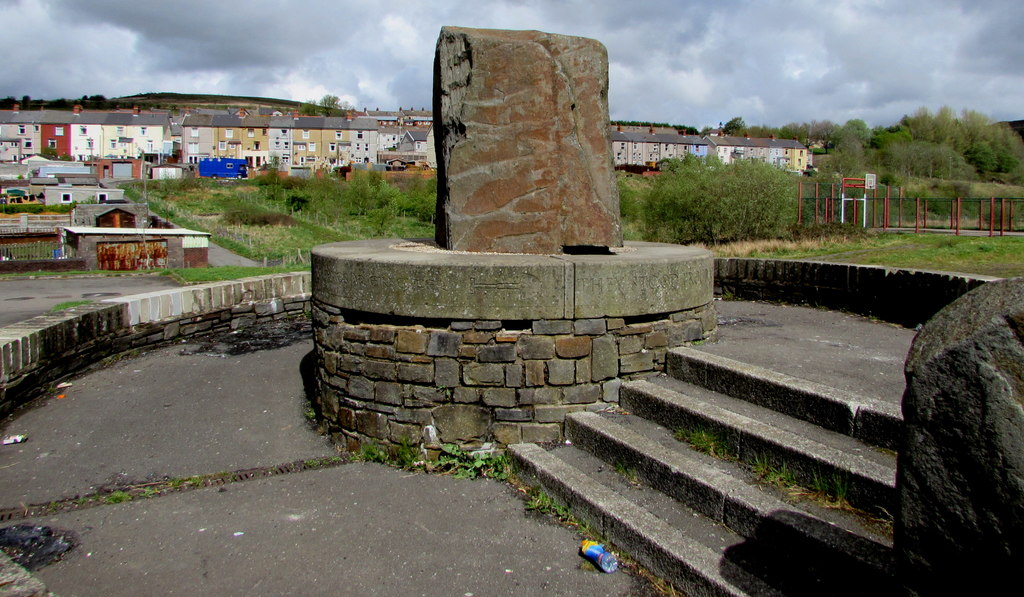
The colliery site has been cleared. The McLaren Miners' Memorial stands in Abertysswg, commemorating the men who worked and died at the pit.
No colliery structures; the McLaren Miners' Memorial in the village.
Related mines
- Ogilvie Colliery — The two were joined underground in August 1958: a long descending man-riding road ran from McLaren's pit bottom to the end of Ogilvie's new locomotive road, and McLaren was kept open afterwards only to carry men in.
Nearby mines
- Ogilvie Colliery — 0.7 miles (1.1 km) SW
- Cilhaul Colliery — 0.8 miles (1.3 km) SW
- Rhymney Merthyr Colliery — 1.1 miles (1.7 km) NW
- New Tredegar Colliery — 1.2 miles (2.0 km) SE
- Elliot Colliery — 1.5 miles (2.4 km) SE
Straight-line distance, within 9 miles (15 km). Show on the map.
Disasters & major incidents
-
McLaren Colliery roof fall, 1900
20 June 1900 · Collapse / Roof Fall · 2 fatalities
A fall of coal and clod killed a collier and his young assistant at the No. 2 McLaren pit, Abertysswg, on 20 June 1900, three years after its first shaft was sunk. -
McLaren Colliery Explosion, 1902
3 September 1902 · Explosion · 17 fatalities
An explosion at McLaren Colliery, Abertysswg, on 3 September 1902 killed seventeen men. The colliery was five years old, and the village around it younger still; the dead came from the new streets of Abertysswg and from Tredegar down the valley, and the youngest of them was seventeen.
Culture
- Idris Davies and McLaren Colliery (Literature)
Davies went to work at McLaren Colliery at fourteen in January 1919, where his father was chief winderman, before moving to the Mardy pit at Pontlottyn in 1920.
What's uncertain
Points where sources disagree or the record could not be settled; both accounts are kept. All open questions in the archive.
- Abertysswg came into being between 1895 and 1900 through the industrialisation brought by the development of the colliery, the first shaft of which was sunk in 1897. (uncertain) 1
- The pit opened in 1897 and was originally called Pwll Llaca Pit; the McLaren Colliery later re-used the shaft, and it was eventually renamed Abertysswg. (uncertain) 2
- The pit produced steam coal for the steel industry and closed in 1969. (uncertain) 2,1
- An explosion at the colliery on 3 September 1902 killed seventeen men; the death roll names them with their ages and addresses. (uncertain) 4
- The BGS mine-plans catalogue holds a Mining Remediation Authority abandonment plan titled 'Mclaren' (catalogue SWR953, No. 3 Pit, dated 1957); the catalogue gives no location and the plan's details do not clearly tie it to this working, so it may belong to another of the same name. (uncertain) 5
Recorded claims
Individual factual claims, each attached to the source(s) that support it below. Where sources disagree, both are kept.
- Abertysswg came into being between 1895 and 1900 through the industrialisation brought by the development of the colliery, the first shaft of which was sunk in 1897. (uncertain) 1
- The pit opened in 1897 and was originally called Pwll Llaca Pit; the McLaren Colliery later re-used the shaft, and it was eventually renamed Abertysswg. (uncertain) 2
- A glass negative of about 1901 in the national collection shows an exterior view at McLaren Colliery, Abertysswg, described as part of the Tredegar Iron & Coal Co., with the screen plant, coke ovens and rows of 'Tredegar' wagons on the sidings. 3
- The pit produced steam coal for the steel industry and closed in 1969. (uncertain) 2,1
- An explosion at the colliery on 3 September 1902 killed seventeen men; the death roll names them with their ages and addresses. (uncertain) 4
- The BGS mine-plans catalogue holds a Mining Remediation Authority abandonment plan titled 'Mclaren' (catalogue SWR953, No. 3 Pit, dated 1957); the catalogue gives no location and the plan's details do not clearly tie it to this working, so it may belong to another of the same name. (uncertain) 5
Photographs & further reading
A photograph of the colliery about four years after its sinking, showing the screen plant, the coke ovens and the company's own wagons on the sidings.
View sourceSources
- (secondary) Abertysswg — Wikipedia
- (secondary) Abertysswg (place-name and pit history, supplied by Glamorgan Archives) — Caerphilly Observer
- (primary) Tredegar Iron & Coal Co. Ltd., glass negative: exterior view at McLaren Colliery, Abertysswg, c.1901 — Amgueddfa Cymru — Museum Wales
- (secondary) McLaren Colliery disaster: death roll, 3 September 1902 — Welsh Coal Mines
- (primary) BGS / Mining Remediation Authority mine plans: MCLAREN — British Geological Survey / Mining Remediation Authority
Record created: 3 September 2026 · Last researched: 3 September 2026