 MineArchive
Idris Davies and McLaren Colliery
| Category | Literature |
|---|---|
| Dates | Born 6 January 1905 at Rhymney; started at McLaren Colliery, Abertysswg, January 1919; moved to the Mardy pit, Pontlottyn, summer 1920; lost a finger underground 1925 or 1926; out of work after the 1926 strike; Gwalia Deserta 1938; The Angry Summer 1943; died 6 April 1953. |
The Rhymney poet of Gwalia Deserta worked underground at McLaren Colliery, Abertysswg, and the Mardy pit at Pontlottyn from 1919 until the 1926 lock-out.
The mining history in this record
Idris Davies was born on 6 January 1905 at 16 Field Street, Rhymney, the Welsh-speaking son of Evan Davies, a colliery chief winderman, and his wife Elizabeth Ann. He left school at fourteen and in January 1919 went to work at the McLaren Colliery at Abertysswg, where his father was chief winderman. In the summer of 1920 he moved to the Mardy pit at Pontlottyn, and while there began night classes with a friend, Eddie Balman, in mathematics and English grammar.
He lost a finger in an accident at the coal face, in 1925 by one account and early in 1926 by another, and had barely returned when the General Strike came. Davies took part in it; his father stayed at work as a safety man. The Mardy pit closed after the strike, and a few months at another Pontlottyn mine ended when that closed too. After seven years underground he was out of work, and spent the next years on what he called 'the long and lonely self-tuition game', which took him to Loughborough College in 1930 and to teaching in London schools from 1932.
People
Idris Davies (1905-1953), miner, schoolmaster and poet. Evan Davies, his father, chief winderman at McLaren Colliery. Eddie Balman, his friend at the Mardy pit, with whom he went to night classes. T. S. Eliot, who selected his poems.
Legacy today
Davies wrote his poetry in London, out of the valley he had left. Gwalia Deserta (1938) drew partly on such mining disasters as the explosion at the Marine Colliery, Cwm, in 1927 and on the defeat of 1926; its fifteenth part, 'The Bells of Rhymney', was set to music in the late 1950s by Pete Seeger and became a folk-rock standard. The Angry Summer (1943) is subtitled 'a poem of 1926'. T. S. Eliot, who chose his poems for publication, called them the best poetic document he knew of a particular epoch in a particular place.
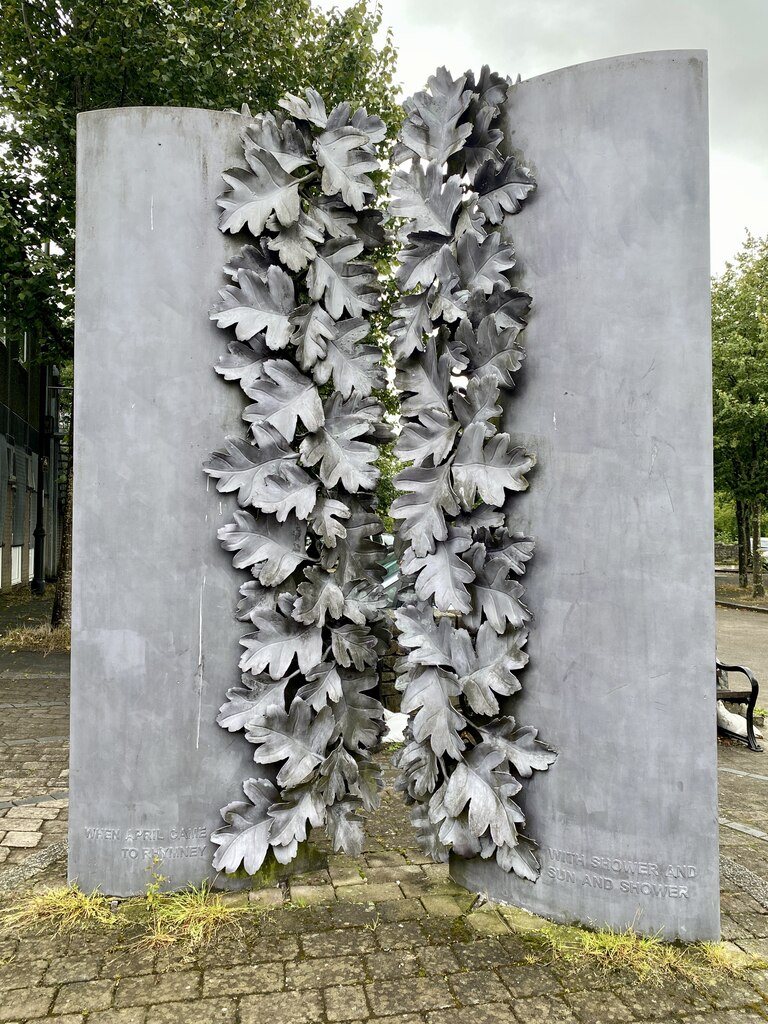
He came back to teach in the Rhymney Valley in 1947 and died at Rhymney on Easter Monday, 6 April 1953. A sculpture in Rhymney carries two lines of his verse, 'When April came to Rhymney / With shower and sun and shower'.
Mining language in this record
Words and phrases in this record that are genuine mining terminology, occupations, methods or economic practice — not scenery or ordinary regional language that merely appears in a mining-adjacent work.
| Expression | Meaning | MineArchive connection |
|---|---|---|
| chief winderman | The senior engineman in charge of a colliery's winding engine, which raised and lowered the cages in the shaft. (South Wales) | Winding Engine — Close but not exact: the term is the engine, not the man who drives it. |
Recorded claims
Individual factual claims, each tagged with how solidly it's grounded and attached to the source(s) that support it. Where sources disagree, both are kept.
- Davies started work at McLaren Colliery, Abertysswg, in January 1919, where his father Evan was chief winderman. (documented fact) 1,2
- From the summer of 1920 Davies worked at the Mardy pit at Pontlottyn, which closed after the 1926 strike. (documented fact) 1,2,3
- Davies worked underground for about seven years after leaving school at fourteen. (documented fact) 1,3
- Davies lost a finger in an accident underground in 1925. (documented fact, disputed) 1
- Davies lost a finger early in 1926, shortly before the General Strike. (documented fact, disputed) 2
- Davies took part in the General Strike of 1926 and was afterwards unemployed, teaching himself until he trained as a teacher. (documented fact) 3,4
- Gwalia Deserta (1938) was inspired partly by mining disasters such as the 1927 explosion at the Marine Colliery, Cwm, and by the failure of the 1926 strike. (documented fact) 1
- 'The Bells of Rhymney', from Gwalia Deserta, was adapted into a folk song by Pete Seeger in the late 1950s. (documented fact) 1,2
- T. S. Eliot judged Davies's poems 'the best poetic document I know about a particular epoch in a particular place'. (documented fact) 2,3
Mines
- McLaren Colliery — Caerphilly
Davies went to work at McLaren Colliery at fourteen in January 1919, where his father was chief winderman, before moving to the Mardy pit at Pontlottyn in 1920.
Disasters
- Marine Colliery explosion, 1927 — 1 March 1927
Gwalia Deserta (1938) drew partly on mining disasters such as this explosion.
Real-world mining concepts used here
Sources
- (secondary) Wikipedia: Idris Davies — Wikipedia
- (secondary) People's Collection Wales: Idris Davies (1905-1953) — People's Collection Wales
- (secondary) DAVIES, IDRIS (1905-1953), miner, schoolmaster and poet — Dictionary of Welsh Biography
- (secondary) Idris Davies (Caerphilly County Borough Council, Digging Deeper: Famous Faces) — Caerphilly County Borough Council
Record created: 16 October 2026 · Last researched: 16 October 2026