 MineArchive
Lady Victoria Colliery
| Location | Newtongrange, near Dalkeith, Midlothian — 55.8618, -3.0678 (exact) |
|---|---|
| Commodity | Coal |
| Type | Coal |
| Worked | From 1890 (sinking)–1981 |
| Maximum depth | 530 metres (1,738 feet) — the deepest shaft in Scotland when sunk |
| Operators | Lothian Coal Company (1890–1947), National Coal Board (1947–1981) |
Overview
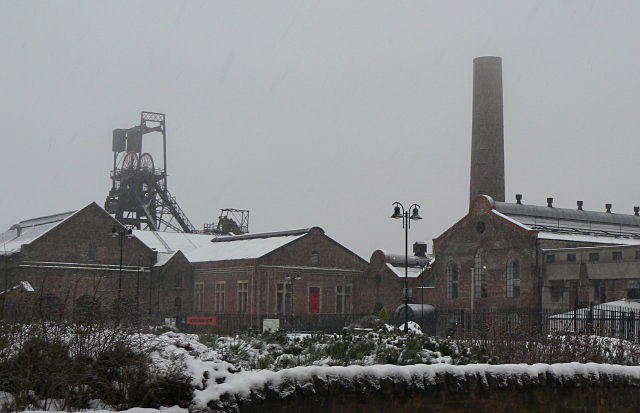
The showpiece colliery of the Lothian Coal Company, sunk in 1890 and named for the wife of its chairman, the Marquess of Lothian — its 530-metre shaft was the deepest in Scotland at the time, served by what survives today as the country's largest steam winding engine, and the whole site is now the National Mining Museum Scotland, one of the most complete Victorian collieries left anywhere in Europe.
History
The Lothian Coal Company began sinking Lady Victoria Colliery in 1890, bringing it into production by 1894. It was named after Lady Victoria Alexandrina Montagu Scott, wife of the 9th Marquess of Lothian, who chaired the company from 1890 to 1900; the Marquess also had the purpose-built model village of Newtongrange constructed nearby to house the colliery's growing workforce. Lady Victoria was connected underground to the neighbouring Lingerwood colliery, allowing the two to share workings without the expense of sinking a second shaft at Lady Victoria itself. The colliery was nationalised into the National Coal Board in 1947 along with the rest of the British coal industry, employing 1,080 people in 1948 and reaching a peak workforce of 1,765 in 1953, before closing in 1981.
Geology
Lady Victoria worked the Midlothian coalfield, part of Scotland's central belt Coal Measures, reaching its coal via what was, at 530 metres, the deepest shaft in Scotland when it was sunk — also the largest-diameter shaft in the country at the time.
Workings
Coal and men were raised and lowered by a large steam winding engine built by Grant, Ritchie and Company of Kilmarnock, matched with headstocks built by Arrols of Glasgow; the winding engine worked for nearly 90 years and survives today, still in working order, as the largest of its kind left in Scotland.
Closure
Lady Victoria closed in 1981 as part of the wider contraction of the Scottish coal industry in the decades following nationalisation.
What remains
The colliery survives as an almost complete Victorian-era site, preserved from 1984 as the National Mining Museum Scotland; the winding engine is kept in full working order and demonstrated to visitors, the surface buildings are Category A listed by Historic Scotland, and the museum's collections are recognised as Nationally Significant by Museums Galleries Scotland.
Redevelopment
The National Mining Museum Scotland was established on the site in 1984 to preserve its surface remains, with major structural stabilisation and new visitor facilities completed from 1998 onward.
Related mines
- Lingerwood Colliery — Lady Victoria was connected underground to Lingerwood, which supplied its statutory second shaft.
- Newbattle Collieries — Lady Victoria was sunk at the south end of the Marquis of Lothian’s Newbattle undertaking as it became the Lothian Coal Company; the 1890 waggonway extension was made to reach its site, and it took over coal preparation from Lingerwood.
Nearby mines
- Newbattle Collieries — 0.1 miles (0.2 km) NE
- Lingerwood Colliery — 0.2 miles (0.4 km) E
- Arniston Colliery — 1.1 miles (1.7 km) S
- Easthouses Pit — 1.1 miles (1.7 km) N
- Eldin Colliery — 1.6 miles (2.6 km) NW
Straight-line distance, within 9 miles (15 km). Show on the map.
Recorded claims
Individual factual claims, each attached to the source(s) that support it below. Where sources disagree, both are kept.
- Lady Victoria's 530-metre shaft was the deepest in Scotland when sunk, and was connected underground to the neighbouring Lingerwood colliery, avoiding the need to sink a second shaft. 1,2
- The colliery employed 1,080 people in 1948, rising to a peak of 1,765 in 1953. 2,3
- The Grant Ritchie of Kilmarnock steam winding engine hauled men and coal up and down the shaft for nearly 90 years and survives today as Scotland's largest such engine, still in working order. 3
- The National Mining Museum Scotland was established in 1984 to preserve the surface remains of the colliery, with major stabilisation and new visitor facilities completed from 1998; the site is Category A listed and its collections are recognised as Nationally Significant. 1
Photographs & further reading
The museum now occupying the colliery site, with visitor information and the preserved winding engine.
View sourceSources
- (secondary) National Mining Museum Scotland — Wikipedia
- (primary) Newtongrange, Lady Victoria Colliery — Canmore / Historic Environment Scotland
- (secondary) National Mining Museum Scotland Feature Page — Undiscovered Scotland
- (primary) Lady Victoria spoil heap plan — BGS Mine Plans / The Coal Authority
Record created: 22 August 2026 · Last researched: 22 August 2026