 MineArchive
Lingerwood Colliery
| Also known as | Engine Pit, Old Engine Pit |
|---|---|
| Location | Newtongrange, Midlothian — 55.8610, -3.0620 (approximate) |
| Commodity | Coal |
| Type | Coal |
| Worked | 1798–1967 |
| Maximum depth | No. 1 (Dickson's Shaft) 253m deep, 5.2m diameter, brick-lined; No. 2 (Engine Pit) 266m deep, rectangular. |
| Operators | Lothian Coal Company (1798–1947), National Coal Board (1947–1967) |
Overview
The oldest of the Newbattle collieries at Newtongrange, sunk as the Old Engine Pit in 1798 and later providing the neighbouring Lady Victoria Colliery with its statutory second shaft.
History
Lingerwood Colliery, at Newtongrange, began as the Old Engine Pit, sunk in 1798 by the Marquess of Lothian's Newbattle Collieries and later worked by the Lothian Coal Company. It was substantially rebuilt in 1839. When the much larger Lady Victoria Colliery was sunk nearby from 1890, Lingerwood's proximity made it the obvious choice to supply Lady Victoria's statutory second shaft, and the two collieries were connected underground and shared surface buildings; coal from the neighbouring Easthouses colliery was also brought to Lady Victoria by branch line. Lingerwood's own workforce averaged 727 over its life, peaking at 770 in 1951, and produced around 1,000 tons of steam and house coal a day (roughly 250,000 tons a year) in 1948. The colliery closed in 1967 and was abandoned in 1982.
Geology
Coal of the Midlothian field; the seams worked are not recorded.
Workings
Worked via two shafts and one surface mine; from 1890 it also supplied the neighbouring Lady Victoria Colliery's statutory second shaft, the two pits connected underground.
Closure
Closed in 1967 and formally abandoned in 1982.
What remains
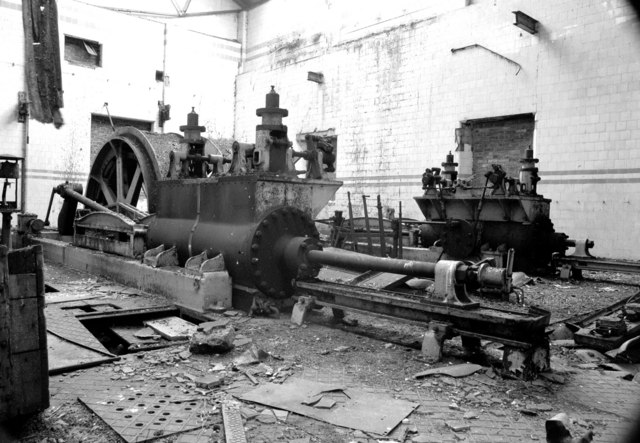
A steam winding engine survived derelict at the site from the colliery's 1967 closure until it was scrapped in 1983; the site is now part of the National Mining Museum Scotland collection area at the neighbouring Lady Victoria Colliery.
Related mines
- Lady Victoria Colliery — Lady Victoria was connected underground to Lingerwood, which supplied its statutory second shaft.
- Newbattle Collieries — Lingerwood was the Marquis of Lothian’s principal Newbattle pit, opened by him in 1798 and the point to which the estate’s waggonway brought coal for preparation before Lady Victoria was built.
Nearby mines
- Lady Victoria Colliery — 0.2 miles (0.4 km) W
- Newbattle Collieries — 0.2 miles (0.4 km) NW
- Arniston Colliery — 1.0 miles (1.6 km) S
- Easthouses Pit — 1.1 miles (1.8 km) N
- Eldin Colliery — 1.9 miles (3.0 km) NW
Straight-line distance, within 9 miles (15 km). Show on the map.
Recorded claims
Individual factual claims, each attached to the source(s) that support it below. Where sources disagree, both are kept.
- From 1890 Lingerwood supplied the neighbouring Lady Victoria Colliery's statutory second shaft, the two pits connected underground and sharing surface buildings. 1
- Lingerwood's workforce averaged 727, peaking at 770 in 1951; in 1948 it produced around 1,000 tons of coal a day. 2
- Lingerwood began as the Old Engine Pit, sunk in 1798, and was substantially rebuilt in 1839. 2
- The colliery worked two shafts: No. 1, Dickson's Shaft, 253 metres deep and 5.2 metres in diameter, brick-lined, fitted with an electric winder and serving as the upcast shaft for the neighbouring Lady Victoria Colliery; and No. 2, the Engine Pit, a downcast rectangular shaft 266 metres deep with its own steam winder. 3
- Baths built for 798 men at Lingerwood also served the workforce at Lady Victoria Colliery, and when Heriot-Watt University's mining school closed, its rescue station was first relocated to Lingerwood before eventually moving on to its current home at Crossgates in Fife. 3
Sources
- (secondary) Newtongrange - the making of Scotland's largest pit village — RAILSCOT
- (secondary) Lingerwood Colliery — mindat.org
- (primary) Lingerwood Colliery (NRHE 132499) — Historic Environment Scotland (trove.scot)
Record created: 1 September 2026 · Last researched: 1 September 2026