 MineArchive
Arniston Colliery
| Also known as | Emily Pit, Gore Pit |
|---|---|
| Location | Gorebridge, Midlothian — 55.8465, -3.0623 (exact) |
| Commodity | Coal |
| Type | Coal |
| Worked | 1858 (some accounts 1860s)–April 1962 |
| Maximum depth | About 990 feet (Emily Pit, 302 m; some accounts 293 m); Gore Pit about 698 feet (213 m) |
| Operators | Arniston Coal Company (1874–1947), National Coal Board (1947–1962) |
Overview
The Arniston Coal Company's colliery at Gorebridge in Midlothian: the Emily Pit, sunk from 1858 and said to have been the deepest shaft in Scotland in its day, and the Gore Pit of 1878. It employed over 1,300 men between the wars and closed in April 1962.
History
Arniston Colliery, at Gorebridge some nine miles south-east of Edinburgh, grew from the Emily Pit, sunk from 1858 by one account and dating from the 1860s by another, close to the older Newbyres Colliery. Its timber-lined shaft, put at 293 to 302 metres, was said to be the deepest in Scotland at the time. The Arniston Coal Company, formed in 1874, took the Emily over and completed its own first pit, the Gore, in 1878: a rectangular brick-lined shaft about 213 metres deep. The two were known together as Arniston Colliery, and Gorebridge grew around them as miners came and a railway was built to take the coal away.
The colliery worked gas, house and steam coals from the Great Seam, Kailblades, Parrot and Splint, and later the Coronation, Diamond, Blackbird and Siller Willie. Employment doubled from 554 in 1905 to 1,047 in 1910 and reached 1,314 in the 1930s; output was 366,000 tons in 1923. A fall of roof killed two colliers in December 1858 (see Disasters, below), and on 27 February 1868 a North British Railway train came to grief at the colliery in a rear collision and derailment that killed three. In 1936 the Gore Pit was given circular pithead baths designed by J. A. Dempster, built for £12,000 with places for 570 men, and at one stage the Emily had its own power station.
The National Coal Board took over in 1947. In 1948 the colliery raised about 950 tons a day, 237,500 tons a year, with 964 employees, a Norton washer, baths, a canteen and a first-aid room, and a reorganisation was planned. The workforce peaked at 990 in 1951. Arniston Colliery closed in April 1962, and its wooded bing survives beside Gorebridge.
Geology
Midlothian Coalfield: the Great Seam, Kailblades, Parrot and Splint, with the Coronation, Diamond, Blackbird (Three Feet) and Siller Willie worked from about 1915.
Workings
The Emily Pit (from 1858 or the 1860s, timber-lined, 293-302 m) and the Gore Pit (completed 1878, rectangular and brick-lined, about 213 m), with an Old Engine Pit; a railway connection; the Emily's own power station; circular pithead baths at the Gore (1936).
Closure
Closed by the National Coal Board in April 1962; the last abandonments of the Kailblades, Great and Coronation seams are dated 1962.
What remains
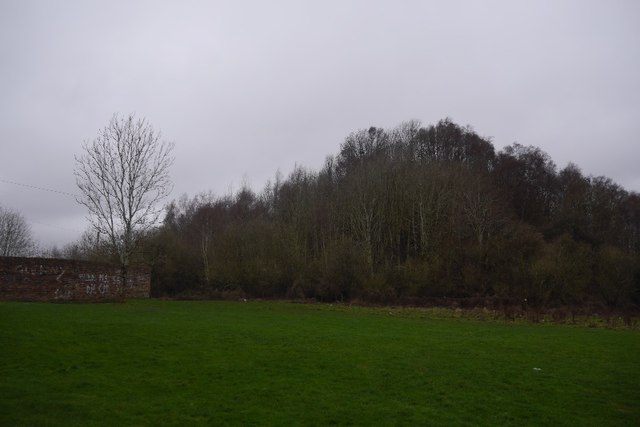
The colliery's spoil heap survives as a wooded bing beside Gorebridge.
A wooded bing.
Redevelopment
Unknown.
Nearby mines
- Lingerwood Colliery — 1.0 miles (1.6 km) N
- Lady Victoria Colliery — 1.1 miles (1.7 km) N
- Newbattle Collieries — 1.2 miles (1.9 km) N
- Easthouses Pit — 2.1 miles (3.4 km) N
- Eldin Colliery — 2.5 miles (4.0 km) NW
Straight-line distance, within 9 miles (15 km). Show on the map.
Disasters & major incidents
-
Arniston Colliery roof fall, 1858
2 December 1858 · Collapse / Roof Fall · 2 fatalities
On 2 December 1858 two colliers, John Clark and Alexander Hood, were killed by a fall of roof at the face of the workings at Arniston Colliery, near Gorebridge in Midlothian, then owned by John Christie.
What's uncertain
Points where sources disagree or the record could not be settled; both accounts are kept. All open questions in the archive.
Recorded claims
Individual factual claims, each attached to the source(s) that support it below. Where sources disagree, both are kept.
- The Emily Pit was sunk in 1858. (disputed) 1,2,3
- The Emily Pit dated from the 1860s. (disputed) 1,4
- The Emily's timber-lined shaft was said to be the deepest in Scotland at the time it was sunk. 1
- The Arniston Coal Company was established in 1874, and the Gore, its first pit, was completed in 1878 with a rectangular brick-lined shaft about 213 m deep. 5,2
- Circular pithead baths designed by J. A. Dempster were completed at the Gore Pit in 1936 at a cost of £12,000, for 570 men. 5
- In 1948 the colliery produced about 950 tons a day, 237,500 tons a year, with 964 employees. 1,5
- Arniston Colliery closed in April 1962. 6,1,3
- On 27 February 1868 a North British Railway accident at Arniston Colliery, a rear collision and derailment, killed three people. 7
- The colliery's spoil heap survives as a wooded bing. 8
- The Kailblades seam at Arniston was abandoned in 1962. 9
Photographs & further reading
The national record of the Emily Pit, with its shafts, workforce and 1948 details.
View sourceThe national record of the Gore Pit and its pithead baths.
View sourceThe pit's railway connection and its neighbours on the line.
View sourceOwners, employment, seams and those killed at the colliery.
View sourceSources
- (secondary) Arniston Colliery, Emily Pit (NRHE 132482) — Historic Environment Scotland (trove.scot, formerly Canmore)
- (secondary) Arniston Colliery Emily Pit — RAILSCOT
- (secondary) Gorebridge — Gazetteer for Scotland
- (secondary) Gorebridge — Wikipedia
- (secondary) Arniston Colliery, Gore Pit (NRHE 148283) — Historic Environment Scotland (trove.scot, formerly Canmore)
- (primary) Arniston Colliery — Durham Mining Museum
- (secondary) Accident at Arniston Colliery, Gorebridge on 27th February 1868 — The Railways Archive
- (observational) Bing, Arniston Colliery (Geograph 5074825) — Geograph
- (primary) BGS mine plan: Arniston, Kaleblades, abandoned 1962 — BGS / Mining Remediation Authority mine plans
Record created: 4 October 2026 · Last researched: 4 October 2026