 MineArchive
Holly Bank Colliery
| Location | Essington, near Wolverhampton, Staffordshire — 52.6274, -2.0517 (approximate) |
|---|---|
| Commodities | Coal, Ironstone |
| Type | Coal |
| Worked | c. 1850 (as Essington Wood)–December 1952 |
| Maximum depth | Unknown. |
| Operators | Holly Bank Coal Co. Ltd (1891–1932), Hilton Main and Holly Bank Collieries Ltd (1932–1946), National Coal Board (1947–1952) |
Overview
A South Staffordshire colliery at Essington, four miles north-east of Wolverhampton, which began as Essington Wood Colliery about 1850 and was renamed Holly Bank when the Holly Bank Coal Co. Ltd took it over in the 1890s. Worked through several shafts, the largest of them the No. 15 with over a thousand employed in 1923, it raised household and manufacturing coal and some ironstone from the Eight Feet, Brooch, Deep and Shallow seams. The company sank Hilton Main to the west from 1920, coal-getting at Holly Bank stopped in the slump after the 1926 strike, and the pit was reopened in 1935 after a Northumberland coal-owner, C. A. Nelson, bought the company. It closed finally in December 1952; the site has since disappeared under the M54 and housing, and only the colliery railway's signal box, now a house, marks it.
History
Essington Wood Colliery, behind the Mitre Inn on Bursnips Road, was working by about 1850 under Samuel Mills of the Darlaston Steel Company, its coal going by tramway to the Wyrley and Essington Canal, whose summit level was chronically short of water; in 1875 a rail connection was made to the London and North Western Railway's new Walsall to Cannock branch. The Holly Bank Coal Co. Ltd was formed in 1891 to take it over and renamed the pit, though the Willenhall History Society places the change in 1895, when Essington Wood went into liquidation and a Holly Bank Trust Company was set up, and the Durham Mining Museum dates the colliery's opening to 1895. Under J. C. Forrest the company became one of the larger producers in the district: the returns show 532 employed in 1894, and by 1905 three pits, the No. 5, the No. 15 and the Sneyd, were returned separately, the No. 15 growing to 981 people in 1915 and 1,016 in 1923. Two Hudswell Clarke saddle tanks bought new in 1893 and 1900 worked the sidings, and in 1906 a line was built to a new canal wharf at Short Heath to avoid the locks. The inspectors' reports name 38 men killed at the colliery between 1893 and 1924, in falls of roof and coal on longwall faces in the Eight Feet, Brooch and Shallow seams, in haulage accidents on the jigs and inclined planes, and in one case, in 1913, in a panic when forty men riding out on trolleys jumped from a moving train. A new pit, Hilton Main, was sunk to the west from about 1920 to reach reserves remote from the old shafts, was connected underground and was producing by 1924, and as it took over the output coal-getting at Holly Bank ceased in the recession that followed the 1926 General Strike. In December 1930 the debenture holders put both collieries up for sale as a going concern, without a buyer, and in 1932 C. A. Nelson, chairman of Hartley Main Collieries at Cramlington in Northumberland, bought the company, which became Hilton Main and Holly Bank Collieries Ltd on 1 July 1932 with its office on the Cannock Road. Nelson brought in locomotives from Hartley Main, reopened Holly Bank in 1935 and named two new Hunslet engines, Robert Nelson No. 4 and Carol Ann No. 5, after the manager's children. The 1940 directory records 1,000 underground and 268 on the surface across the two pits, and the Durham Mining Museum lists Holly Bank as working in 1947, though the brick historian's reading of the same returns is that it had no men underground at nationalisation. Holly Bank closed in December 1952, its abandonment plans dated 18 December that year, and the Willenhall History Society attributes the decline to geological faults; Hilton Main worked on until 1968-69, when faulting of the Eight Feet seam made mechanised faces uneconomic.
Geology
Holly Bank worked the Coal Measures of the Cannock Chase coalfield's south-western edge, where the productive seams lie in sedimentary beds named by thickness and character: the Eight Feet, Five Feet, Four Feet, Brooch, Deep, Shallow, Yard, Bass and Cinder coals, with ironstone raised alongside them in the 1890s and 1910s. The accident reports describe the Eight Feet as a 5 ft 9 in seam with a dirt band, faces rising at 1 in 6 and 'slips' in roof and coal that repeatedly released falls without warning. Faulting was the district's undoing: production at Holly Bank is said to have declined through geological faults, and Hilton Main closed in 1968 when local faulting of the Eight Feet seam defeated mechanised working.
Geological setting: Faults and Fractures (well documented example), Sedimentary Beds and Seams (well documented example)
Workings
Several shafts, returned separately as the No. 5, No. 15 and Sneyd pits in the early twentieth century, with a staple and an underground connection to Hilton Main from the 1920s. Longwall faces in the Eight Feet, Brooch, Deep and Shallow seams from at least the 1890s, compressed-air disc coal-cutters by 1903 and electric shot-firing by 1901; haulage by endless-rope planes and chain-hauled jigs at gradients up to 1 in 3.5, with men ridden out on trolleys along a main travelling road inclined at 1 in 6. On the surface the colliery had its own brickworks, reported in 1930 as able to make 150,000 bricks a week, a locomotive shed and a railway system linking the pit to the LNWR Cannock branch, the canal wharf at Short Heath and, by a contour-hugging loop, to Hilton Main.
Closure
Coal-getting first stopped in the slump after the 1926 General Strike as Hilton Main took over production; reopened in 1935 under the new owners and closed finally in December 1952, with the abandonment plans dated 18 December 1952. The Willenhall History Society attributes the decline to geological faults.
What remains
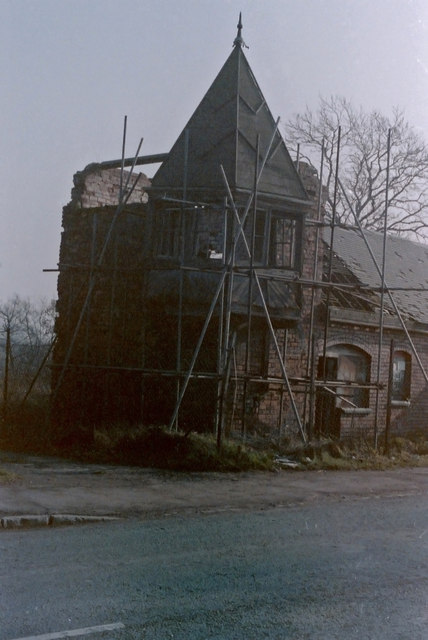
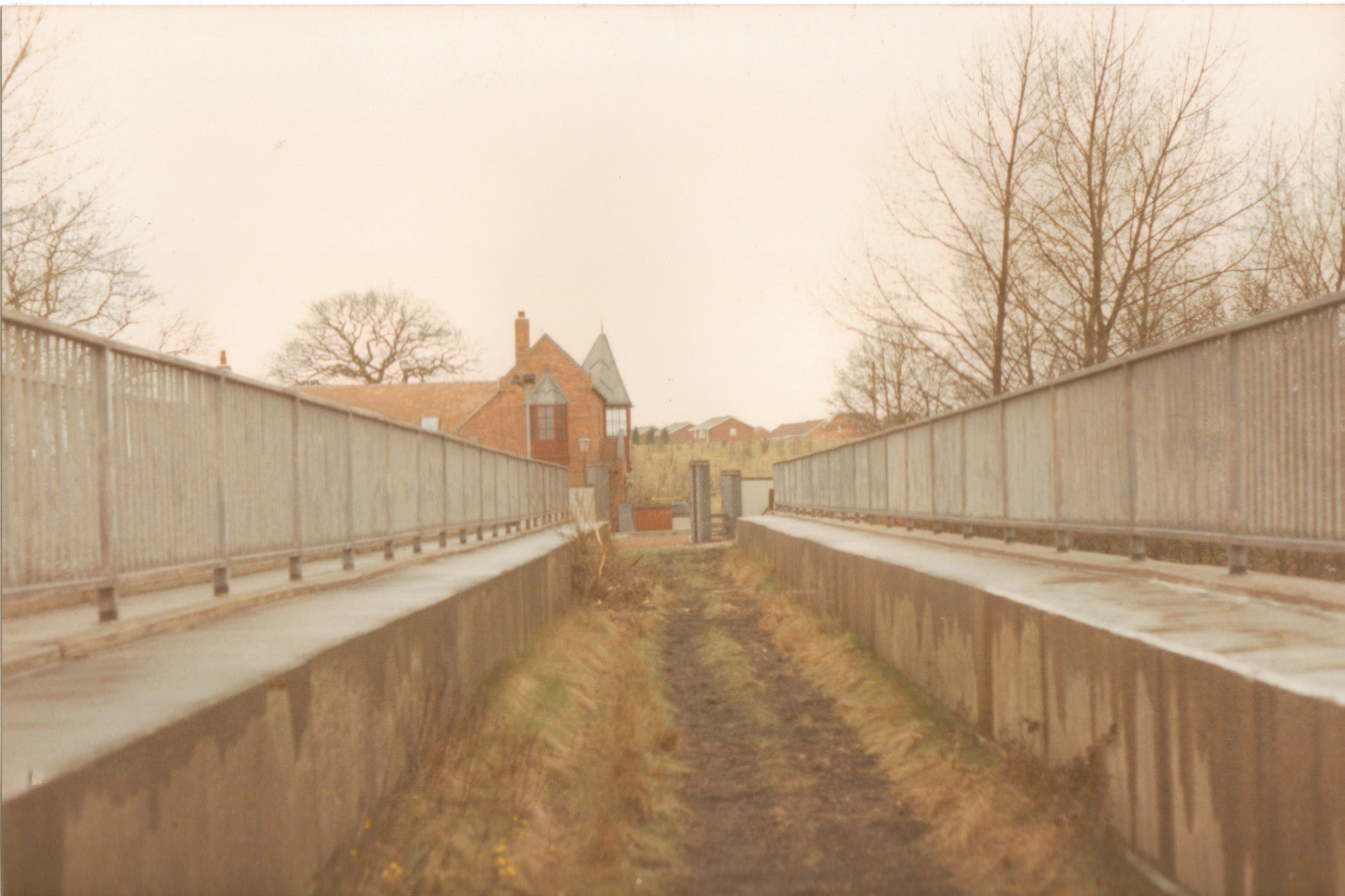
The colliery site disappeared under the M54 motorway in the 1980s and later housing; Wulfrun Way follows the line of the colliery railway. The former crossing and signal box on the railway, photographed derelict in January 1984, was repaired and is still in use as a house, and a bridge on the line survived in 1993. Sections of the railway to Hilton Main and the canal wharf at Short Heath are walkable or public footpaths.
The colliery railway's signal box, now a dwelling; lengths of the trackbed towards Hilton Main and Short Heath, with a bridge and the canal wharf.
Redevelopment
M54 motorway and housing over the pit site; Wulfrun Way on the railway.
Nearby mines
- Norton Cannock Colliery — 1.9 miles (3.0 km) NE
- Wyrley No. 3 Colliery — 2.4 miles (3.8 km) NE
- Fishley Colliery — 2.7 miles (4.3 km) E, West Midlands
- Great Wyrley Colliery — 2.8 miles (4.5 km) NE
- Hawkins Colliery — 2.9 miles (4.6 km) N
Straight-line distance, within 9 miles (15 km). Show on the map.
What's uncertain
Points where sources disagree or the record could not be settled; both accounts are kept. All open questions in the archive.
- The Willenhall History Society states that Essington Wood went into liquidation in 1895 and the Holly Bank Trust Company was set up; the Durham Mining Museum gives 1895 as the colliery's opening. (disputed) 4,1
- The Durham Mining Museum lists Holly Bank as producing household and manufacturing coal in 1947, but the brick historian reads the same records as showing no men underground at nationalisation. (disputed) 4,3
Recorded claims
Individual factual claims, each attached to the source(s) that support it below. Where sources disagree, both are kept.
- The colliery began as Essington Wood Colliery about 1850, owned by Samuel Mills of the Darlaston Steel Company. 1
- The Holly Bank Coal Co. Ltd was formed in 1891 to take over Essington Wood Colliery, which was renamed Holly Bank. 2,3
- The Willenhall History Society states that Essington Wood went into liquidation in 1895 and the Holly Bank Trust Company was set up; the Durham Mining Museum gives 1895 as the colliery's opening. (disputed) 4,1
- Holly Bank employed 532 people in 1894; by 1905 the No. 5, No. 15 and Sneyd pits were returned separately, and the No. 15 alone had 981 employed in 1915 and 1,016 in 1923. 4
- The returns record the Brooch, Eight Feet, Five Feet, Four Feet, Shallow, Deep and Cinder seams, with ironstone raised in 1894 and 1915; the 1952 abandonment plan covers the Eight Feet, Yard, Bass, Shallow and Deep. 4,5
- A rail connection to the LNWR Walsall-Cannock branch was built in 1875, a line to a new wharf on the Wyrley and Essington Canal at Short Heath in 1906, and a loop line to Hilton Main; the lines closed in 1969. 2
- A new shaft was sunk near Featherstone from about 1920 to reach remote reserves; Hilton Main was producing by 1924, connected underground to Holly Bank, and took over production. 2,3
- Underground work at Holly Bank ceased in the recession following the 1926 General Strike, coal extraction having stopped by 1927. 2,3
- The collieries were put up for sale by the debenture holders in December 1930 without a buyer; C. A. Nelson of Hartley Main Collieries, Cramlington, bought the Holly Bank Coal Co. in 1932 (the takeover dated 1 July 1932) and reopened Holly Bank in 1935. 6,3
- A December 1930 newspaper account gave the colliery's brickworks a capacity of 150,000 bricks a week. 3
- Holly Bank Nos. 1 and 2 were Hudswell Clarke saddle tanks bought new in 1893 and 1900; Robert Nelson No. 4 and Carol Ann No. 5, Hunslets of 1936, were named after the manager's children, and No. 4 is preserved. 7
- The colliery closed in December 1952; its abandonment plans are dated 18 December 1952. 4,1,5
- The Durham Mining Museum lists Holly Bank as producing household and manufacturing coal in 1947, but the brick historian reads the same records as showing no men underground at nationalisation. (disputed) 4,3
- The Durham Mining Museum names 38 men killed at Holly Bank between 1893 and 1924, in separate accidents; no incident of five or more deaths is recorded. 4
- In August 1913 forty men riding out on trolleys along the main travelling road jumped off in a panic when a chain securing a girder was seen hanging down; James Garner broke a leg and died of blood poisoning a month later. 4
- The colliery site disappeared under the M54 in the 1980s and recent housing; the railway's signal box, derelict in 1984, was repaired and is in use as a house. 8,9
Photographs & further reading
Returns for the No. 5, No. 15 and Sneyd pits, the seams worked and the circumstances of 38 men killed at the colliery.
View sourceA shared description of the colliery's railways and canal wharf, attached to 31 photographs of what survives of them.
View sourceThe colliery company's brickworks and the 1930-32 sale of the collieries, with newspaper extracts.
View sourceThe colliery's steam locomotives from 1876 to nationalisation, with what became of each.
View sourceSources
- (secondary) Holly Bank Colliery — Willenhall History Society
- (secondary) Holly Bank and Hilton Main Colliery Railway (shared description by John M, 2011) — Geograph Britain and Ireland
- (secondary) Essington & Cheslyn Hay Brickworks — UK Named Bricks
- (primary) Durham Mining Museum: Holly Bank Colliery — Durham Mining Museum
- (primary) Holly Bank: abandonment plan, Eight Feet, Yard, Bass, Shallow and Deep seams (mine plans catalogue) — British Geological Survey / Mining Remediation Authority
- (primary) Durham Mining Museum: Hilton Main and Holly Bank Collieries Ltd. — Durham Mining Museum
- (secondary) Hilton Main & Holly Bank Locomotives — Chasewaterstuff's Railway & Canal Blog
- (observational) Old signal box, Holly Bank Colliery (photograph, January 1984) — Tim Marshall, Geograph Britain and Ireland, via Wikimedia Commons
- (observational) Wulfrun Way, Holly Bank Colliery Railway (photograph, 2009) — Geograph Britain and Ireland, via Wikimedia Commons


Record created: 8 September 2026 · Last researched: 9 September 2026