 MineArchive
Higher Pitts Mine
| Location | near Priddy, Somerset — 51.2387, -2.6676 (approximate) |
|---|---|
| Commodities | Iron, Copper, Lead, Manganese |
| Type | Metal |
| Worked | 17th century–1893 |
| Maximum depth | Unknown. |
| Operators | Somerset Manganese and Iron Ore Co. (1890–1893) |
Overview
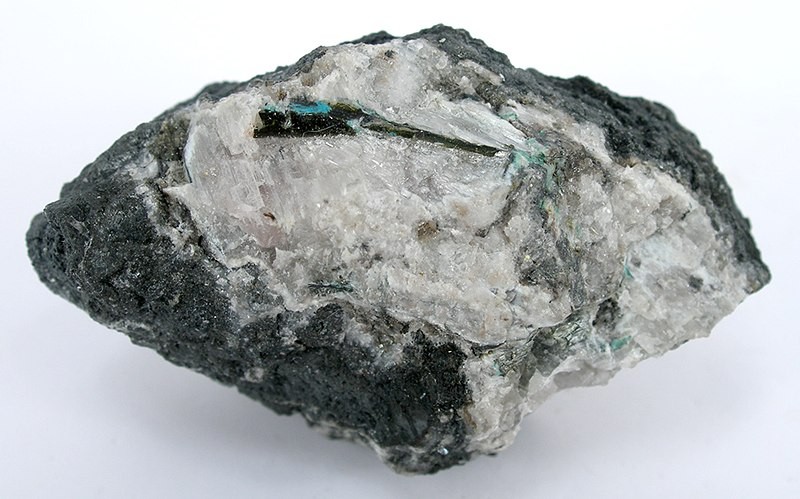
A small Mendip mine worked for iron and manganese since the 17th century, briefly revived as a commercial venture in 1890-93, and now known chiefly as the type locality for the minerals chloroxiphite and diaboleite.
History
Higher Pitts Mine, near Priddy in the Mendip Hills, was worked on a small scale for iron and manganese from as early as the 17th century. It saw a brief commercial revival in 1890, when the Somerset Manganese and Iron Ore Co. was formed to work the site for iron, manganese, lead and copper under manager Willcox; the venture met with little success and the company closed the mine within a few years -- sources differ on whether work actually ceased in 1891 or the company's closure came in 1893. The mine's real significance lies in its mineralogy rather than its production: it is the type locality for the rare minerals chloroxiphite and diaboleite, and has also produced some of the largest known crystals of hydrocerussite and crednerite. The last physical traces of mining were removed from the site in 1992.
Geology
Iron, manganese, copper and lead of the Mendip orefield; the ground was worked commercially for manganese and iron ore in the early 1890s.
Workings
Small-scale working from the 17th century; briefly worked commercially 1890-93 by the Somerset Manganese and Iron Ore Co. for iron, manganese, lead and copper.
Closure
Sources disagree on the exact end of the 1890s commercial revival -- either 1891 (when work reportedly ceased under manager Willcox) or 1893 (when the Somerset Manganese and Iron Ore Co. is said to have closed the mine); the last physical traces of mining were cleared from the site in 1992.
What remains
The last vestiges of mining were removed from the site in 1992; it remains notable chiefly as a mineralogical type locality.
Nearby mines
- Priddy (St Cuthbert's) Lead Works — 1.5 miles (2.4 km) NE
- Chewton Mineries — 2.6 miles (4.2 km) NE
- Dulcote Quarry — 3.4 miles (5.4 km) SE
- Grebe Swallet Mine — 4.4 miles (7.1 km) NW
- Blackmoor Rake — 4.5 miles (7.2 km) NW
Straight-line distance, within 9 miles (15 km). Show on the map.
What's uncertain
Points where sources disagree or the record could not be settled; both accounts are kept. All open questions in the archive.
- The Somerset Manganese and Iron Ore Co. was formed in 1890 to work Higher Pitts Mine, under manager Willcox, but closed within a few years -- sources differ on whether work ceased in 1891 or the company closed the mine in 1893. (disputed) 1
Recorded claims
Individual factual claims, each attached to the source(s) that support it below. Where sources disagree, both are kept.
- The Somerset Manganese and Iron Ore Co. was formed in 1890 to work Higher Pitts Mine, under manager Willcox, but closed within a few years -- sources differ on whether work ceased in 1891 or the company closed the mine in 1893. (disputed) 1
- Higher Pitts Mine is the type locality for the minerals chloroxiphite and diaboleite, and has produced some of the largest known crystals of hydrocerussite and crednerite. 2
- Until the much larger mendipite deposits were found at Merehead quarry, Higher Pitts was the Mendips' main source of mendipite specimens; plattnerite and kentrolite have since been identified in old specimens from the mine. 1
- The workings lie in a shallow dry valley at the edge of the Mendip escarpment, about 240 metres above the Somerset Levels, leading through Dursdon Wood to Ebbor Gorge; the valley was known as 'Iron Pits Bottom' by 1752, and lead had been mined in the immediate vicinity from early times, peaking in the seventeenth century and dying out by the mid-nineteenth. 1
Photographs & further reading
Full mineralogical detail, including the type-locality minerals found here.
View sourceSources
- (secondary) Higher Pitts Mine, Priddy, Mendip, Somerset — Mindat
- (secondary) The Higher Pitts mine, Mendip Hills, Somerset, England — Mineralogical Record (via Free Library)
Record created: 1 September 2026 · Last researched: 24 September 2026