 MineArchive
Hemsworth Colliery
| Location | Fitzwilliam, near Hemsworth, 6½ miles east-south-east of Wakefield, West Yorkshire — 53.6333, -1.3667 (approximate) |
|---|---|
| Commodity | Coal |
| Type | Coal |
| Worked | 1876–1880 (sinking)–July 1967 (merged into South Kirkby) |
| Maximum depth | The Shafton seam, the first worked, lay 145 yards (133 m) down; the pit was later deepened to the Haigh Moor and then the Barnsley seam. |
| Operators | J. R. Fosdick (1876–1881), Fitzwilliam, Hemsworth Colliery Co. (1882–1887), South Kirkby, Featherstone and Hemsworth Collieries Ltd (1907–1946), National Coal Board (1947–1967) |
Overview
Hemsworth Colliery was sunk as Fitzwilliam Main between 1876 and 1880 by J. R. Fosdick, on the Yorkshire coalfield east of Wakefield, and gave its name to the pit village of Fitzwilliam that grew around it. It was renamed Hemsworth in the annual lists from 1888, changed hands nine times in its first thirty years, and was deepened twice, to the Haigh Moor in 1897 and to the Barnsley seam from 1899, employing well over two thousand people by the 1920s. In its first year, with the men still working by naked light, an explosion of firedamp killed five colliers (see Disasters, below). It worked as an independent colliery until 1967, when it was joined underground to South Kirkby, which then wound its coal; the two were formally merged that July. Kinsley Drift was later driven from the old pit yard to take the coal left behind.
History
J. R. Fosdick sank Fitzwilliam Main to the Shafton seam between 1876 and 1880, and the pit was barely a year old when firedamp released by a fall was fired at a naked light in the dip levels on 25 January 1879, killing five colliers. Ownership changed repeatedly in the early decades: Fosdick to 1881, the Fitzwilliam, Hemsworth Colliery Co. to 1887, the Fitzwilliam, Hemsworth Coal Co. to 1894, the Hemsworth Coal Co. to 1897, the New Hemsworth Coal Co. in 1899, the New Hemsworth Colliery Co. Ltd to 1903, Fitzwilliam Hemsworth Collieries Ltd to 1905, and from 1907 the South Kirkby, Featherstone and Hemsworth Collieries Ltd, which held it until nationalisation. From 1888 the annual lists called it Hemsworth Colliery. It was deepened to the Haigh Moor seam in 1897 and worked the Barnsley seam from 1899, so that by 1900 the Home Office return shows three mines under one name — Shafton, Haigh Moor and Barnsley — with a combined workforce of over 1,600. Coking, gas, household and steam coal were all returned. Employment peaked at 2,343 in 1923 and was still 1,863 in 1940. Nationalised in 1947 with an output of 370,000 tons and 1,305 employees, the colliery was still returning 1,419 in 1954, working the Barnsley and the Low and Top Haigh Moor. In the early spring of 1967 it was linked underground to South Kirkby, which wound its coal from then on, and the two were officially merged in July 1967; the pit top appears to have closed at or soon after that date. Between September 1976 and 1978, the old buildings having been cleared, the Kinsley Drift was driven from the former Hemsworth pit yard as a short-life, high-productivity mine to work the Shafton and Sharlston Yard seams; it closed as uneconomic in July 1986.
Geology
Hemsworth worked the productive Middle Coal Measures of the Yorkshire coalfield through three of its principal seams. The Shafton, reached at 145 yards, was the shallow seam the pit was first sunk to; a thin coal left in the roof above it had given off a little gas during sinking, and it was gas from that horizon, released by a fall, that caused the 1879 explosion. Deepening reached the Haigh Moor in 1897 and the Barnsley seam, the coalfield's thickest and most valuable, from 1899. The later Kinsley Drift went back to the Shafton and to the Sharlston Yard.
Geological setting: Sedimentary Beds and Seams (well documented example)
Workings
A shaft colliery whose three named horizons were returned as separate mines in the Home Office lists between 1900 and 1915. The 1879 inquiry describes longwall working on the Shafton with gates driven to the coal face and deputies examining the workings before each shift, the men working by naked light until the inspector pressed for safety lamps after the explosion. In its last phase the pit wound nothing at all: after the 1967 link its coal went out through South Kirkby. The Kinsley Drift that replaced it was a surface drift, not a shaft mine, driven into the shallow seams from the old pit yard.
Closure
Hemsworth stopped working as an independent colliery in the early spring of 1967, when an underground link to South Kirkby was completed and that colliery began winding its coal; the merger was formalised in July 1967 and the pit top closed at or soon after, the site appearing derelict to a passing observer by about 1970. Some accounts give a closure date of 1969, which probably reflects the end of the merged workings under the Hemsworth name rather than the pit top itself.
What remains
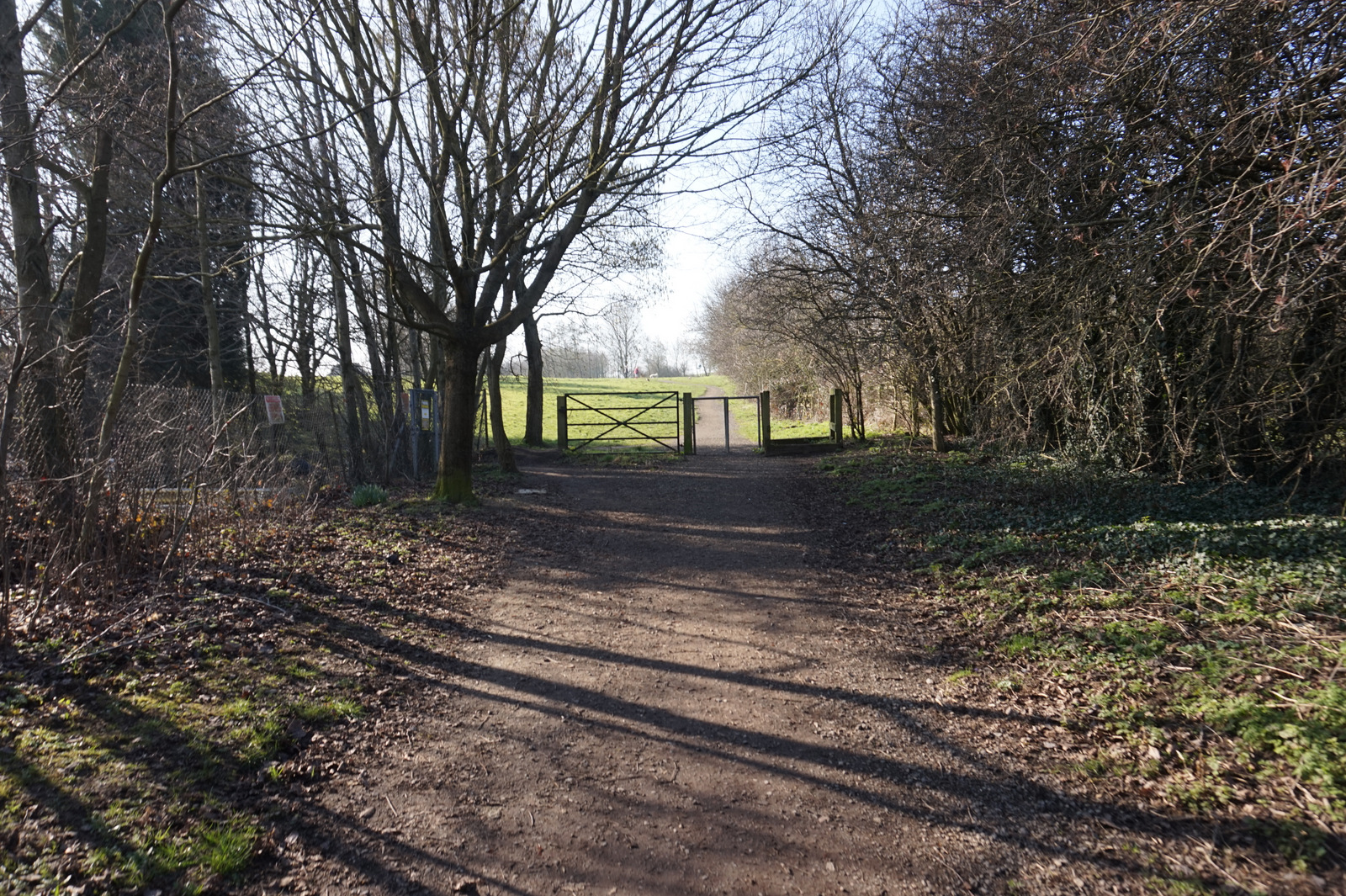
The colliery buildings were cleared in the mid-1970s to make way for the Kinsley Drift, which in turn closed in 1986. Nothing of either survives above ground. The line of the colliery's mineral railway can still be walked east of the site and was photographed as such in 2019; the surrounding land has been reclaimed as open ground around the pit villages of Fitzwilliam and Kinsley.
No headgear or colliery buildings. The trackbed of the branch that served the colliery survives as a green lane, and the pit villages of Fitzwilliam and Kinsley, built for the workforce, remain.
Redevelopment
Reclaimed open land and public green space between Fitzwilliam and Kinsley, after the Kinsley Drift closed in 1986.
Related mines
- Featherstone Main Colliery — Both owned by South Kirkby, Featherstone and Hemsworth Collieries Ltd; Hemsworth's miners backed the 1935 Featherstone Main strike.
- Kinsley Drift — Kinsley Drift was driven to reach coal left behind by the older Hemsworth workings, on whose ground it stood.
Nearby mines
- Kinsley Drift — 0.1 miles (0.2 km) N
- Nostell Colliery — 1.6 miles (2.6 km) NW
- South Kirkby Colliery — 1.8 miles (2.9 km) E, South Yorkshire
- Sharlston Colliery — 2.8 miles (4.5 km) N
- Hodroyd Colliery — 2.9 miles (4.7 km) S, South Yorkshire
Straight-line distance, within 9 miles (15 km). Show on the map.
Disasters & major incidents
-
Fitzwilliam Main Colliery Explosion
25 January 1879 · Explosion · 5 fatalities
An explosion of firedamp in the dip levels on the west side of Fitzwilliam Main Colliery, near Hemsworth in the West Riding, on the morning of 25 January 1879. The pit had been open less than a year, gas had scarcely been seen in it, and the men were allowed to work by naked light. A fall is thought to have released gas from a thin coal left in the roof, which fired at a naked flame. Two colliers died at once and three others later; the inspector afterwards pressed the owner to introduce safety lamps throughout.
Culture
- Hemsworth Colliery F.C. (Sports)
The club was formed by and named for the workforce of Hemsworth Colliery in the mid-1920s, when the pit employed over two thousand people, and played from the recreation ground in the pit village of Kinsley beside it.
Recorded claims
Individual factual claims, each attached to the source(s) that support it below. Where sources disagree, both are kept.
- Fitzwilliam Main was sunk to the Shafton seam by J. R. Fosdick between 1876 and 1880, and appears in the annual list of collieries as Hemsworth Colliery from 1888. 1
- The colliery was deepened to the Haigh Moor seam in 1897 and worked the Barnsley seam from 1899. 1,2
- Home Office returns give 846 employed in 1894, over 1,600 across the Shafton, Haigh Moor and Barnsley mines in 1900, a peak of 2,343 in 1923, and 1,305 at nationalisation in 1947, when output was 370,000 tons. 2
- The colliery passed through nine owners between 1876 and 1907, ending with South Kirkby, Featherstone and Hemsworth Collieries Ltd, which held it until nationalisation in 1947. 1
- Hemsworth worked independently until the early spring of 1967, when it was linked underground to South Kirkby, which wound its coal; the two collieries were officially merged in July 1967. 1
- Between September 1976 and 1978 the Kinsley Drift was driven from the cleared Hemsworth pit yard as a short-life, high-productivity mine to work the Shafton and Sharlston Yard seams, and closed as uneconomic in July 1986. 1
- The 1954 return lists the Barnsley, Low Haigh Moor and Top Haigh Moor as the seams then worked, with 1,419 employed. 2
- An explosion of firedamp released by a fall and fired at a naked light killed five colliers on 25 January 1879, in the pit's first year of working. 3,4
- The BGS mine-plans catalogue holds a Mining Remediation Authority abandonment plan titled 'Hemsworth' (catalogue NE549, Top Haigh Moor, dated 1965). 5
Photographs & further reading
The sinking of Fitzwilliam Main, the deepenings to the Haigh Moor and Barnsley seams, the full list of owners from 1876 to nationalisation, and the driving and closure of the Kinsley Drift that followed on the same site.
View sourceThe Home Office returns for the colliery between 1894 and 1954 — output, coal types, seams and numbers employed — together with the museum's roll of individual deaths at the pit and the circumstances of each.
View sourceA 2019 photograph of the trackbed of the mineral branch that served the colliery, now a green lane east of the site.
View sourceSources
- (secondary) Hemsworth Colliery (Hemsworth or Fitzwilliam Colliery and Kinsley Drift) — Northern Mine Research Society (read via a 2024 Wayback Machine capture)
- (primary) Durham Mining Museum: Hemsworth Colliery — Durham Mining Museum
- (primary) Fitzwilliam Colliery Explosion, Pontefract, 1879 — Northern Mine Research Society, after the Mines Inspector Report for 1879 (read via a 2024 Wayback Machine capture)
- (secondary) Mining Disasters in Great Britain: chronological list, 1850 onwards — Coal Mining History Resource Centre
- (primary) BGS / Mining Remediation Authority mine plans: HEMSWORTH — British Geological Survey / Mining Remediation Authority
- (observational) Former railway line to Hemsworth Colliery (photographed 2019) — Geograph Britain and Ireland, Ian S
- (secondary) Hemsworth Colliery F.C. — Wikipedia
- (secondary) Hemsworth Miners Welfare F.C. — Wikipedia
Record created: 9 September 2026 · Last researched: 9 September 2026