 MineArchive
Sharlston Colliery
| Location | New Sharlston, near Wakefield, West Yorkshire — 53.6710, -1.3900 (approximate) |
|---|---|
| Commodity | Coal |
| Type | Coal |
| Worked | 1858–July 1993 |
| Maximum depth | Unknown. |
| Operators | New Sharlston Collieries Co. Ltd (?–1946), National Coal Board (1947–?) |
Overview
A West Yorkshire colliery that grew a whole new village around it, worked for well over a century until 1993, its salvaged pit wheel now split in two and standing at either end of the quiet road that runs through Sharlston today.
History
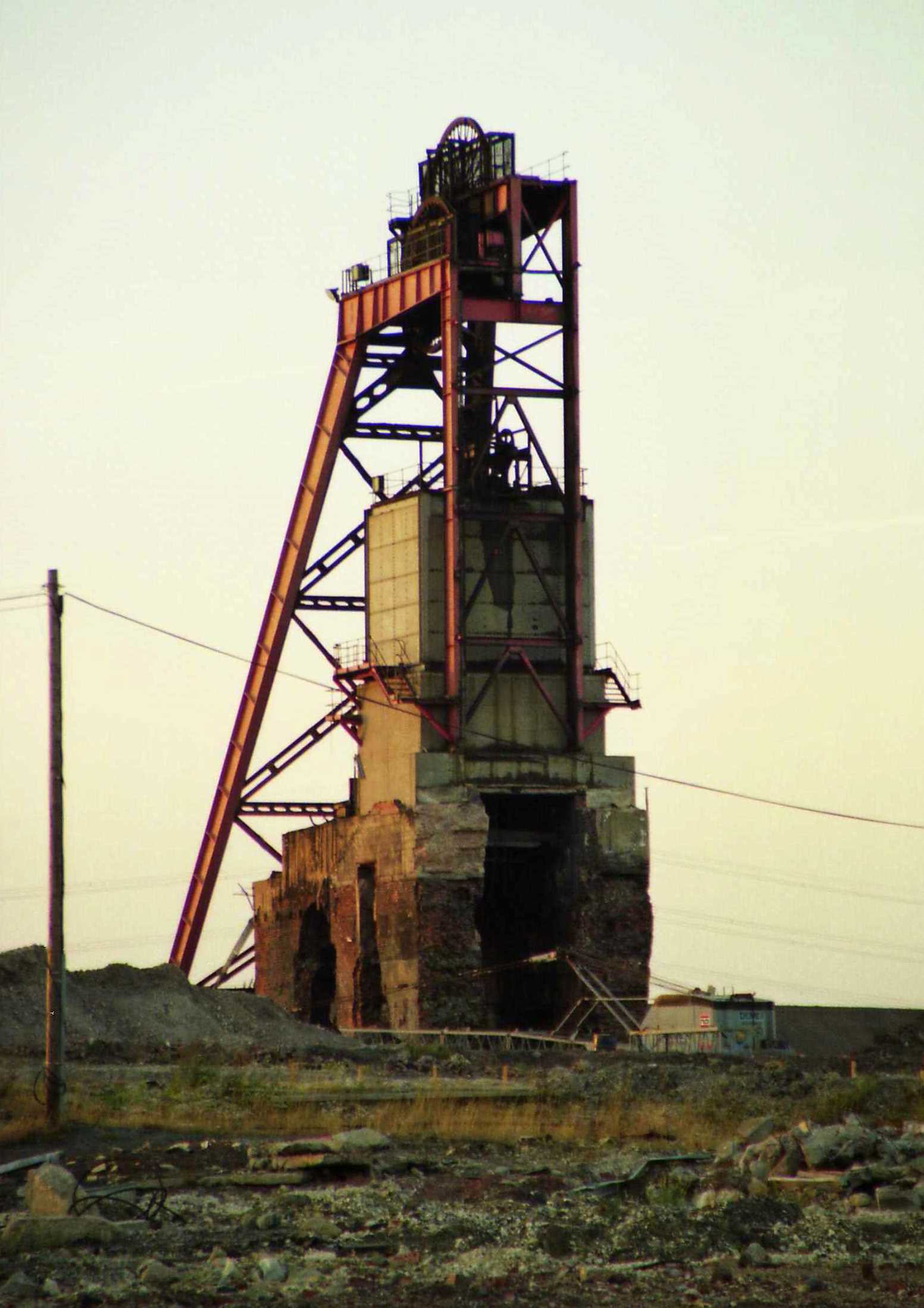
Sharlston Colliery opened in 1858, with its shafts sunk in 1865, and grew to become one of four large-scale collieries operating within three kilometres of the village of Sharlston during the industrial period. The new settlement of New Sharlston grew up specifically to house its workforce. Accounts of the colliery's later employment vary: one source records around 1,000 miners in 1984, while another gives a peak of around 2,200 men working chiefly the Top Haigh Moor seam — both figures are presented here rather than silently picking one, since neither source clarifies which period each count covers.
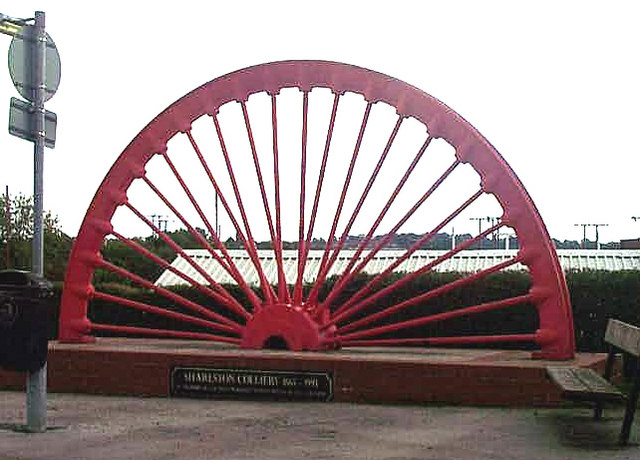
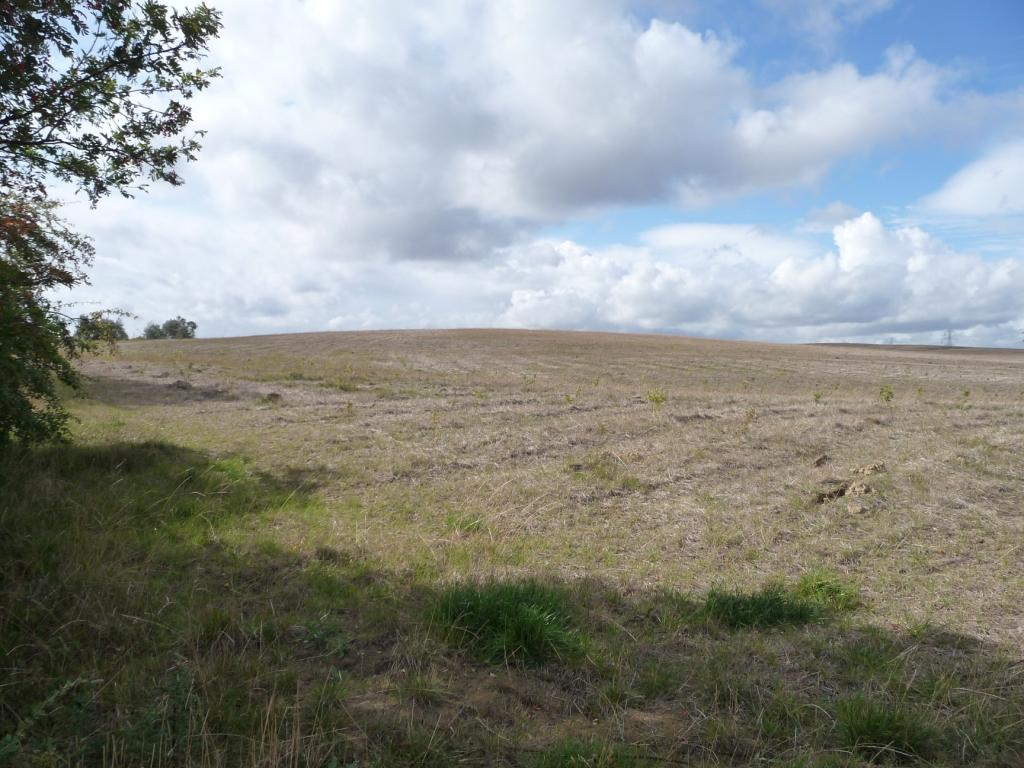
The colliery closed in July 1993, one of the final wave of pit closures that ended deep coal mining across most of Yorkshire; its site has since reverted to agricultural land. One of the colliery's pithead wheels was salvaged after closure, sliced in two, and the pieces placed at either end of the road running through the now-quiet village. The Durham Mining Museum's returns show Sharlston as a group of pits rather than one: the Haigh Moor pit, the Stanley Main pit and Sharlston West, owned by the New Sharlston Coal Company and from the 1890s New Sharlston Collieries Co. Ltd, with the West pit sunk about 1890. Haigh Moor employed 858 in 1894 and West only 77, but by 1910 West had 955 and Stanley Main 912; by 1933 West had 1,240 and Stanley Main 1,008, and the combined West Haigh Moor employed 1,830 in 1940 and 1,851 at nationalisation in 1947, when it raised 436,000 tons of gas, household and steam coal. In 1954 the colliery worked the Birkwood, Haigh Moor, Kent, Silkstone and Stanley Main seams.
Geology
The pits worked the Middle Coal Measures east of Wakefield: the Top and Low Haigh Moor, the Kent Thick, the Silkstone, the Stanley Main, the Winter and the Birkwood or Lidgett seams, with about half the output in the 1950s coming from the Top Haigh Moor.
Geological setting: Sedimentary Beds and Seams (well documented example)
Workings
Shafts sunk in 1865, chiefly working the Top Haigh Moor seam in the colliery's later years.
Closure
Closed in July 1993; the site has since reverted to agricultural land.
What remains
The former colliery site has reverted to agricultural land.
One of the colliery's salvaged pithead wheels was sliced in two, with the pieces placed as a memorial at either end of the road running through the village.
Nearby mines
- Snydale Colliery — 0.5 miles (0.7 km) NE
- Featherstone Main Colliery — 1.5 miles (2.5 km) NE
- Ackton Hall Colliery — 1.6 miles (2.6 km) NE
- Nostell Colliery — 1.6 miles (2.6 km) S
- Kinsley Drift — 2.7 miles (4.3 km) S
Straight-line distance, within 9 miles (15 km). Show on the map.
Disasters & major incidents
-
Sharlston Colliery boiler explosion, 1864
18 June 1864 · Machinery · 3 fatalities
On 18 June 1864 the bursting of a steam engine boiler above ground killed three at Sharlston Colliery, near Wakefield. -
Sharlston Colliery gas deaths, 1893
1 May 1893 · Gas / Asphyxiation · 3 fatalities
On 1 May 1893 three colliers were killed by gas at Sharlston Colliery, near Wakefield. -
Sharlston Colliery boiler explosion, 1898
25 July 1898 · Machinery · 2 fatalities
On 25 July 1898 one of a range of eleven boilers exploded at Sharlston Colliery, near Wakefield, killing two men. -
Sharlston Colliery powder explosion, 1898
8 December 1898 · Explosion · 2 fatalities
On 8 December 1898 an explosion of powder while a shot was being fired at Sharlston Colliery, near Wakefield, fatally injured two colliers.
Culture
- Sharlston Colliery Band (Music)
The colliery's brass band, photographed at practice at Sharlston Colliery in January 1993 (Historic England Archive, Brass Band Results).
What's uncertain
Points where sources disagree or the record could not be settled; both accounts are kept. All open questions in the archive.
- One source records around 1,000 miners employed in 1984; another gives a peak of around 2,200 men working chiefly the Top Haigh Moor seam. Neither source clarifies which period each figure covers. (uncertain) 2
Recorded claims
Individual factual claims, each attached to the source(s) that support it below. Where sources disagree, both are kept.
- Sharlston Colliery opened in 1858, with its shafts sunk in 1865. 1
- One source records around 1,000 miners employed in 1984; another gives a peak of around 2,200 men working chiefly the Top Haigh Moor seam. Neither source clarifies which period each figure covers. (uncertain) 2
- The colliery closed in July 1993; its site has since reverted to agricultural land. 1,2
- One of the colliery's pithead wheels was salvaged, sliced in two, and the pieces placed at either end of the road running through the village. 2
- Sharlston was worked as three pits — Haigh Moor, Stanley Main and Sharlston West — under the New Sharlston Coal Company and then New Sharlston Collieries Co. Ltd. 3,4
- Employment rose from 858 at Haigh Moor in 1894 to 1,851 at the combined colliery in 1947, when it raised 436,000 tons. 3
- In 1954 the colliery worked the Birkwood, Haigh Moor, Kent, Silkstone and Stanley Main seams. 3
- The BGS mine-plans catalogue holds a Mining Remediation Authority abandonment plan titled 'Sharlston Colliery' (catalogue 16629, Spoil Tip - 240/139, 240/140. 240/141, 240/142, dated 1994). 5
Photographs & further reading
Owners, output and employment returns for the three Sharlston pits from 1894, the seams worked, and a list of 81 men and boys killed at the colliery.
View sourceSources
- (secondary) Sharlston's History — Sharlston Parish Council
- (secondary) No regrets in new Sharlston — Morning Star
- (primary) Durham Mining Museum: Sharlston Colliery — Durham Mining Museum
- (primary) Durham Mining Museum: New Sharlston Collieries Co., Ltd. — Durham Mining Museum
- (primary) BGS / Mining Remediation Authority mine plans: SHARLSTON COLLIERY — British Geological Survey / Mining Remediation Authority
- (secondary) Sharlston Colliery Band — Brass Band Results
Record created: 27 August 2026 · Last researched: 8 September 2026