 MineArchive
Hassockrigg Colliery
| Also known as | Hassockrig Colliery, Hassockridge Colliery |
|---|---|
| Location | Hassockrigg, between Shotts and Harthill, North Lanarkshire — 55.8462, -3.8018 (exact) |
| Commodity | Coal |
| Type | Coal |
| Worked | By 1876–1962 |
| Maximum depth | Unknown. |
| Operators | Coltness Iron Company (?–1947), National Coal Board (1947–1962) |
Overview
The Coltness Iron Company's colliery between Shotts and Harthill, worked from the 1870s, with its own miners' rows. It grew from about 190 people in the 1890s to 350 in 1954, raising 100,000 tons in 1947, and its last seams were abandoned in 1962.
History
Hassockrigg lies between Shotts and Harthill, in the parish of Shotts. A plan of the Virtuewell seam there was abandoned as early as 1876, and the national record lists both the colliery and its nineteenth-century miners' rows. The Coltness Iron Company owned it, and the Lists of Mines return 195 people in 1894, raising household, manufacturing and steam coal, with ironstone in 1900. It worked the Upper Drumgray and Virtuewell, and from 1915 the Mid Drumgray.
The colliery grew between the wars, to 266 people in 1933 and 287 by 1937. Falls of roof killed a machineman, Matthew Swan, in 1927, John Swan in 1931 and William Leckie in 1939; on 4 April 1935 nearly five tons of debris fell on Thomas Naylas and Patrick Warner, working behind a coal-cutting machine, and both were dead when they were dug out an hour later; and in 1936 a machineman, Joseph Duffy, died when his cutter kicked.
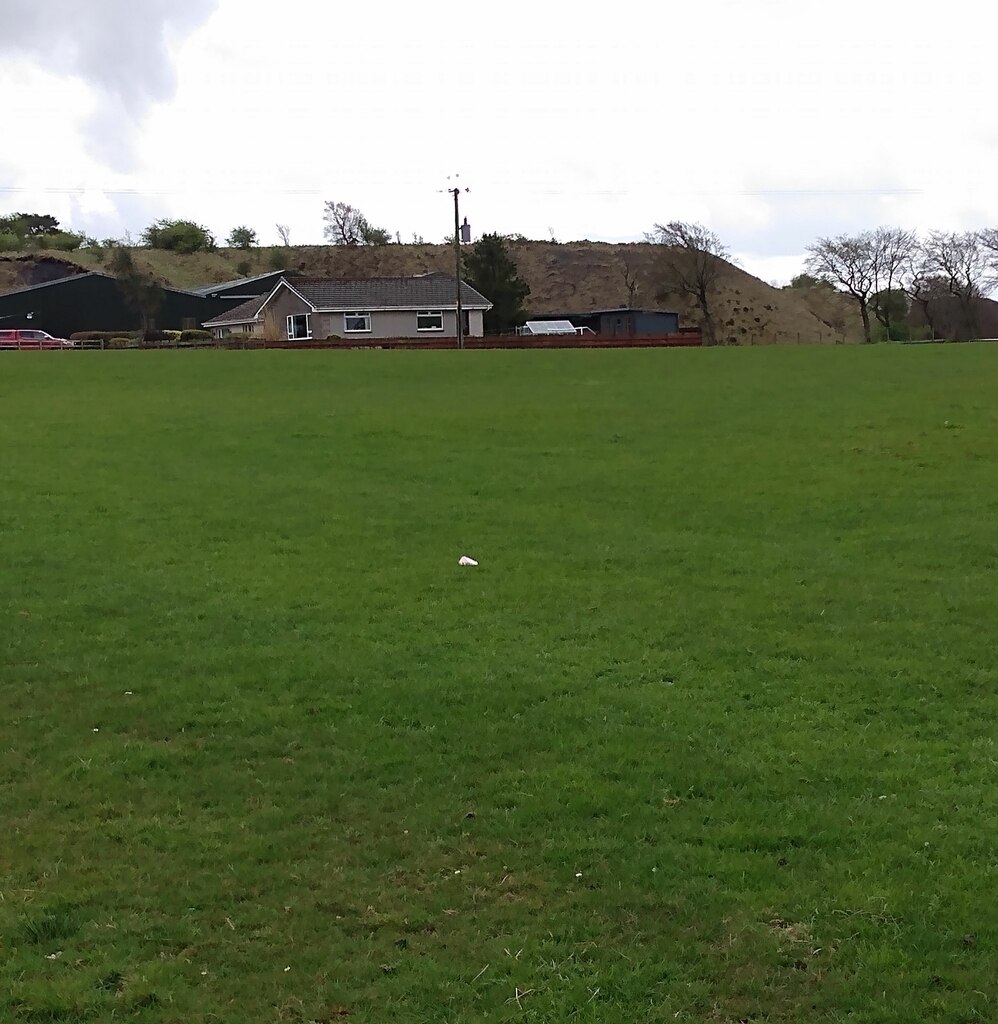
The National Coal Board took Hassockrigg over in 1947, when it raised 100,000 tons with 331 people. By 1954 it employed 350 and worked the Ball, Colinburn and Mill seams. The Drumgray and Shotts Gas workings were abandoned between 1947 and 1956, and the Main, Colinburn and Mill in 1962, when the colliery closed. Its spoil heap still stands above the farm of Wester Hassockrigg.
Geology
Lanarkshire coalfield: the Virtuewell, Upper, Mid and Lower Drumgray, Shotts Gas, Main, Ball, Colinburn and Mill seams, with ironstone worked about 1900.
Workings
Shafts and workings in the Drumgray and later the Ball, Colinburn and Mill seams; machine-cut faces by the 1930s; miners' rows beside the colliery.
Closure
The Main, Colinburn and Mill seams, the last worked, were abandoned in 1962.
What remains
The colliery's spoil heap stands above the farm of Wester Hassockrigg.
A spoil heap.
Redevelopment
Unknown.
Related mines
- Blairhall Colliery — Both worked by the Coltness Iron Company.
- Coventry Colliery — Both worked by the Coltness Iron Company.
- Crofthead Colliery — Both worked by the Coltness Iron Company.
- Milnwood Colliery — Both worked by the Coltness Iron Company.
Nearby mines
- Calderhead Colliery — 1.0 miles (1.6 km) S
- Hillhouserigg Colliery — 1.3 miles (2.2 km) S
- Blairmuckhill Colliery — 1.7 miles (2.8 km) NE
- Fortissat Colliery — 1.7 miles (2.8 km) W
- Northfield Colliery — 1.8 miles (2.9 km) S
Straight-line distance, within 9 miles (15 km). Show on the map.
Recorded claims
Individual factual claims, each attached to the source(s) that support it below. Where sources disagree, both are kept.
- Hassockrig is recorded as a nineteenth-century colliery with miners' rows. 1
- The Coltness Iron Company owned Hassockrigg until 1947. 2,3
- Hassockrigg employed 195 people in 1894, 287 in 1937, 331 in 1947 and 350 in 1954. 3
- In 1947 the colliery raised 100,000 tons. 3
- On 4 April 1935 Thomas Naylas and Patrick Warner were killed by a fall of nearly five tons of debris behind a coal-cutting machine. 2
- A plan of the Virtuewell seam at Hassockrigg was abandoned in 1876. 4
- The Main, Colinburn and Mill workings were abandoned in 1962. 5
- The spoil heap of Hassockrigg pit stands above Wester Hassockrigg. 6
Photographs & further reading
The national record of the colliery and its miners' rows, with photographs.
View sourceOwners, employment, seams and those killed at the colliery.
View sourceNewspaper reports of accidents in the Shotts area, several at Hassockrigg.
View sourceSources
- (secondary) Hassockrig Colliery (NRHE 82457) — Historic Environment Scotland (trove.scot, formerly Canmore)
- (primary) Shotts parish accidents post 1900 — Scottish Mining Website — Scottish Mining Website
- (primary) Hassockrigg Colliery — Durham Mining Museum
- (primary) BGS mine plan: Hassockrigg, Virtuewell, abandoned 1876 — BGS / Mining Remediation Authority mine plans
- (primary) BGS mine plan: Hassockrigg, Main, abandoned 1962 — BGS / Mining Remediation Authority mine plans
- (observational) Wester Hassockrigg (Geograph 6835455) — Geograph
Record created: 4 October 2026 · Last researched: 4 October 2026