 MineArchive
Hanham Colliery
| Also known as | Jefferies Hill Pit, The Whittuck |
|---|---|
| Location | Hanham, on the River Avon, Bristol — 51.4458, -2.5237 (approximate) |
| Commodity | Coal |
| Type | Coal |
| Worked | By 1872–1926 |
| Maximum depth | 900 feet. |
| Operators | Leonard, Boult and Company (1872–?), East Bristol Collieries Ltd (?–1926), Bristol United Collieries, Bedminster Coal Company, Bedminster, Easton, Kingswood and Parkfield Collieries Ltd |
Overview
A Bristol coalfield colliery on the banks of the River Avon, built on the site of a former brass works and in production by 1872 and closed in 1926, moving its coal exclusively by river barge.
History
Coal was raised on the site for decades before the colliery's usual dates of 1906 to 1926. In 1872 George Hare Leonard bought the Jefferies Hill pit, known as 'The Whittuck', from J. J. Whittuck, and Leonard, Boult and Company developed it over the next fifteen years; the partner William Boult Monks was the first to see the potential of the Hanham workings, whose Red Ash, White Ash and Steam Coal seams, low in ash, became household words in Bristol. The mines inspectors' returns list the colliery from 1894, when it employed 104 men, rising to 358 by 1910. The workings later passed to the Bedminster Coal Company and then to its successors, the Bedminster, Easton, Kingswood and Parkfield Collieries Ltd and East Bristol Collieries Ltd.
Hanham Colliery was sunk on the banks of the River Avon on the site of the former Hanham Spelter Works, a brass-manufacturing operation, its own shafts reaching 900 feet deep. It was owned, alongside Dean Lane, Easton, Pennywell Road and Whitehall collieries, by Bristol United Collieries. Underground, its workings extended as far as Regent Street, Kingswood, to the north and roughly to Court Road to the east. Unlike most of the district's pits, Hanham was never connected to any railway; instead it relied on extensive waterside facilities for loading coal directly onto barges on the Avon. Falling coal prices in the 1920s, after the exceptional wartime demand of the Royal Navy receded, made the pit uneconomic, and it closed in 1926. The workings extended under a considerable part of Kingswood, and there was talk of the Red Ash seam joining the Speedwell pit's workings so the coal could be raised there more cheaply, but nothing came of it. M. J. H. Southway suggested in 1971 that the pit may have been the Avonside Colliery worked by Tinn and Fryar in 1866 and by J. J. Whittuck in 1868.
Geology
Coal of the Bristol field on the banks of the Avon; the seams worked are not recorded.
Workings
Worked from a 900-foot shaft, extending underground roughly as far as Regent Street, Kingswood; coal was moved exclusively by barge from waterside loading facilities on the Avon, since the colliery was never connected to the rail network.
Closure
Closed in 1926 as coal prices fell sharply after wartime naval demand ended.
What remains
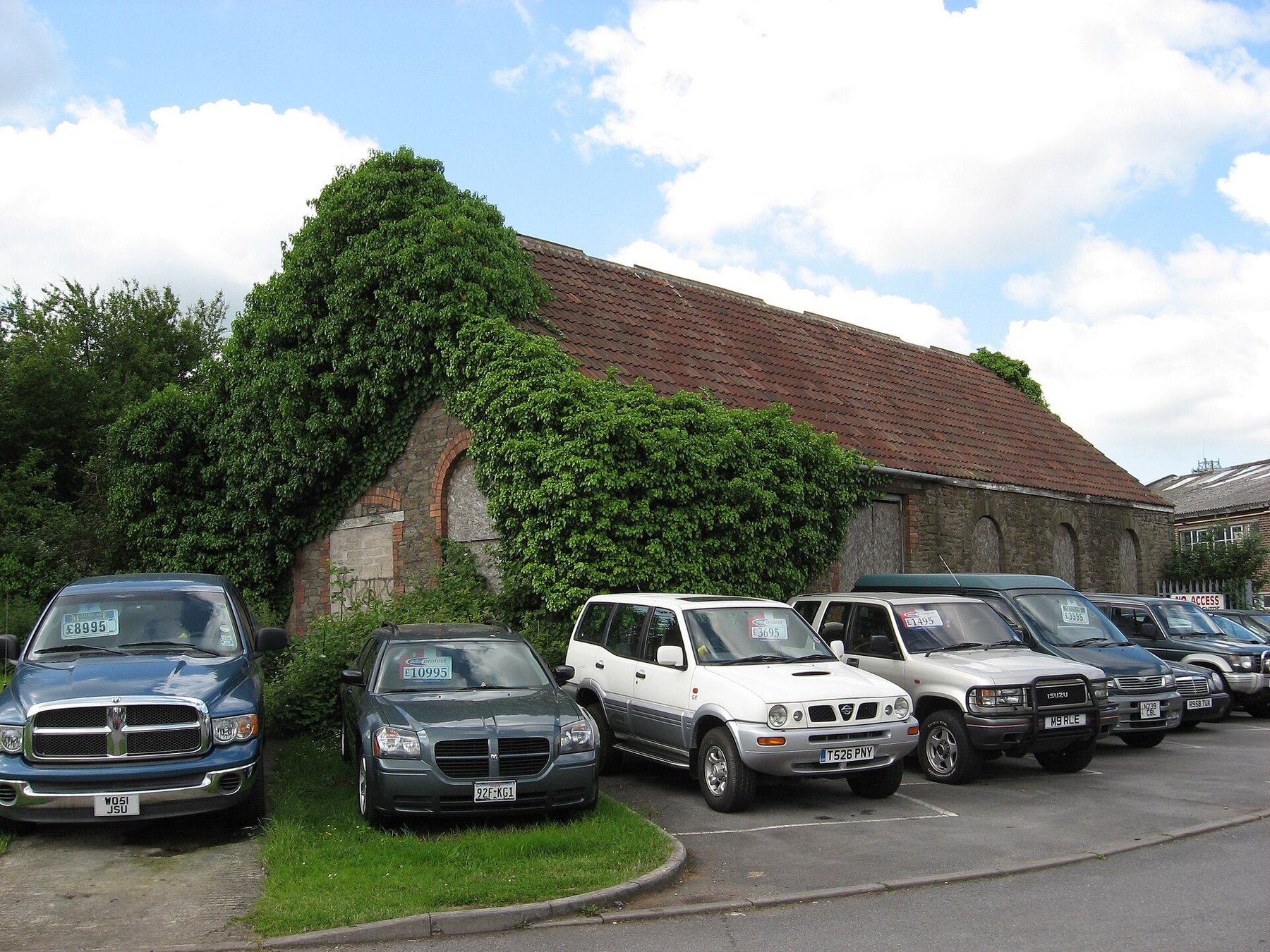
A powder magazine and a winding engine house survive on Memorial Road, Hanham; the latter later served as part of a Bristol Diecasting Ltd factory before being listed and restored. The spoil heap on the Avon's north bank also survives.
A powder magazine and a restored, listed winding engine house on Memorial Road, plus the spoil heap on the north bank of the River Avon.
Related mines
- Dean Lane Colliery — Both worked by the Bedminster Coal Company.
- Easton Colliery — Hanham was among the eight collieries brought under Bedminster, Easton, Kingswood and Parkfield Collieries Ltd in 1900 alongside Easton.
- Speedwell Colliery — Both were East Bristol / Bristol United Collieries pits in the 1920s and 1930s; Hanham closed in 1926, Speedwell in 1936, the last two deep mines in north Bristol.
Nearby mines
- Speedwell Colliery — 1.5 miles (2.5 km) N
- Easton Colliery — 2.3 miles (3.7 km) NW
- Dean Lane Colliery — 3.2 miles (5.2 km) W
- Wick Ochre Mines — 3.5 miles (5.7 km) E, South Gloucestershire
- Shortwood Colliery — 4.0 miles (6.5 km) NE, South Gloucestershire
Straight-line distance, within 9 miles (15 km). Show on the map.
Recorded claims
Individual factual claims, each attached to the source(s) that support it below. Where sources disagree, both are kept.
- Hanham Colliery was sunk on the site of the former Hanham Spelter Works on the banks of the River Avon, its shafts reaching 900 feet deep, and was owned by Bristol United Collieries alongside its Dean Lane, Easton, Pennywell Road and Whitehall pits. 1,2
- Never connected to the rail network, Hanham moved its coal exclusively by barge from waterside facilities on the Avon; it closed in 1926 as coal prices fell after the end of exceptional wartime naval demand. 2
- A powder magazine and a winding engine house survive on Memorial Road, Hanham, the latter listed and restored after later use as part of a Bristol Diecasting Ltd factory. 2
- The mines inspectors' returns list Hanham from 1894, when it employed 104, rising to 358 in 1910 and standing at 300 in 1923; the seams worked were the Black, Toad and Jubilee No. 1, with the Parrot and Jubilee No. 2 suspended, and the owners are given as Bristol United Collieries Ltd and East Bristol Collieries Ltd. 3
- In 1872 George Hare Leonard bought the Jefferies Hill pit, 'The Whittuck', from J. J. Whittuck, and Leonard, Boult and Company developed it over the next fifteen years; it was the partner William Boult Monks who first saw the potential of the Hanham workings, whose Red Ash, White Ash and Steam Coal seams, low in ash, became household words in Bristol. 4
- The Hanham workings passed to the Bedminster Coal Company and then to its successors, the Bedminster, Easton, Kingswood and Parkfield Collieries Ltd and East Bristol Collieries Ltd; the colliery closed in 1926 despite local management's insistence that large areas of coal remained undeveloped. 4
Sources
- (secondary) Bedminster, Easton, Kingswood and Parkfield Collieries — Grace's Guide
- (secondary) Hanham Colliery — Graces Guide
- (primary) Hanham Colliery (Durham Mining Museum) — Durham Mining Museum
- (secondary) Kingswood Coal History — Kingswood Town Council
Record created: 31 August 2026 · Last researched: 24 September 2026