 MineArchive
Halamanning Mine
| Location | Halamanning, St Hilary, between Higher Downs and the River Hayle, Cornwall — 50.1283, -5.4116 (approximate) |
|---|---|
| Commodities | Tin, Copper |
| Type | Metal |
| Worked | By 1794–1858 (reworked 1912) |
| Maximum depth | Unknown. |
| Operators | Halamanning Adventurers (1794–1794) |
Overview
A tin and copper mine near St Hilary, worked with Croft Gothal and Retallack between Higher Downs and the River Hayle from 1830 to 1858 and again in 1912. Letters from James Watt show it at work in 1794, when Boulton and Watt took its adventurers to Chancery over unpaid engine premiums.
History
Halamanning Mine, near St Hilary, worked together with the neighbouring Croft Gothal and Retallack mines across a tract of ground between Higher Downs and the River Hayle. Its recorded working ran from 1830 to 1858, with a revival in 1912, but letters from James Watt show it at work, with a steam engine, in the 1790s. In April 1794 Watt wrote to Thomas Wilson, Boulton and Watt's agent at Truro, about the firm's case against the Halamanning adventurers, who had refused to pay the premium due on their Boulton and Watt engines at Halamanning and Retallack; Watt proposed charging £50 a month for the time the engine had worked, and Boulton and Watt filed a bill in Chancery against Sir Christopher Hawkins and the Halamanning adventurers, both over the premium and for erecting an engine by Bull after notice of an injunction against him. The abandonment plans of Halamanning and Croft Gothal, drawn on seven sheets, record tin and copper ores and are dated 1857. Much of the ground has never been reclaimed for farming, and the waste dumps that remain are increasingly valued by geologists and collectors: specimens recorded from them range from cassiterite and chalcopyrite to secondary lead and copper minerals such as caledonite, linarite and bayldonite.
Geology
Tin and copper ores, recorded on the abandonment plans. Specimens from the dumps include cassiterite, chalcopyrite, chalcocite, cuprite, arsenopyrite, galena, sphalerite and molybdenite, with secondary minerals such as anglesite, cerussite, caledonite, linarite, bayldonite and cyanotrichite.
Workings
Worked with the Croft Gothal and Retallack mines across the ground between Higher Downs and the River Hayle; in 1794 it had a Boulton and Watt steam engine, and its adventurers were erecting a second engine by Bull. The abandonment plans run to seven sheets at 20 yards to the inch.
Closure
Worked until 1858 by Atkinson's account; the abandonment plans of Halamanning and Croft Gothal are dated 1857. The mine was reworked in 1912.
What remains
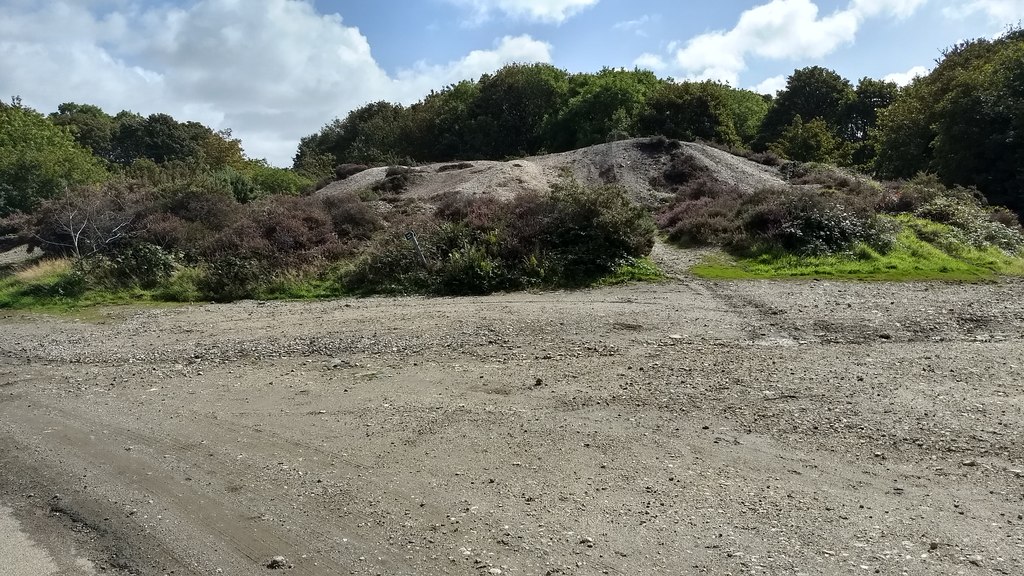
The ground has not been reclaimed for farming and the waste dumps remain; a spoil heap at Halamanning was photographed in 2017.
Waste dumps and spoil heaps.
Nearby mines
- Penberthy Croft Mine — 1.7 km NW
- Tregurtha Downs Mine — 2.5 km W
- Great Work Mine — 3.3 km E
- Wheal Grey Mine — 3.7 km SE
- Tregonning Hill China Clay Pits — 3.9 km E
Straight-line distance, within 15 km. Show on the map.
People
- Sir Christopher Hawkins · shareholder, 1794 — Named with the Halamanning adventurers as defendant in Boulton and Watt's 1794 Chancery bill.
- James Watt · engineer, 1794 — Wrote in April 1794 about Boulton and Watt's case against the Halamanning adventurers over their engine premiums.
- Thomas Wilson · agent, 1794 — Boulton and Watt's agent at Truro, to whom Watt wrote about the Halamanning case.
Recorded claims
Individual factual claims, each attached to the source(s) that support it below. Where sources disagree, both are kept.
- Together with the Croft Gothal and Retallack mines, Halamanning exploited a tract of land between Higher Downs and the River Hayle; it was worked from 1830 to 1858 and re-worked in 1912. 1
- Letters from James Watt to Thomas Wilson at Truro in April 1794 concern Boulton and Watt's case against the Halamanning adventurers over the premium on their engines at Halamanning and Retallack, and a Chancery bill against Sir Christopher Hawkins and the Halamanning adventurers, including for erecting Bull's engine despite an injunction. 1
- The abandonment plans of Halamanning and Croft Gothal, on seven sheets at 20 yards to the inch, record tin and copper ores and are dated 1857. 2
- At Halamanning, as at Wheal Alfred, Binner Downs and Penberthy Crofts, ground not reclaimed to agriculture still shows the district's mining in its waste dumps, whose scientific value is increasingly recognised by geologists. 1
- A spoil heap at Halamanning was photographed in September 2017. 3
- Specimens recorded from Halamanning's dumps include cassiterite, chalcopyrite, chalcocite, cuprite, arsenopyrite, galena, sphalerite and molybdenite, with secondary lead and copper minerals such as anglesite, cerussite, caledonite, linarite, bayldonite and cyanotrichite. 4
- Together with the Croft Gothal and Retallack mines, Halamanning exploited the tract between Higher Downs and the River Hayle, and was worked from 1830 to 1858 and again in 1912. 4
Photographs & further reading
Working dates and transcriptions of James Watt's 1794 letters about the Halamanning case.
View sourceReferences for Halamanning's partner mine, Croft Gothal: Dines and Hamilton Jenkin.
View sourceSources
- (secondary) Halamanning Mine, Cornwall — Cornwall Calling
- (primary) Halamanning and Croft Gothal (Mining Remediation Authority abandonment plan OMR152, via BGS catalogue item 21867396) — British Geological Survey / Mining Remediation Authority
- (observational) Spoil heap at Halamanning (Geograph photo 5545835, David Medcalf, 2017) — Geograph Britain and Ireland
- (secondary) Halamanning Mine, St Hilary, Cornwall, England, UK — Mindat.org
Record created: 18 September 2026 · Last researched: 18 September 2026