 MineArchive
Glyncorrwg Colliery
| Also known as | Glyncorrwg South Pit, Glyncorrwg North and South Pits |
|---|---|
| Location | Glyncorrwg, Afan Valley, Neath Port Talbot — 51.6868, -3.6114 (exact) |
| Commodity | Coal |
| Type | Coal |
| Worked | 1904–1970 |
| Maximum depth | 417 yards (North pit); 403-407 yards (South pit, sources differ) |
| Operators | Glyncorrwg Colliery Ltd (1904–1927), Amalgamated Anthracite Collieries Ltd (1928–1947) |
Overview
Glyncorrwg Colliery stood at the head of the Afan valley, where levels had been worked since at least the 1860s. Glyncorrwg Colliery Ltd sank the North and South pits in 1904, to 417 and 403 yards, and by 1908 the colliery employed 537 men. It passed through Glyn Neath Collieries and then Amalgamated Anthracite, peaking at 995 men in 1938, and produced semi-anthracite or dry steam coal. On 13 January 1954 an explosion burned 24 men, 17 of them seriously; the ignition was attributed to aluminium striking rusty steel, and the use of aluminium at the coalface was prohibited afterwards (see Disasters, below). The National Coal Board reconstructed the colliery in the late 1950s and closed it in 1970.
History
Coal was being got at Glyncorrwg long before the pits were sunk: the levels were working as early as 1860 to 1865 under David Rees, and the valley had been the object of an earlier and unhappier venture still. Between 1839 and 1842 Charles Strange and Robert Parsons, two London men with no previous experience of mining or railways and no connection to south Wales, built the Glyncorrwg Mineral Railway to carry Afan valley coal to the Neath Canal at Aberdulais. They had taken leases over some 5,500 acres and were committed to £2,300 a year in dead rents payable whether or not coal was raised; they were never able to work much of what they had leased, the line became known as Parsons' Folly, and it was abandoned in 1852. Glyncorrwg Colliery Ltd sank the North and South pits in 1904. In 1908, 537 men were employed, the North pit on the No. 2 Rhondda seam and the South on the Six Feet and Nine Feet. The colliery lay idle from 1912 until 1919, after which only the South pit was listed, with 144 men on the Red Vein; 216 were at work on the Six Feet by 1923. Glyn Neath Collieries Ltd acquired it in 1927 with 384 men on the Nine Feet and Peacock Anthracite seams, and in December of that year the Glyncorrwg Colliery Company went into liquidation. Amalgamated Anthracite Collieries Ltd took over in 1928, and employment reached 995 in 1938 before falling to 634 by 1945. Through the 1950s men were transferred in from Garth, Glenhafod, Bryn, Newlands and Aberbaiden, and in the 1960s some came from as far as Scotland.
Geology
The colliery worked the Coal Measures at the western end of the South Wales coalfield, where the coal reaches semi-anthracite and dry steam rank. Several named seams are recorded: the No. 2 Rhondda, worked by the North pit; the Six Feet and Nine Feet, worked by the South; the Red Vein, taken after the pits reopened in 1919; and the Peacock Anthracite, worked from 1927. The North pit reached 417 yards to the Red Vein and the South 403 yards to the Six Feet seam of the Middle and Lower Coal Measures.
Geological setting: Coal Formation and Rank (well documented example), Sedimentary Beds and Seams (well documented example)
Workings
Two shafts, sunk in 1904 and worked as one colliery. The Inspector's 1955 report confirms the arrangement: the North pit, 16 feet in diameter, served as the upcast and reached 417 yards; the South pit, 18 feet in diameter, was the downcast and reached 403 yards. The colliery was known locally simply as the South Pit. Underground haulage was by locomotives and large mine cars, and after the National Coal Board's reconstruction of the late 1950s and early 1960s it was considerably more modern than most of the collieries that outlived it. The earlier levels at Glyncorrwg were served by the South Wales Mineral Railway and the pits by the Rhondda and Swansea Bay Railway.
Closure
The colliery closed in 1970, despite having been reconstructed by the National Coal Board only a decade or so earlier and being better equipped than many pits that continued. No source gives a stated reason. The Welsh Coal Mines account reports, at second hand, that Tower Colliery was later working Glyncorrwg's reserves beneath the village.
What remains
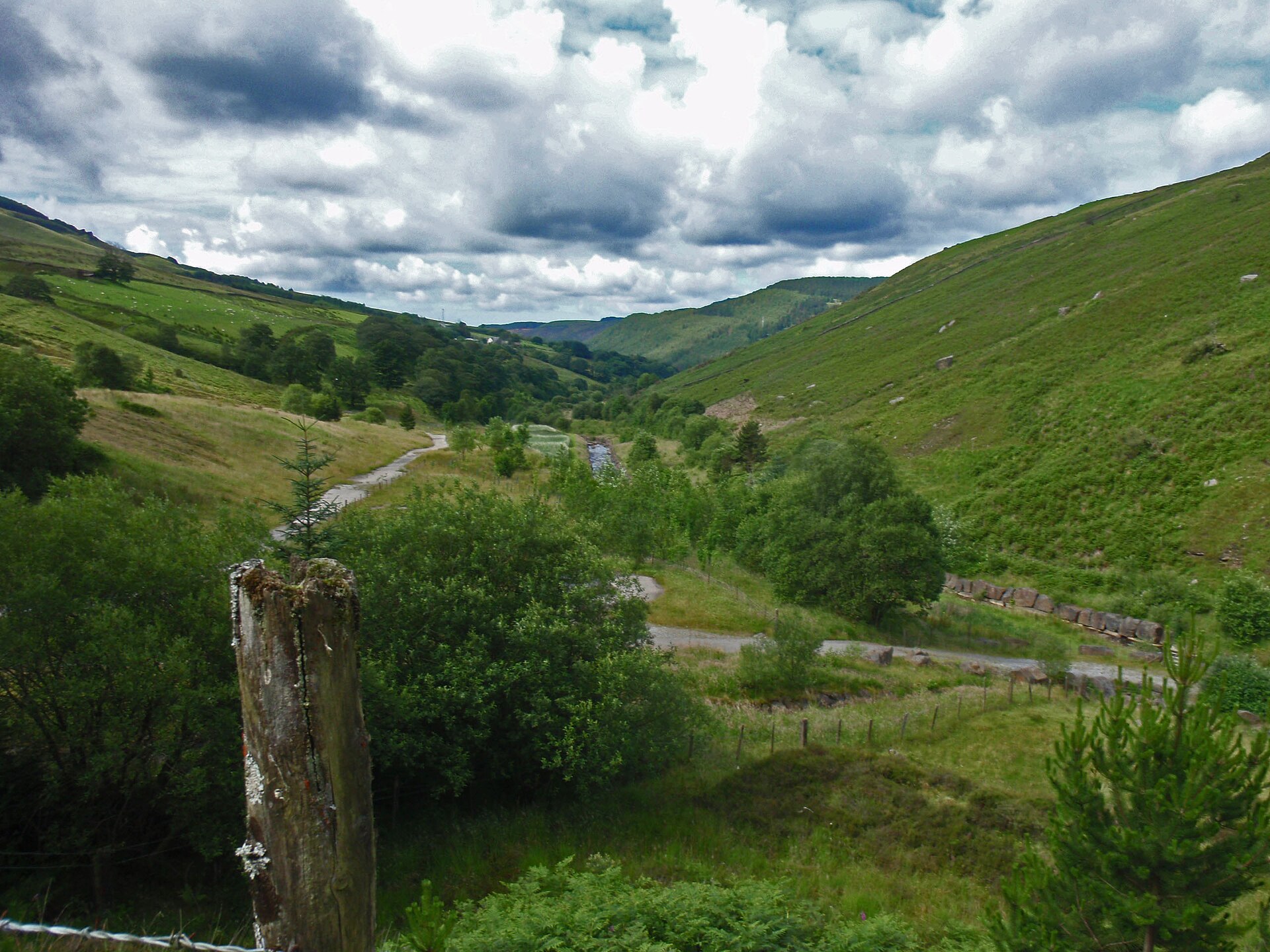
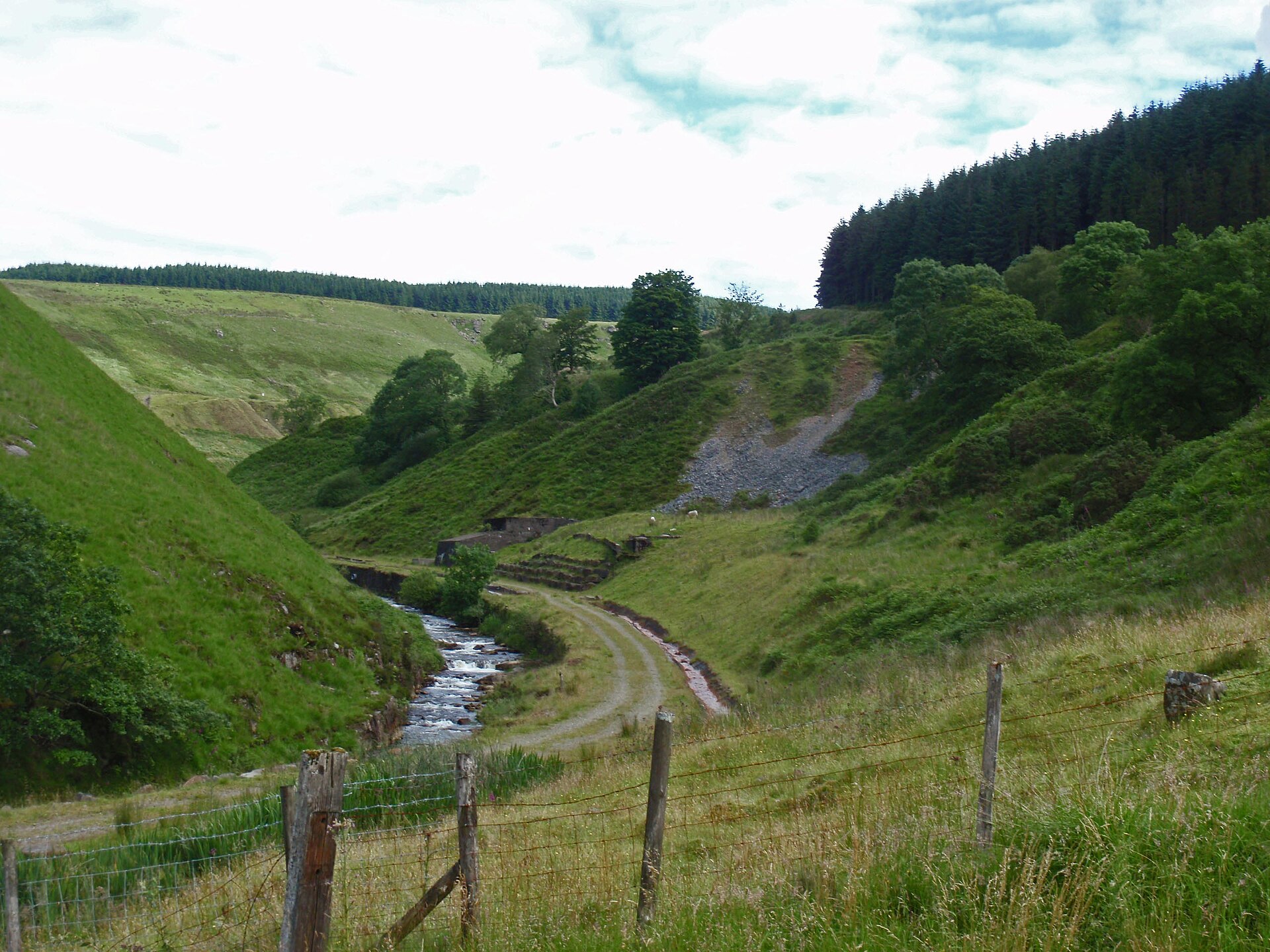
Little now remains of the colliery. The site lies at the head of the Afan valley above the village of Glyncorrwg, and photographs from 2012 show only fragmentary remains on cleared ground.
No substantial structures are recorded as surviving. The Welsh Coal Mines account notes that the surface buildings and layout were very similar to those at Maerdy, which is the clearest surviving description of what stood here.
Related mines
- Blaengwynfi Colliery — The NMRS places the Glyncorrwg pits at Blaengwynfi and gives the Glyncorrwg Colliery Company as owner of both; the two records are kept separate under the user's 2026-10-08 ruling.
- North Rhondda Colliery — Neighbouring Afan Valley collieries at Glyncorrwg, written up together by Welsh Coal Mines.
- Ynyscorrwg Colliery — Owned by the Glyncorrwg Colliery Company from 1921; Welsh Coal Mines writes the two up together.
Nearby mines
- British Rhondda Colliery — 0.3 miles (0.5 km) N
- North Rhondda Colliery — 0.3 miles (0.6 km) N
- Ynyscorrwg Colliery — 1.1 miles (1.7 km) SW
- Dunraven Colliery — 1.8 miles (2.9 km) NE, Rhondda Cynon Taf
- Nantewlaeth Colliery — 2.0 miles (3.3 km) SW
Straight-line distance, within 9 miles (15 km). Show on the map.
Disasters & major incidents
-
Glyncorrwg Colliery Explosion
13 January 1954 · Explosion · 0 fatalities
On the morning of 13 January 1954 an explosion ran along the Panzer Face in the Six Feet Seam at Glyncorrwg Colliery. Of the 32 men in its path, 17 were severely burned and seven slightly; eight escaped unhurt and nobody was killed. A second explosion followed before noon the same day, and a third within the sealed district on 16-17 January. The official inquiry traced the ignition to a light-alloy roof bar: its rusted steel wedge had become smeared with aluminium in ordinary use, and when a collier struck it with a sledgehammer the resulting spark fired the methane. The Inspector recommended that light-alloy bars be prohibited on longwall faces with open wastes where inflammable gas was likely.
What's uncertain
Points where sources disagree or the record could not be settled; both accounts are kept. All open questions in the archive.
- The Welsh Coal Mines account reports at second hand, and phrases as a question, that Tower Colliery was later working Glyncorrwg's reserves beneath the village. No other account repeats it. (uncertain) 1
- Welsh Coal Mines gives the South pit as 403 yards; the Inspector of Mines' 1955 report gives the South Shaft as sunk to the Six Feet Seam at a depth of 407 yards. The report also confirms the South Shaft as the downcast, 18 feet in diameter and the main winding shaft, and the North as the upcast at 16 feet. (disputed) 3
Recorded claims
Individual factual claims, each attached to the source(s) that support it below. Where sources disagree, both are kept.
- Glyncorrwg Colliery Ltd sank the North and South pits in 1904, to depths of 417 and 403 yards respectively. 1
- In 1908, 537 men were employed, the North pit working the No. 2 Rhondda seam and the South the Six Feet and Nine Feet. Employment reached 995 in 1938 and had fallen to 634 by 1945. 1
- Glyn Neath Collieries Ltd acquired the colliery in 1927; the Glyncorrwg Colliery Company went into liquidation in December of that year, and Amalgamated Anthracite Collieries Ltd took over in 1928. 1
- The Glyncorrwg levels were working as early as 1860-65 under David Rees. An earlier venture, the Glyncorrwg Mineral Railway of 1839-42 promoted by Charles Strange and Robert Parsons to carry Afan valley coal to the Neath Canal, failed under dead rents of £2,300 a year, became known as Parsons' Folly and was abandoned in 1852. 1,2
- The Welsh Coal Mines account reports at second hand, and phrases as a question, that Tower Colliery was later working Glyncorrwg's reserves beneath the village. No other account repeats it. (uncertain) 1
- Welsh Coal Mines gives the South pit as 403 yards; the Inspector of Mines' 1955 report gives the South Shaft as sunk to the Six Feet Seam at a depth of 407 yards. The report also confirms the South Shaft as the downcast, 18 feet in diameter and the main winding shaft, and the North as the upcast at 16 feet. (disputed) 3
- At the time of the 1954 explosion the colliery lay about 9 miles north-east of Port Talbot, had been working since 1904, produced about 800 tons of coal a day and employed 633 people below ground and 150 on the surface. 3
- The BGS mine-plans catalogue holds a Mining Remediation Authority abandonment plan titled 'Glyncorrwg' (catalogue SWA1014, Red Vein, dated 1968). 4
Photographs & further reading
The fullest account of the colliery: sinking, shaft depths, the seams worked decade by decade, the succession of owners, the 1954 explosion and the aluminium ban that followed it, and the transfers of men in from other pits during the 1950s and 60s.
View sourceSources
- (secondary) Glyncorrwg Colliery — Welsh Coal Mines
- (secondary) Glyncorrwg Mineral Railway — Wikipedia
- (primary) Jones, T. A. (1955). Explosion at Glyncorrwg Colliery, Glamorganshire: report on the causes of, and circumstances attending, the explosion which occurred on 13th January 1954. Ministry of Fuel and Power, Cmd. 9553. HMSO — H.M. Divisional Inspector of Mines, via Edinburgh Research Archive
- (primary) BGS / Mining Remediation Authority mine plans: GLYNCORRWG — British Geological Survey / Mining Remediation Authority
Record created: 4 September 2026 · Last researched: 4 September 2026