 MineArchive
Gin Pit Colliery
| Location | Astley, near Tyldesley, Greater Manchester — 53.5034, -2.4695 (exact) |
|---|---|
| Commodity | Coal |
| Type | Coal |
| Worked | 1840s–1958 |
| Maximum depth | 375 yards (Six Foot/Rams mine) |
| Operators | John Darlington (?–1851), Samuel Jackson (1851–?), Astley and Tyldesley Coal and Salt Company (1866–1900), Astley & Tyldesley Collieries Company (1900–1929), Manchester Collieries Ltd (1929–1947), National Coal Board (1947–1958) |
Overview
A single-shaft colliery near Astley whose name recalls an even older, horse-powered winding gear on the same site — the small mining settlement it gave rise to still stands, and is now home to a memorial pit wheel salvaged from a Nottinghamshire colliery.
History
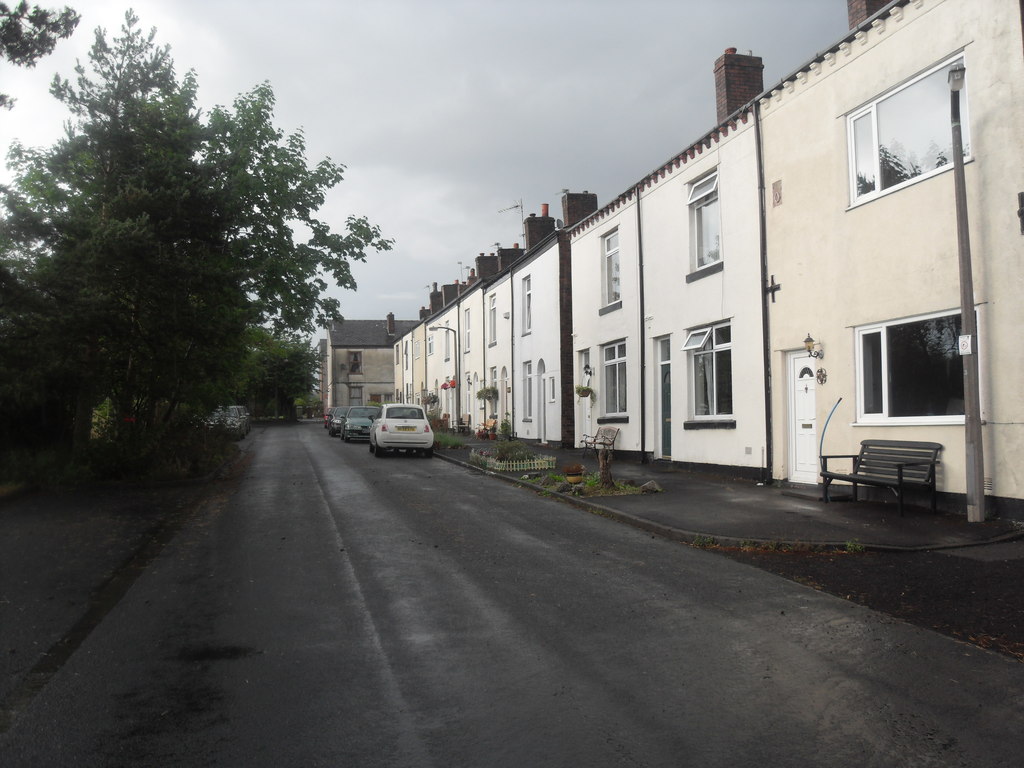
Gin Pit Colliery took its name from the horse-driven winding gear, a 'gin', that had worked it or a predecessor on a site of even older coal workings. In the 1840s John Darlington leased the mineral rights under land belonging to Astley Hall and sank a pit here, then called Astley Colliery; in 1847 his concern was known as Astley and Bedford Collieries. The site was isolated from roads, so Darlington built a horse-worked narrow-gauge tramway to carry the coal to the Bridgewater Canal at Marsland Green. In 1851 he tried to sell the colliery, tramroad, cranes and tipplers to the Bridgewater Trustees, but the business went instead to Samuel Jackson, a salt merchant who owned a colliery in Bedford. Jackson's Astley and Tyldesley Coal and Salt Company deepened the single shaft to the Six Foot, or Rams, mine at 375 yards between 1866 and 1872, with a pumping engine built by the Haigh Foundry, and the investment of those years made it one of the most productive pits in the Atherton and Tyldesley district. Gin Pit had no upcast of its own: it was ventilated through No. 2 pit at St George's Colliery, around half a mile to the north, which is why St George's surface works were kept long after that colliery stopped winding coal in 1941. In 1896 Gin Pit employed 240 men underground and 55 on the surface, working the Crombouke and Six Foot mines for household, steam and gas coal, with pit-brow lasses sorting coal on the screens; in 1923 the figures were 237 and 57. The company, reorganised as Astley and Tyldesley Collieries in 1900, ran its railway to Gin Pit, kept the sheds for servicing its locomotives there, and had a sawmill supplying pit props and a boat-building operation for the wooden box boats used on the canal; in the twentieth century it added an important complex of workshops providing repair and engineering facilities for several of its collieries. The colliery passed to Manchester Collieries in 1929 and to the National Coal Board in 1947. Sources give its closure as either 1955 or 1958; afterward the buildings were taken over by William Hare and used as a foundry and steel-fabrication plant, and the surface structures were cleared ahead of housing in the early 2000s, when Oxford Archaeology North excavated the remains of the heapstead. The small settlement of Gin Pit Village, built to house the colliery's workers, remains inhabited today, and its miners' welfare club is still open; in 2013 a pit wheel salvaged from Clipstone Colliery in Nottinghamshire was installed on the village green as a memorial to the area's mining heritage generally, rather than as a relic of Gin Pit's own original winding gear.
Geology
The Middle Coal Measures of the Manchester Coalfield, whose seams here dip towards the south and west and are broken by small faults; Gin Pit worked the Crombouke and the Six Foot, or Rams, mine.
Workings
A single shaft, deepened between 1866 and 1872 to the Six Foot (Rams) mine at 375 yards, working the Crombouke and Six Foot mines; it had a Haigh Foundry pumping engine, and its return air went up No. 2 pit at St George's Colliery around half a mile to the north.
Closure
Production ended in 1958 by the colliery's own history (Hayes, cited by Wikipedia), or in 1955 by the history of the Astley and Tyldesley company; the buildings were subsequently used by William Hare as a foundry and steel-fabrication plant, and were cleared for housing in the early 2000s.
What remains
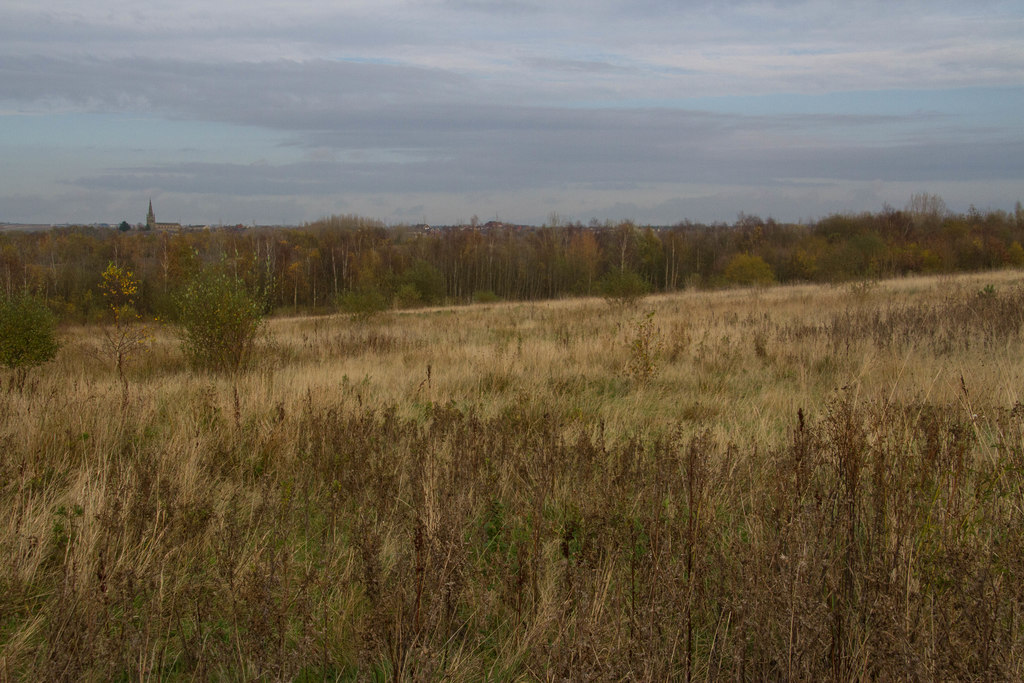
Gin Pit Village, the small settlement built to house the colliery's workers, remains inhabited, and its miners' welfare club and cricket ground are still in use; a pit wheel from Clipstone Colliery, Nottinghamshire, was installed on the village green in 2013 as a general mining-heritage memorial. The colliery's surface structures were removed ahead of housing development in the early 2000s, and the spoil heaps to the south have grassed over.
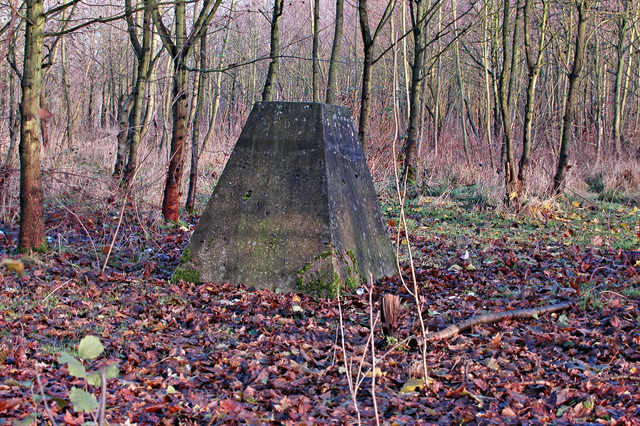
The heapstead remains, recognised in 2003 as a rare surviving example of the type, were excavated by Oxford Archaeology North in 2005–2007 ahead of development; a concrete shaft cap stands in woodland nearby. Nothing of the colliery buildings survives.
Redevelopment
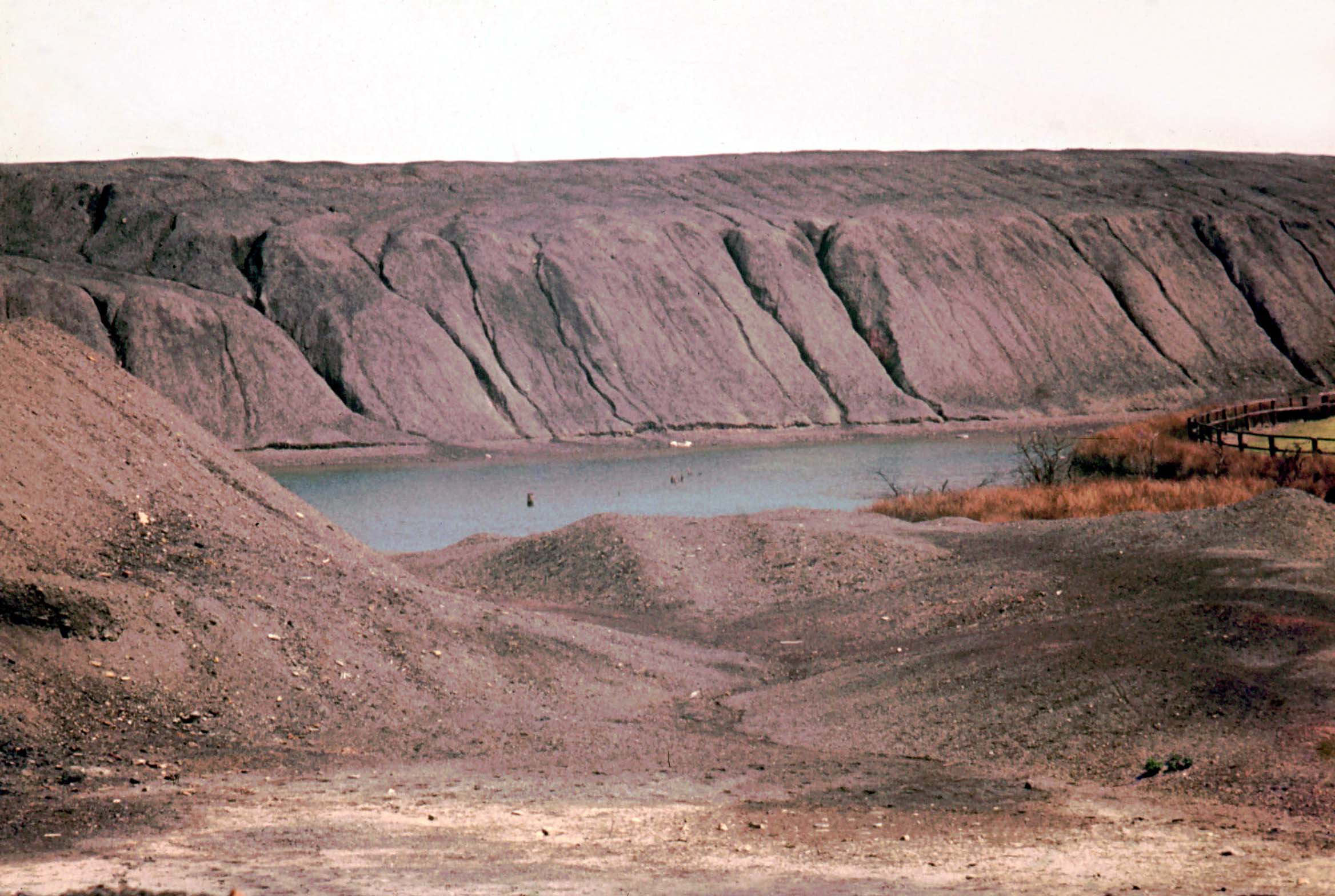
Housing on the colliery site from the early 2000s; the spoil heaps south of the village have been reclaimed as rough grassland.
Related mines
- Nook Colliery — Both worked by the Astley and Tyldesley company, and both relied on St George's No. 2 pit as their upcast.
- St George's Colliery — Linked underground to Gin Pit for ventilation from the start, and ventilated and worked with Gin Pit after 1947.
Nearby mines
- Nook Colliery — 0.3 miles (0.4 km) N
- St George's Colliery — 0.6 miles (1.0 km) N
- Shakerley Colliery — 1.0 miles (1.6 km) N
- Bedford Colliery — 1.1 miles (1.8 km) W
- Chanters Colliery — 1.1 miles (1.8 km) N
Straight-line distance, within 9 miles (15 km). Show on the map.
What's uncertain
Points where sources disagree or the record could not be settled; both accounts are kept. All open questions in the archive.
- Sources disagree on the closure date, giving either 1955 or 1958; the buildings were subsequently used by William Hare as a foundry and steel-fabrication plant. (disputed) 1
- Gin Pit ceased production in 1958. (disputed) 1
- Gin Pit closed in 1955. (disputed) 3
Recorded claims
Individual factual claims, each attached to the source(s) that support it below. Where sources disagree, both are kept.
- Gin Pit took its name from the horse-driven winding gear ('gin') of an older colliery on the same site; the colliery itself was completed around 1872 with a single shaft to the Six Foot (Rams) mine at 375 yards. 1
- Sources disagree on the closure date, giving either 1955 or 1958; the buildings were subsequently used by William Hare as a foundry and steel-fabrication plant. (disputed) 1
- Gin Pit Village, built to house the colliery's workers, remains inhabited with its miners' welfare club still open; a pit wheel salvaged from Clipstone Colliery, Nottinghamshire, was installed on the village green in 2013 as a general mining-heritage memorial. 2
- In the 1840s John Darlington leased the mineral rights of land belonging to Astley Hall and sank Astley Colliery, which became the site of Gin Pit; in 1851 the colliery and its tramroad to the Bridgewater Canal went to the salt merchant Samuel Jackson. 1,3
- The single shaft was deepened to the Rams mine at 375 yards between 1866 and 1872 by the Astley and Tyldesley Coal and Salt Company; it had a pumping engine built by the Haigh Foundry. 1
- In 1896 Gin Pit employed 240 underground and 55 surface workers producing gas, household and steam coal from the Crombouke and Six Foot mines; in 1923, 237 and 57. 1,3
- St George's Colliery No. 2 pit was the upcast for St George's and also served Gin Pit; St George's ceased production in 1941 but most of its surface works were retained because of ventilation requirements at Gin Pit and Nook, closing finally in 1964. 4
- Astley and Tyldesley Collieries kept sheds and facilities for servicing its industrial locomotives at Gin Pit, which also had a sawmill supplying pit props and a landsale yard. 3
- Gin Pit ceased production in 1958. (disputed) 1
- Gin Pit closed in 1955. (disputed) 3
- The surface structures were removed ahead of residential development in the early 2000s; Oxford Archaeology North's 2005–2007 study uncovered the remains of the heapstead, recognised as a rare surviving example of the type in 2003. 1
- The Durham Mining Museum lists Gin, at Astley, among the pits of Astley and Tyldesley Collieries Ltd. 5
Photographs & further reading
Academic archaeological study of the colliery settlement.
View sourceHistory of the company that owned Gin Pit, with its railway, locomotives and the 1857 Astley Hall lease.
View sourceThe neighbouring colliery whose No. 2 pit was Gin Pit's upcast shaft.
View sourceSources
- (secondary) Gin Pit Colliery — Wikipedia — Wikipedia
- (secondary) Gin Pit: The Archaeology of an Historic Coal-Mining Settlement — ResearchGate
- (secondary) Astley and Tyldesley Collieries — Wikipedia
- (secondary) St Georges Colliery (1866-1964) — Northern Mine Research Society
- (primary) Durham Mining Museum - Astley and Tyldesley Collieries Ltd. — Durham Mining Museum
Record created: 2 September 2026 · Last researched: 21 September 2026