 MineArchive
Shakerley Colliery
| Also known as | Nelson Pit (Tyldesley), Messhing Trees Colliery |
|---|---|
| Location | Shakerley, Tyldesley, Greater Manchester — 53.5181, -2.4586 (approximate) |
| Commodity | Coal |
| Type | Coal |
| Worked | 1830s or 1840s–1938 |
| Maximum depth | The Nelson Pit was deepened to the Arley mine at 1,486 feet; it was 280 yards to the Trencherbone in 1883. |
| Operators | William Ramsden and Sons (1861–1935), Manchester Collieries Ltd (1935–1938) |
Overview
William Ramsden's colliery at Shakerley, Tyldesley — the Nelson Pit and the Wellington Pit — reached by its own toll road, struck by a cage-rope failure in 1883 and an explosion in 1895 that killed its manager and undermanager, and closed in 1938.
History
Coal had been dug at Shakerley since at least the 15th century, and a colliery stood between Higher Oak and Common Fold by 1798. Shakerley Colliery, later renamed the Nelson Pit, was sunk in the 1830s or 1840s on land leased from Ellis Fletcher and worked by Nathan Eckersley. In 1861 it passed to his nephew William Ramsden, who also owned Messhing Trees Colliery half a mile to the south, renamed the Wellington Pit after 1880. Isolated from the main roads, the Nelson Pit was served by a cobbled toll road, Shakerley Lane, to the Bolton-Leigh turnpike, and after 1864 Ramsden built a mineral railway to the Tyldesley Loopline. In 1869, in financial trouble while sinking a shaft, Ramsden vanished on his way to the bank at Bolton; his wife kept the collieries running with help from George Green of Yew Tree Colliery until he walked back from Liverpool some weeks later. On 2 October 1883 the cage rope broke at the Nelson Pit, 280 yards deep to the Trencherbone, sending six men to their deaths in the sump. On 1 October 1895 an explosion of firedamp at the Wellington Pit killed five, including the manager John Kaye and the undermanager James Sharples (see Disasters, below). The two pits employed 529 in 1896 and 445 in 1933, when they raised 90,000 tons from the Plodder, Cannel, Arley, Smith and Yard mines. Ramsden's collieries joined Manchester Collieries in 1935; the Wellington Pit was abandoned that year and the Nelson Pit in October 1938.
Geology
The Trencherbone, Arley, Plodder, Cannel, Smith, Yard, Hell Hole and Haigh Yard mines of the Manchester Coalfield.
Workings
Two pits: the Nelson Pit (originally Shakerley Colliery), sunk to the Trencherbone at 840 feet and deepened to the Arley at 1,486 feet, and the Wellington Pit (formerly Messhing Trees), working the Trencherbone at 360 yards and furnace-ventilated in 1895. A toll road and, from after 1864, a mineral railway to the Tyldesley Loopline served them.
Closure
Taken over by Manchester Collieries in 1935; the Wellington Pit was abandoned in 1935 and the Nelson Pit in October 1938.
What remains
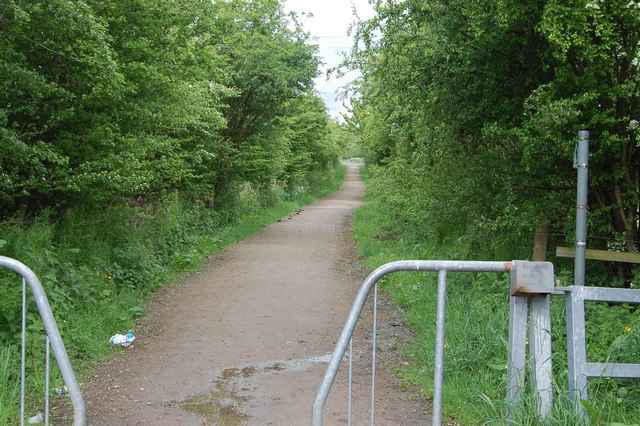
The pits have gone. Shakerley Lane, the cobbled toll road built to serve the colliery, remained a toll road until 1948 or 1949 and is now a bridleway.
Shakerley Lane, the former colliery toll road, survives as a bridleway.
Nearby mines
- Peelwood Colliery — 0.2 km N
- Combermere Colliery — 0.3 km E
- Cleworth Hall Colliery — 0.4 km E
- Nook Colliery — 0.7 km SW
- New Lester Colliery — 0.8 km SW
Straight-line distance, within 15 km. Show on the map.
People
- Nathan Eckersley · owner, to 1861 — Worked Shakerley Colliery (the later Nelson Pit) by 1851, before it passed to his nephew William Ramsden in 1861.
- John Kaye · manager, 1895 — Colliery manager, killed in the 1895 Wellington Pit explosion.
- William Ramsden · owner, from 1861 — Inherited Shakerley Colliery from his uncle Nathan Eckersley in 1861 and owned it with the Wellington Pit.
What's uncertain
Points where sources disagree or the record could not be settled; both accounts are kept. All open questions in the archive.
- In 1869 Ramsden, in financial difficulty, disappeared on the way to the bank at Bolton; his wife kept the collieries working until he returned on foot from Liverpool weeks later. (uncertain) 2
Recorded claims
Individual factual claims, each attached to the source(s) that support it below. Where sources disagree, both are kept.
- Shakerley Colliery, later the Nelson Pit, was sunk in the 1830s or 1840s on land leased from Ellis Fletcher and worked by Nathan Eckersley; in 1861 it passed to his nephew William Ramsden, who owned Messhing Trees (later Wellington) Colliery. 1,2,3
- In 1869 Ramsden, in financial difficulty, disappeared on the way to the bank at Bolton; his wife kept the collieries working until he returned on foot from Liverpool weeks later. (uncertain) 2
- On 2 October 1883 the cage rope broke at the Nelson Pit (280 yards to the Trencherbone), killing six men. 3,4
- On 1 October 1895 a firedamp explosion at the Wellington Pit killed five, including manager John Kaye and undermanager James Sharples. 1,2,5
- In 1933 the company employed 445 and produced 90,000 tons; Ramsden's joined Manchester Collieries in 1935, the Wellington Pit was abandoned that year and the Nelson Pit closed in 1938. 1,2,6
- The national catalogue holds combined 'Shakerley, Nelson, Wellington' plans, including the Trencherbone abandoned in 1895. 7
Photographs & further reading
The Nelson and Wellington pits, William Ramsden, the toll road and the disasters.
View sourceThe 1895 firedamp explosion that killed the manager, undermanager and firemen.
View sourceSources
- (secondary) Shakerley Colliery (Durham Mining Museum) — Durham Mining Museum
- (secondary) Shakerley Collieries — Wikipedia
- (secondary) Nelson Pit — Wikipedia
- (secondary) Shakerley Colliery Nelson Pit Shaft Accident – Tyldesley – 1883 — Northern Mine Research Society
- (secondary) Shakerley Colliery Wellington Pit Explosion – Tyldesley – 1895 — Northern Mine Research Society
- (secondary) Wellington Pit (Tyldesley) — Wikipedia
- (primary) BGS / Mining Remediation Authority mine plans catalogue: Shakerley, Nelson, Wellington (Trencherbone, 1895) — British Geological Survey
Record created: 17 September 2026 · Last researched: 17 September 2026