 MineArchive
Foulshiels Colliery
| Also known as | Foulshiels Nos. 1 and 2 Pits |
|---|---|
| Location | Foulshiels, Stoneyburn, near Whitburn, West Lothian — 55.8531, -3.6344 (approximate) |
| Commodity | Coal |
| Type | Coal |
| Worked | By 1894–1957 |
| Operators | Loganlea Coal Company Limited (1894–1905), United Collieries Limited (1905–1947), National Coal Board (1947–1957) |
Overview
The United Collieries pit on the edge of Stoneyburn, for which the village was largely built, worked from the 1890s to 1957. Its No. 2 shaft, 112 metres deep, was also the upcast for Loganlea Colliery, to which its workings were joined underground; it employed over 460 at its peak in 1951, raised 145,000 tons a year by longwall in 1952, and had pithead baths from 1935.
History
The Loganlea Coal Company had 42 men at Foulshiels in 1894 and 136 by 1900, raising manufacturing and steam coal on the Foulshiels lands south-west of Bathgate, where a short-lived station of the Longridge and Bathgate line had stood from 1850 to 1852. The company passed into United Collieries Ltd about 1905, and under it the pit grew steadily: 225 employed in 1905, 322 in 1915, 463 in 1920 and 553 in 1940, working the China, Lady Morton and Main coals, and the register compiled after nationalisation puts the start of production about 1900. Stoneyburn grew up round the pit and in 1919 United Collieries laid out the Bents housing scheme of 138 homes for its workers. Its workings ran for miles to join those of Loganlea, the company's largest pit, and the No. 2 shaft served as Loganlea's upcast. Pithead baths for 450 men with 37 shower cubicles were built in 1935. Two deaths are recorded by the Durham Mining Museum: a drawer of fifteen caught by a loaded train on a cuddie brae in 1910, and a miner under a slab of roof between two lypes in 1924. The National Coal Board took it over in 1947 with 416 employed and 135,000 tons a year; in 1952 it had 428 employees, 580 tons a day by longwall, four screens and a Baum washer, and drew all its electricity from Loganlea. The peak workforce was 463 in 1951. It closed in 1957 and was abandoned in 1958, two years before Loganlea.
Geology
Central coalfield, Limestone Coal Group of the Bathgate hills: China, Lady Morton, Main and Smithy coals, with blaes also returned in 1954.
Geological setting: Sedimentary Beds and Seams (historical documentary reference)
Workings
Nos. 1 and 2 pits; No. 2 shaft 112 metres deep, the upcast for Loganlea Colliery, with which the workings were connected. Longwall working; in 1952 580 tons a day and 145,000 tons a year with four screens and a Baum-type washer by the Blantyre Engineering Company. Employment from the Lists of Mines: 42 in 1894, 136 in 1900, 281 in 1910, 463 in 1920, 539 in 1933, 553 in 1940, 416 in 1947, 462 in 1954; peak 463 in 1951.
Closure
Closed in 1957 and abandoned in 1958 by the National Coal Board; the reason is not given in the sources read.
What remains
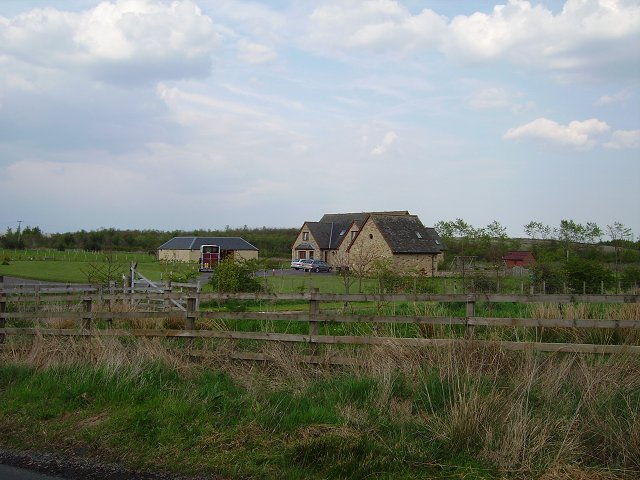
The colliery land at Foulshiels is wooded with large new houses scattered among the trees; the old bing and the trackbed of the mineral line towards Addiewell survive.
The wooded bing and the trackbed of the branch railway; no colliery buildings are reported.
Related mines
- Addiewell Oil Works — Neighbouring works; the Foulshiels branch railway ran towards Addiewell.
- Loganlea Colliery — Joined underground; Foulshiels No. 2 shaft was Loganlea's upcast and Loganlea supplied all Foulshiels' electricity.
Nearby mines
- Loganlea Colliery — 1.3 km S
- Addiewell Oil Works — 1.6 km SE
- Whitrigg Colliery — 1.6 km NW
- Riddochhill Colliery — 2.9 km N
- Baads Colliery — 3.5 km SE
Straight-line distance, within 15 km. Show on the map.
Recorded claims
Individual factual claims, each attached to the source(s) that support it below. Where sources disagree, both are kept.
- Returned from 1894; production is dated about 1900 in the NCB register; closed 1957, abandoned 1958. 1,2
- Loganlea Coal Co. Ltd, United Collieries Ltd, then the National Coal Board from 1947. 1,2,3
- The No. 2 pit shaft, 112 metres deep, was the upcast for Loganlea Colliery. 2
- 463 employed in 1920, 553 in 1940 and a peak of 463 in 1951 by the NCB register. 1,2
- Pithead baths were completed in 1935 for 450 men with 37 shower cubicles; Wikipedia gives 600 men. (disputed) 2,4
Photographs & further reading
Owners, seams and employment from 1894 to 1954 and two named deaths.
View sourceHistoric Environment Scotland's record with the 1952 National Coal Board register entry and a photograph of the 1935 pithead baths.
View sourceThe story of the neighbouring Loganlea pit whose workings joined Foulshiels.
View sourceSources
- (primary) Foulshiels Colliery — Durham Mining Museum — Durham Mining Museum
- (primary) Foulshiels Colliery — trove.scot (Canmore record with the 1952 NCB register entry) — Historic Environment Scotland
- (secondary) Loganlee Coal Co. Ltd — Scottish Shale — Scottish Shale (Museum of the Scottish Shale Oil Industry)
- (secondary) Stoneyburn — Wikipedia — Wikipedia
- (secondary) Lovely Loganlea — Scottish Shale — Scottish Shale (Museum of the Scottish Shale Oil Industry)
Record created: 12 September 2026 · Last researched: 12 September 2026