 MineArchive
Force Crag Mine
| Location | Coledale, above Braithwaite, Cumbria — 54.5831, -3.2380 (exact) |
|---|---|
| Commodities | Barite, Lead, Zinc, Silver |
| Type | Metal |
| Worked | 1839–1990 |
| Operators | New Coledale Mining Company (?–1990) |
Overview
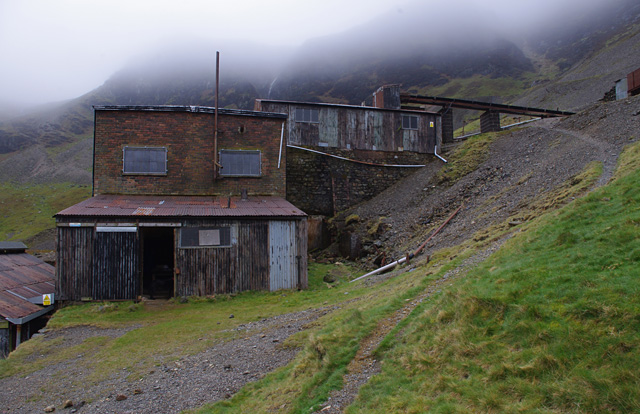
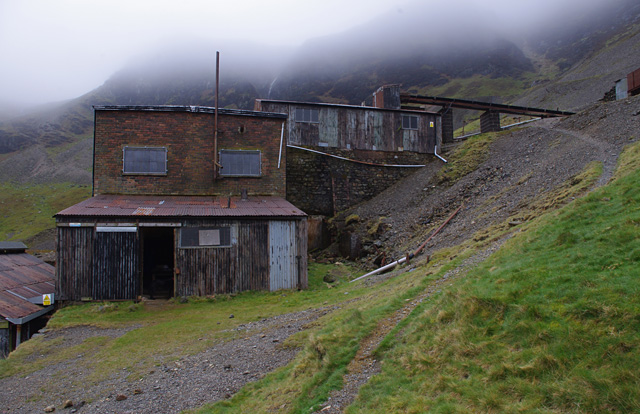
Force Crag, at the head of the Coledale valley above Braithwaite, was the last working metal mine in the Lake District, producing lead, zinc, silver and barytes over more than a century and a half of intermittent operation before closing in 1990. It is now owned by the National Trust and is considered the best-preserved barytes mill in the country.
History
Documentary evidence shows small-scale surface working for lead at Force Crag as early as 1578, though the main phase of underground mining began in the 19th century. The mine worked as a lead operation, with some silver, from 1839 until falling lead prices forced closure in 1865. From 1867 it was reworked, mainly for zinc blende, and increasingly for barytes from the 1860s onward. A mill was established on the site in 1840 and rebuilt in its present form in 1908–9 at around 900 feet elevation; flotation equipment installed in 1914 allowed effective separation of blende from barytes. An aerial ropeway was built in the 1930s to move ore down the valley, and the workings were served underground by a narrow-gauge railway using both diesel and battery-powered locomotives. In its final phase the mine was run by the New Coledale Mining Company, targeting zinc. Production finally ceased in 1990, with pumping of the workings stopped shortly afterwards, and the site passed into the care of the National Trust.
Geology
Lead, zinc, silver and barytes at the head of the Coledale valley above Braithwaite; the ground was reworked mainly for zinc blende from 1867 and increasingly for barytes.
Geological setting: Veins and Lodes (well documented example)
Workings
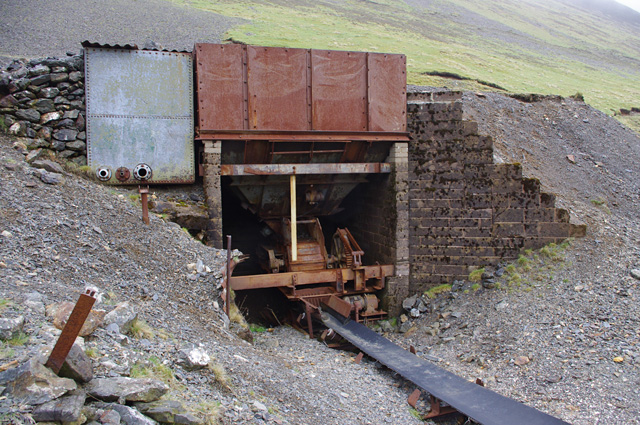
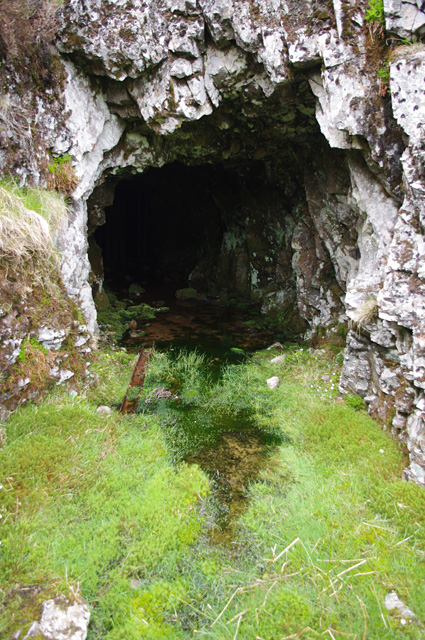
The mine comprised low and high workings reached by adits into the Coledale valley side, served by the surface mill, an aerial ropeway, and an underground narrow-gauge railway. The mill still holds its ore-processing sequence in order — grizzly screen, jaw crusher, four-compartment jig, ball mill and flotation plant.
Closure
Falling lead prices forced closure in 1865; production finally ceased in 1990 and pumping stopped shortly afterwards.
What remains
Force Crag's mill retains its original ore-processing sequence largely in situ — grizzly screen, jaw crusher, a four-compartment jig, ball mill and flotation plant — and is regarded as the best-preserved barytes mill in the country; English Heritage has assessed it as offering perhaps the best opportunity in England for in-situ preservation of a mid-20th-century barytes mine. Most surface buildings and machinery survive intact, though some equipment has been relocated to the Lakeland Mines and Quarries Trust museum at Threlkeld. The site is a Scheduled Monument within the Lake District World Heritage Site, and the National Trust runs occasional guided tours; the buildings are otherwise kept locked. A water-treatment scheme now treats metal-rich discharge from the old workings before it reaches Coledale Beck.
The mill buildings, ropeway remains and mine entrances are visible in the valley below Force Crag itself; vandalism and break-ins to the locked buildings have been an ongoing problem despite there being little of value left inside.
Redevelopment
The National Trust owns and conserves the mill and its machinery. Since March 2014 the site has also carried the UK's first passive mine water treatment scheme for an abandoned metal mine — the first of its kind in Europe — developed from research by Dr Adam Jarvis and colleagues at Newcastle University and delivered by the Coal Authority, now the Mining Remediation Authority, with the Environment Agency, the National Trust and the Lake District National Park Authority. Water from the Level 1 adit passes through two compost-filled vertical flow ponds and a wetland of soft rushes, needing no power to run, and removes over 95% of the zinc and over 90% of the cadmium and lead before the water reaches Coledale Beck.
Nearby mines
- Barrow Mine — 2.1 miles (3.4 km) E
- Goldscope Mine — 2.5 miles (4.0 km) SE
- Yewthwaite Mine — 2.9 miles (4.6 km) SE
- Thornthwaite Mine — 3.2 miles (5.1 km) NE
- Brandelhow Mine — 3.3 miles (5.3 km) E
Straight-line distance, within 9 miles (15 km). Show on the map.
What's uncertain
Points where sources disagree or the record could not be settled; both accounts are kept. All open questions in the archive.
- Documentary sources record small-scale surface extraction of lead at Force Crag as early as 1578, well before the main 19th- and 20th-century underground workings. (uncertain) 1
- A March 2020 permission-visit report, made with a National Trust ranger, describes ongoing vandalism at the locked mine buildings, including a break-in using a battery-powered grinder, despite no materials of value remaining on site. (uncertain) 3
Recorded claims
Individual factual claims, each attached to the source(s) that support it below. Where sources disagree, both are kept.
- Documentary sources record small-scale surface extraction of lead at Force Crag as early as 1578, well before the main 19th- and 20th-century underground workings. (uncertain) 1
- Over its working life, Force Crag yielded a cumulative total of around 60,000 tons of barytes, 1,248 tons of zinc and 624 tons of lead, the lead containing significant quantities of silver. 1,2
- Force Crag's mill retains its original ore crusher and flotation plant in situ, and is considered the best-preserved barytes mill in the country; most of the surface buildings and machinery survive intact. 1,2
- Force Crag ceased production in 1990, becoming the last working metal mine in the Lake District, with pumping of the workings stopped shortly afterwards. 1
- A March 2020 permission-visit report, made with a National Trust ranger, describes ongoing vandalism at the locked mine buildings, including a break-in using a battery-powered grinder, despite no materials of value remaining on site. (uncertain) 3
- Force Crag carries the UK's first passive treatment scheme for an abandoned metal mine, in operation since March 2014 and the first of its kind in Europe. Water from the Level 1 adit is piped to two vertical flow ponds filled with a compost mix and then through a wetland planted with soft rushes, with no power required to run it. 4,5
- The scheme removes more than 95% of the zinc and more than 90% of the cadmium and lead from the mine water, keeping up to a tonne of metals a year out of Bassenthwaite Lake and cleaning some six miles of watercourse below the mine. 4
- The BGS holds 36 catalogued Force Crag plan records, most with publicly viewable scans, including plans of the mine itself, a section of 'Force Cragg' mine and a plan of the mill at Coledale. 6
Photographs & further reading
A detailed account of the barytes mill's processing sequence, from Industrial History of Cumbria.
View sourceA National Trust-facilitated photography visit documenting the mill's surface and underground machinery, and noting ongoing vandalism problems at the site.
View sourceSources
- (primary) Force Crag Mine in Coledale, Braithwaite, Borrowdale — National Trust Heritage Records
- (secondary) Force Crag Mine – The Mill — Industrial History of Cumbria
- (observational) Force Crag Mine, Cumbria, Mar 2020 (permission visit) — 28DaysLater
- (primary) Force Crag mine water treatment scheme — Mining Remediation Authority
- (secondary) Zero-power metal mine water treatment — Newcastle University
- (primary) Force Crag Mine plans (BGS catalogue) — British Geological Survey
Record created: 19 August 2026 · Last researched: 28 August 2026