 MineArchive
Elms Colliery
| Location | Nailsea, Somerset — 51.4316, -2.7463 (exact) |
|---|---|
| Commodity | Coal |
| Type | Coal |
| Worked | 1829–1850s |
| Operators | White and Co. (1829–?), John Robert Lucas |
Overview
Elms Colliery, also known as Middle Engine Pit, was a small coal mine at Nailsea, Somerset, opened in 1829 to supply the local glass-making industry and closed by the 1850s. It survives as one of the most complete examples of an early 19th-century colliery in Britain, and is a scheduled ancient monument.
History
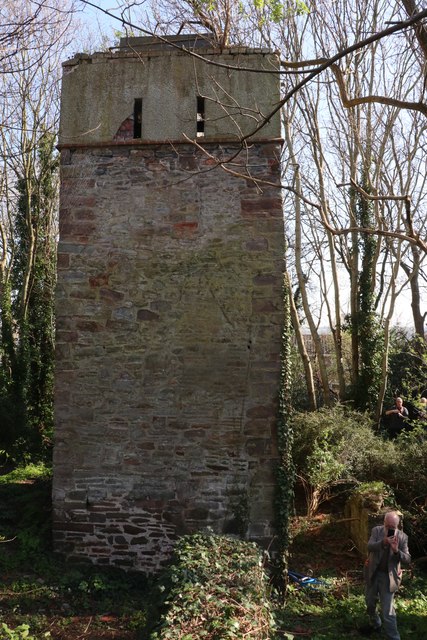
Coal mining around Nailsea dates back to at least the 16th century -- the earliest recorded date is 1507, when coal from the area was carried to Yatton to light fires -- and by the late 18th century the Golden Valley area around Nailsea hosted a cluster of small pits serving the growing Nailsea Glassworks. Elms Colliery, better known by its older name of Middle Engine Pit, was sunk in 1829 within this same cluster, operated by a consortium formed in 1786 as White and Co. -- Peter Cox, Joseph Whitchurch and Isaac White -- later joined by John Robert Lucas, who supplied coal directly to the Nailsea Glassworks. The pit closed in the 1850s as the local glassworks itself declined. Middle Engine Pit is now considered the most complete surviving example of an early 19th-century colliery in Britain: three buildings survive, including a Grade II listed engine house that retained its rotative beam engine, together with the remains of a horse whim and a weighbridge house. After the colliery closed, the water tank above the engine house was repurposed to supply water to the nearby house, The Elms, from which the colliery took its later name.
Geology
Coal of the Somerset field; the seams worked are not recorded.
Workings
A single shaft pit, worked with a rotative beam engine for pumping and winding, supplemented by a horse whim; a weighbridge house controlled coal leaving the site.
Closure
Closed in the 1850s as the local glass-making industry it supplied declined.
What remains
Scheduled as an ancient monument and placed on the Heritage at Risk Register owing to the risk of vandalism and decay. Three buildings survive, including a Grade II listed engine house retaining its rotative beam engine.
Engine house with its rotative beam engine, horse whim remains, and a weighbridge house.
Redevelopment
After closure, the engine house's water tank was repurposed to supply water to the nearby house, The Elms -- the source of the colliery's later name.
Nearby mines
- South Liberty Colliery — 5.6 miles (9.1 km) E, Bristol
- Dean Lane Colliery — 6.4 miles (10.3 km) E, Bristol
- Easton Colliery — 8.0 miles (12.9 km) E, Bristol
- Pensford Colliery — 9.2 miles (14.7 km) SE
- Charterhouse Roman Mines — 9.2 miles (14.9 km) S
Straight-line distance, within 9 miles (15 km). Show on the map.
Recorded claims
Individual factual claims, each attached to the source(s) that support it below. Where sources disagree, both are kept.
- Middle Engine Pit is described as the most complete surviving example of an early 19th-century colliery in Britain, scheduled as an ancient monument and on the Heritage at Risk Register. 1,2
- The pit was worked by a consortium formed in 1786 as White and Co. -- Peter Cox, Joseph Whitchurch and Isaac White -- later joined by John Robert Lucas, who supplied coal to the Nailsea Glassworks. 1
- The site is on the Heritage at Risk Register owing to the risk of vandalism and further decay, despite its scheduled ancient monument status. 1,2
Photographs & further reading
The official scheduling and listing description for the site, setting out why it is considered the most complete surviving example of an early 19th-century colliery in Britain.
View sourceSources
- (secondary) Elms colliery — Wikipedia
- (primary) Middle Engine Pit, Nailsea — Historic England
Record created: 1 September 2026 · Last researched: 1 September 2026