 MineArchive
Pensford Colliery
| Location | Stanton Wick, Stanton Drew, Somerset — 51.3700, -2.5580 (approximate) |
|---|---|
| Commodity | Coal |
| Type | Coal |
| Worked | 1909–1955 |
| Maximum depth | Unknown. |
| Operators | Pensford and Bromley Collieries Ltd (1909–1921), Pensford and Bromley Collieries (1921) Ltd (1921–1955) |
Overview
A 20th-century Somerset coalfield colliery sunk in 1909 to work the deeper Pensford syncline alongside its older sister pit Bromley, closed in 1955, whose tall chimney is the coalfield's most visible surviving landmark.
History
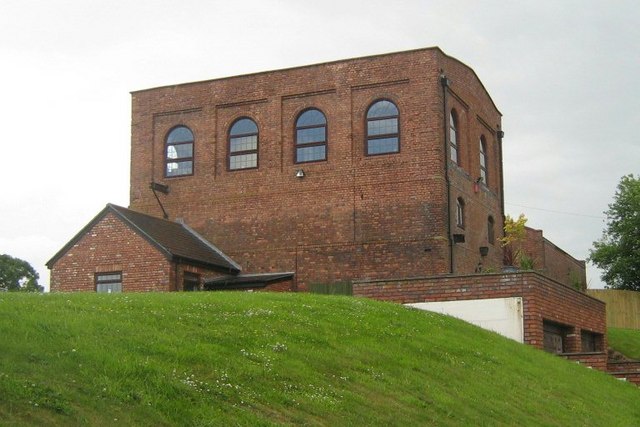
Pensford Colliery was sunk in 1909 by the newly formed Pensford and Bromley Collieries Ltd, specifically to exploit the deeper seams of the Pensford syncline, complementing the company's existing, shallower Bromley Colliery nearby; its surface buildings stood northeast of Stanton Wick in Stanton Drew parish, while its underground workings extended into the neighbouring parishes of Publow and Pensford. The pit was equipped with modern coal cutters, a red-brick winding-gear house, pithead baths for the miners and a coal-washing plant, and by 1947 was producing some 70,000 tons of coal a year. Ownership passed, alongside Bromley, to Pensford and Bromley Collieries (1921) Ltd from 1921; by 1910 the pit employed 30 men underground and 70 on the surface, a workforce that grew to 127 underground and 30 on the surface by 1923 as underground development caught up with the shaft's own greater depth. Pensford closed in 1955, two years before its sister pit Bromley.
Geology
Coal of the Somerset field, sunk specifically to work the deeper seams of the Pensford syncline.
Geological setting: Anticlines and Synclines (well documented example)
Workings
Worked the deeper seams of the Pensford syncline, equipped with modern coal cutters, a pithead baths and a coal-washing plant.
Closure
Closed in 1955, two years before its sister pit Bromley.
What remains
The colliery's tall brick chimney still stands near the village, the most visible surviving relic of the Somerset coalfield in an otherwise pastoral landscape. The winding engine house survives, converted, among the old colliery buildings; the site served as a coach depot and is now housing.
The colliery chimney.
Related mines
- Bromley Colliery — Pensford and Bromley Collieries Ltd was formed specifically to jointly develop the two mines together.
Nearby mines
- Bromley Colliery — 1.1 miles (1.8 km) S
- Burchells Colliery — 2.9 miles (4.7 km) S
- Greyfield Colliery — 3.5 miles (5.6 km) SE
- Conygre Colliery — 5.0 miles (8.0 km) SE
- South Liberty Colliery — 5.1 miles (8.2 km) NW, Bristol
Straight-line distance, within 9 miles (15 km). Show on the map.
Recorded claims
Individual factual claims, each attached to the source(s) that support it below. Where sources disagree, both are kept.
- Pensford Colliery was sunk in 1909 by the newly formed Pensford and Bromley Collieries Ltd specifically to exploit the deeper seams of the Pensford syncline, complementing the company's existing, shallower Bromley Colliery; its surface buildings stood northeast of Stanton Wick while its underground workings extended into Publow and Pensford parishes. 1
- The pit was equipped with modern coal cutters, pithead baths and a coal-washing plant, producing some 70,000 tons of coal a year by 1947; its workforce grew from 30 underground and 70 on the surface in 1910 to 127 underground and 30 on the surface by 1923. 2
- The Mining Remediation Authority's abandonment plans for Pensford cover the North and South shafts and Rydon's Pit on the No. 3 vein (SWR3400, SWR3399) and the No. 1 seam (SW355), with further sheets as SW354 and SW356. 3
- The mine was prone to flooding and coal-dust explosions; a Commons debate of 1931 noted 206 miners injured and two killed at the colliery between 1927 and 1930; the miners paid for a welfare institute in the early 1920s, and after the 1955 closure the site became Filer's Coaches' depot and later housing. 4
Sources
- (secondary) Mining and quarrying in Somerset (South West Heritage Trust) — South West Heritage Trust
- (primary) Bromley Colliery (Durham Mining Museum, via Pensford and Bromley Collieries (1921) Ltd company page) — Durham Mining Museum
- (primary) Pensford abandonment plans SWR3400 and others (BGS mine plans catalogue) — British Geological Survey / Mining Remediation Authority
- (secondary) Pensford (Wikipedia) — Wikipedia
Record created: 31 August 2026 · Last researched: 24 September 2026