 MineArchive
East Pool Mine
| Location | Pool, near Camborne, Cornwall — 50.2312, -5.2622 (exact) |
|---|---|
| Commodities | Tin, Arsenic, Copper, Tungsten, Uranium |
| Type | Metal |
| Worked | 1698–1945 |
| Maximum depth | about 1,700 ft (518 m) at Taylor's Shaft |
| Operators | East Pool and Agar Ltd (1913–1945) |
Overview
East Pool, between Camborne and Redruth, worked continuously for almost two and a half centuries, switching from copper to tin as fortunes and markets changed. Its two preserved beam engines, still standing in their original engine houses, are among the best-known survivors of Cornwall's mining age.
History
A 1698 lease from Francis Basset to William Burrell granted rights to dig for tin and other metals at what was then called Pool Old Bal. The mine worked copper from the early 18th century until 1784, when the opening of shallow, cheaper copper deposits on Anglesey collapsed the market price and made the operation unprofitable. It lay largely dormant until 1834, when it reopened as East Pool Mine and switched its focus to tin, alongside smaller quantities of arsenic and tungsten. The mine went on to raise around 92,000 tons of copper ore and 47,000 tons of tin ore over its working life, and remained an important local employer even after tin demand declined in the late 19th century, employing over 500 people in most years between 1884 and 1913 — the year it was incorporated as East Pool and Agar Ltd. A serious underground rockfall destroyed both winding shafts in 1921 (see Disasters, below); the replacement, Taylor's Shaft, was equipped with a new 90-inch cylinder pumping engine by 1924. The mine was eventually taken over by its neighbour, South Crofty, and closed in 1945.
Geology
East Pool worked tin and copper lodes in the heavily mineralised ground between Camborne and Redruth, also yielding smaller quantities of arsenic, wolframite (tungsten ore), bismuth, cobalt and uranium minerals.
Geological setting: Veins and Lodes (well documented example)
Workings
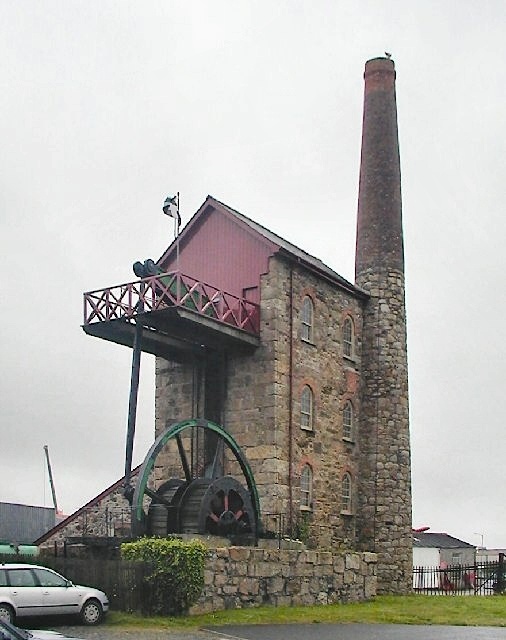
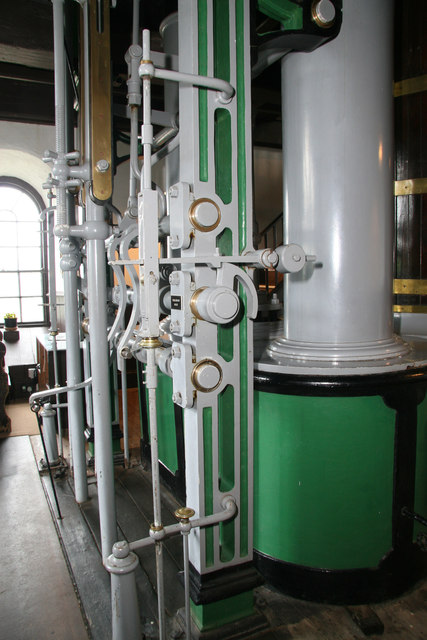
Workings had reached at least 90 fathoms (about 165 m) by 1843. Taylor's Shaft, sunk from 1922 after the 1921 rockfall destroyed the mine's earlier winding shafts (see Disasters, below), reached about 1,700 ft; the 90-inch non-rotative pumping engine re-erected over it in 1924 lifted water from that depth at roughly 27,000 gallons an hour, 92 gallons to a stroke. That engine had already had a working life elsewhere, at Highburrow East Shaft on Carn Brea, before East Pool bought it. Michell's Shaft kept the last beam whim engine installed in Cornwall, built by Holman Brothers of Camborne in 1887, which wound men and ore from around 1,500 ft until the 1921 collapse put its shaft out of use.
Closure
The mine was taken over by the neighbouring South Crofty mine and closed in 1945; the sources do not give a specific reason beyond the takeover itself.
What remains
The site is preserved as an industrial heritage attraction, with an Industrial Discovery Centre at Taylor's Shaft incorporating 1920s-era mine buildings, and is owned and managed by the National Trust.
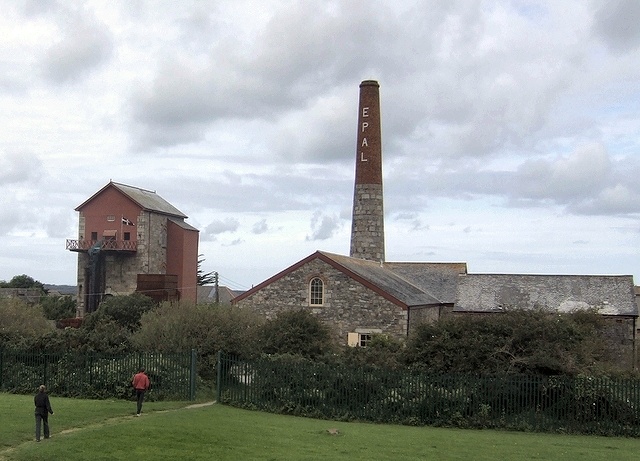
Two beam engines survive in their original engine houses — the Harvey's engine at Taylor's Shaft and the engine at Michell's Shaft — along with associated engine houses, a chimney stack carrying the letters "EPAL" (East Pool and Agar Limited), and boiler structures. The site was designated a Scheduled Monument on 3 September 2004 and includes multiple Grade II and II* listed buildings.
Redevelopment
The site operates today as a National Trust visitor attraction and forms part of the Cornwall and West Devon Mining Landscape UNESCO World Heritage Site.
Related mines
- South Crofty — South Crofty took over its neighbour East Pool and closed it in 1945.
Nearby mines
- West Tolgus Mine — 0.1 miles (0.2 km) SE
- Wheal Agar — 0.2 miles (0.4 km) S
- Wheal Buller — 0.6 miles (0.9 km) S
- South Crofty — 0.8 miles (1.3 km) SW
- Wheal Uny — 0.8 miles (1.3 km) E
Straight-line distance, within 9 miles (15 km). Show on the map.
Disasters & major incidents
-
East Pool Mine shaft collapse
1921 · Collapse / Roof Fall · 0 fatalities
A large underground rockfall destroyed both of East Pool's winding shafts and flooded the mine; no deaths were reported, but the mine had to sink an entirely new shaft to survive.
What's uncertain
Points where sources disagree or the record could not be settled; both accounts are kept. All open questions in the archive.
- Sources disagree on the date the Taylor's Shaft pumping engine was built: the National Trust's own record gives 1891, built by Harvey & Co of Hayle for £5,500 and first installed at Highburrow East Shaft, Carn Brea, while Wikipedia gives 1892. Both agree it was re-erected at Taylor's Shaft in 1924. (disputed) 1,2
- Sources also disagree on when the Taylor's Shaft engine stopped: the National Trust records it working from 1925 until 1955, while Wikipedia gives 28 September 1954 as the date electric pumps took over. (disputed) 1,2
Recorded claims
Individual factual claims, each attached to the source(s) that support it below. Where sources disagree, both are kept.
- Over its working life East Pool raised around 92,000 tons of copper ore and 47,000 tons of tin ore. 1
- The site was designated a Scheduled Monument on 3 September 2004. 1
- The National Trust's record for Taylor's Shaft states that its 90-inch engine pumped water from a shaft approximately 1,700 ft (about 518 m) deep, at around 27,000 gallons an hour — 92 gallons per stroke. 2
- Sources disagree on the date the Taylor's Shaft pumping engine was built: the National Trust's own record gives 1891, built by Harvey & Co of Hayle for £5,500 and first installed at Highburrow East Shaft, Carn Brea, while Wikipedia gives 1892. Both agree it was re-erected at Taylor's Shaft in 1924. (disputed) 1,2
- Sources also disagree on when the Taylor's Shaft engine stopped: the National Trust records it working from 1925 until 1955, while Wikipedia gives 28 September 1954 as the date electric pumps took over. (disputed) 1,2
- Michell's Shaft holds the last beam whim engine installed in Cornwall — a 30-inch double-acting engine with an unusually long stroke of over nine feet, built by Holman Brothers of Camborne in 1887 to a design by Francis W. Michell, which wound both men and ore from about 1,500 ft until the rock movement of May 1921 destroyed the shaft. 3
- Michell's engine survived the wartime scrap drive because Arthur Treve Holman saved it in 1941; the National Trust acquired the site in 1967 and set the engine in motion again, under electric power, on 20 August 1975. 3
- In almost every year between 1884 and 1913, more than 500 people were employed at the mine. 1
- The BGS mine plans catalogue holds several East Pool and Agar working plans, including Moreings Lode and North Pool Lode at the 1,600 ft level, Rogers Lode, a 1943 supplementary sheet, and a plan of the South Crofty and East Pool and Agar setts showing boundaries and shafts. 4
Photographs & further reading
The site's owner and manager, with visiting information for the preserved beam engines and Discovery Centre.
View sourceFurther freely-licensed photographs of Taylor's Shaft and Michell's Shaft engine houses.
View sourceSources
- (secondary) East Pool mine — Wikipedia
- (primary) Taylor's Mine Shaft Engine, East Pool Mine — National Trust Heritage Records — National Trust
- (primary) Michell's Mine Shaft Engine, East Pool Mine — National Trust Heritage Records — National Trust
- (primary) East Pool and Agar mine plans (BGS catalogue MP24100-MP24107, MP24878, MP25640) — British Geological Survey
- (secondary) History of East Pool Mine — National Trust
Record created: 19 August 2026 · Last researched: 28 August 2026