 MineArchive
East Pool Mine shaft collapse
A large underground rockfall destroyed both of East Pool's winding shafts and flooded the mine; no deaths were reported, but the mine had to sink an entirely new shaft to survive.
| Date | 1921 |
|---|---|
| Mine | East Pool Mine |
| Region | Cornwall |
| Primary type | Collapse / Roof Fall |
| Associated types | Flooding / Inundation |
| Fatalities | 0 (No deaths are recorded, though the collapse destroyed both winding shafts and caused significant flooding.) |
| Context | During active mining |
Location
Plotted at East Pool Mine. Recorded location. The large pin is the mine; the small round markers are the nearest mines on record. Click one for its page. View on full map
Cause
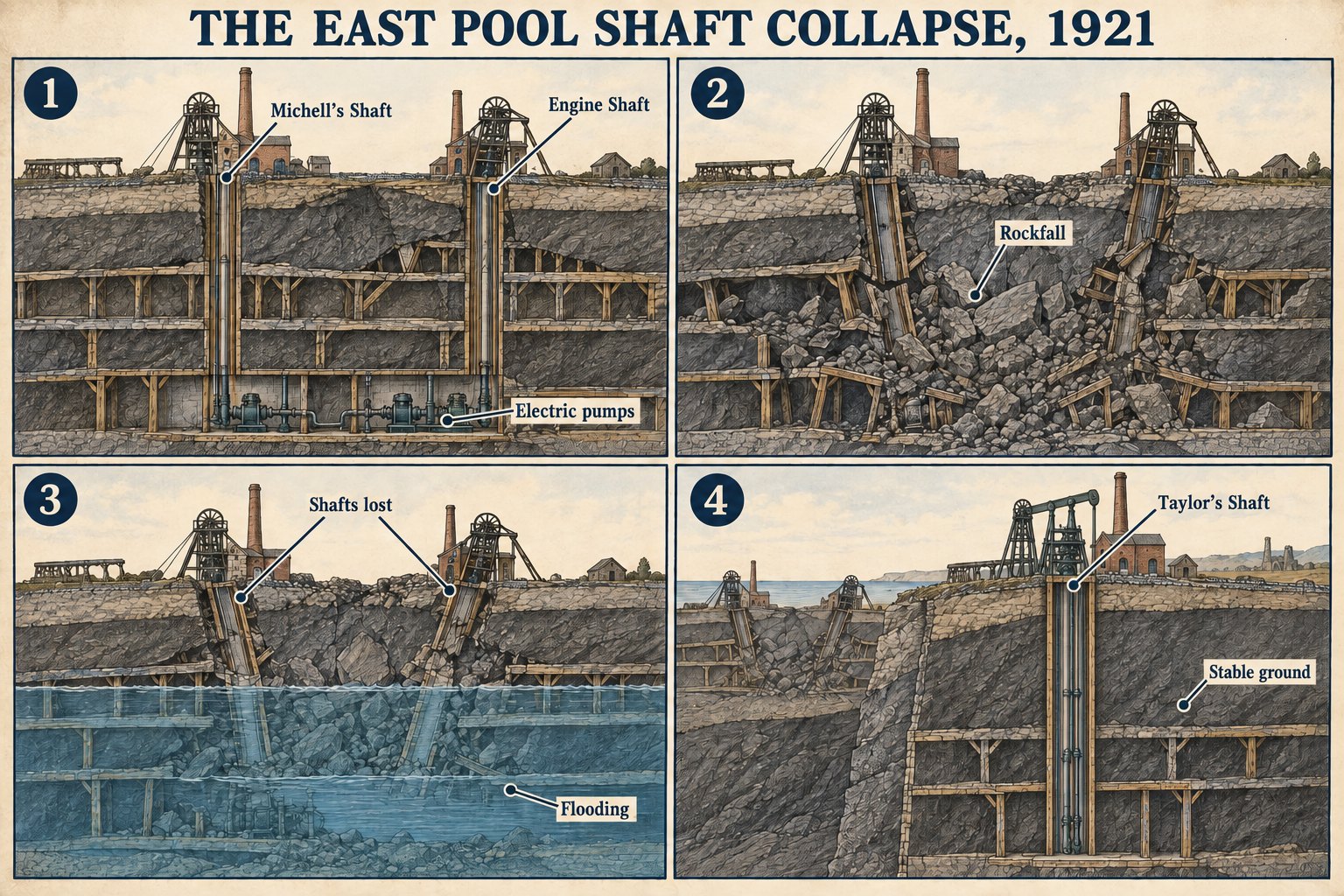
A large-scale underground rockfall struck the mine's old workings around Michell's and Engine shafts.
What happened
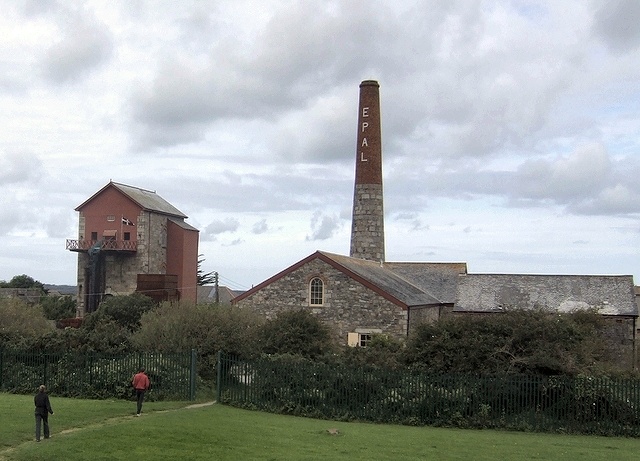
In 1921, a major rockfall in old underground workings destroyed both of East Pool's winding shafts and wrecked the electric pumps serving them, and the mine flooded badly. The owners wrote both shafts off and chose to sink a new shaft (Taylor's Shaft, named for the mine manager) away from the unstable ground, beginning in 1922. By 1924 it was equipped with a new 90-inch cylinder pumping engine, moved from the nearby Carn Brea mine where it had stood unused since 1914. The collapse came in the depression of 1921, as world tin prices fell. Taylor's Shaft was 380 metres deep by 1923, and a fast horizontal winding engine by Holman Brothers, bought from Botallack Mine when it closed in 1914, was set to work there. The 90-inch engine, known as Harvey's Engine, was designed by Nicholas Trestrail and built by Harvey and Co. in 1892. It pumped the mine through seven lifts of pumps.
Recorded claims
Individual factual claims, each attached to the source(s) that support it below. Where sources disagree, both are kept.
- A large rockfall in 1921 destroyed both of East Pool's winding shafts and caused significant flooding. 1
- The replacement, Taylor's Shaft, was equipped with a 90-inch pumping engine relocated from Carn Brea mine by 1924. 1,2
- The rockfall came in the depression of 1921, when world tin prices collapsed. 1
- Taylor's Shaft, named for the manager M. T. Taylor, was 380 metres deep by 1923, with a Holman Brothers winding engine bought from Botallack Mine. 1
- The 90-inch pumping engine, Harvey's Engine, was designed by Nicholas Trestrail, built by Harvey and Co. in 1892 and pumped through seven lifts. 2
Related terminology
Mining terms this disaster is structurally linked to, with the nature of the relationship.
- Old Workings (contextual relationship)
Named in this record’s cause: “A large-scale underground rockfall struck the mine's old workings around Michell's and Engine shafts.” - Pumping Engine (contextual relationship)
Named in this record’s narrative: “…in 1922. By 1924 it was equipped with a new 90-inch cylinder pumping engine, moved from the nearby Carn Brea mine where it had stood unused…” - Shaft (contextual relationship)
A single rockfall destroyed both winding shafts at once, which is what turned a fall of ground into an existential problem: the mine had to sink an entirely new shaft to carry on at all. - Tin (contextual relationship)
Named in this record’s narrative: “…since 1914. The collapse came in the depression of 1921, as world tin prices fell. Taylor's Shaft was 380 metres deep by 1923, and a fast…” - Winding Engine (contextual relationship)
Named in this record’s narrative: “…Taylor's Shaft was 380 metres deep by 1923, and a fast horizontal winding engine by Holman Brothers, bought from Botallack Mine when it closed in…”
Sources
- (secondary) History of East Pool Mine — National Trust
- (secondary) East Pool Mine — Grace's Guide
Record created: 20 August 2026 · Last researched: 3 November 2026