 MineArchive
Dockra Ironstone Pit
| Also known as | Dockra Colliery, Dockra No. 1 Pit, Dockra Ironstone Pit No. 1 |
|---|---|
| Location | Dockra, above Barrmill, near Beith, Ayrshire, North Ayrshire — 55.7318, -4.6027 (approximate) |
| Commodities | Coal, Ironstone |
| Type | Ironstone |
| Worked | 1896–1918 (or 1921) |
| Operators | Glengarnock Iron and Steel Company (1896–?), Merry & Cuninghame (?–1918) |
Overview
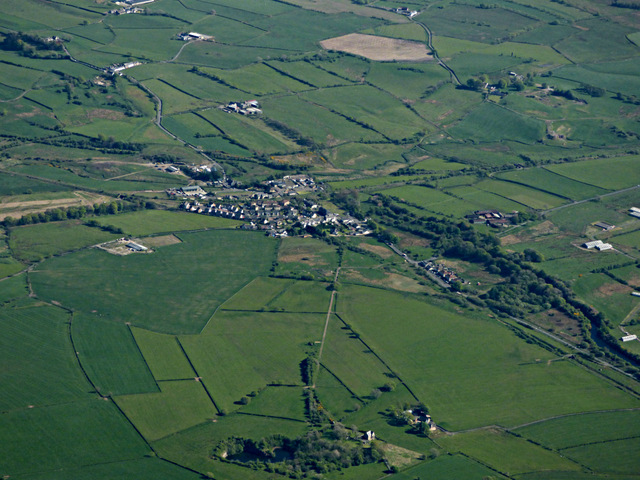
The Glengarnock Iron and Steel Company's clayband ironstone pit above Barrmill, near Beith, sunk in 1896 and worked until 1918, its ore going down a tramway to Barrmill station and on to the Glengarnock furnaces. It employed 136 at its peak in 1910, took to raising coal as well under Merry and Cuninghame, and never reopened after the 1921 strike though its ironstone was not worked out.
History
Dockra above Barrmill had long been quarried for limestone, and the 1897 Ordnance Survey shows a tramway running down from the Dockra quarries to Barrmill station. The Glengarnock Iron and Steel Company sank the ironstone pit in 1896, the Durham Mining Museum's list for that year returning it as sinking, and it was at work by 1900 with 78 employed, rising to 110 in 1905 and 136 in 1910. The shaft went 22 fathoms to the Dalry Clayband ironstone, and the workings spread half a kilometre north-east and seven hundred metres north-west of it. From 1910 the lists record coal as well as ironstone, and the owner became Merry and Cuninghame, the ironmasters who then held Glengarnock; the company built three square blocks near the railway off Dunlop Road, the Miners' Blocks, for twelve families of Dockra workers, and the 1888 Braefoot tenement built for the Barr brickworks also filled with them. The pit's one recorded death is Thomas McCann junior, a chain runner of sixteen, run over by a race of full hutches he was taking up a dook in October 1905. A two-month strike at the Glengarnock steelworks in 1912 stopped the ironstone works until the Beith paper announced its reopening. Employment had fallen to 79 in 1915, and the museum closes the pit in 1918; the village history says it worked until the 1921 strike and never reopened, the mine not being worked out. Its bing was carted off in the mid-1950s to build up the naval munitions depot between Barrmill and Beith.
Geology
Ayrshire Carboniferous: the Dalry Clayband ironstone at 22 fathoms, worked in extensive segmented panels, with coal from 1910. Limestone was quarried at Dockra alongside.
Geological setting: Sedimentary Beds and Seams (historical documentary reference)
Workings
One shaft, Dockra No. 1, 22 fathoms to the clayband; workings 950 metres in extent with a vertical range of 40 metres, extending about 500 metres north-east and 700 metres north-west of the shaft; the north-eastern panels are now flooded. Employment from the Lists of Mines: sinking in 1896, 78 in 1900, 110 in 1905, 136 in 1910, 79 in 1915. Hutches were hauled up a dook in races.
Closure
The museum closes the pit in 1918; the Barrmill village history says it stopped at the 1921 strike and never reopened, the ironstone not being worked out.
What remains
The shaft site is derelict at the end of a track, with the foundations of a surface building visible; the neighbouring quarry is flooded and the bing was removed in the 1950s.
Foundations of a surface building at the shaft site; the tramway line to Barrmill can be traced as a line of trees; the quarry's powder magazines survive.
Nearby mines
- Doura Colliery — 7.3 km S
- Fergushill Colliery — 9.2 km S
- Bartonholm Colliery — 12.5 km SW
- Annandale Colliery — 14.5 km S, East Ayrshire
Straight-line distance, within 15 km. Show on the map.
Recorded claims
Individual factual claims, each attached to the source(s) that support it below. Where sources disagree, both are kept.
- Sunk in 1896 and closed in 1918 according to the museum; the village history says it worked until the 1921 strike. (disputed) 1,2,3
- Glengarnock Iron and Steel Co. Ltd, then Merry and Cuninghame Ltd. 1,2,4
- The shaft went 22 fathoms to the Dalry Clayband ironstone; the workings extend 950 metres. 2
- 78 employed in 1900, 136 in 1910 and 79 in 1915. 1
- The northern track at Barrmill station served Dockra Ironstone Pit No. 1 by reversal. 5
Photographs & further reading
Owners, output and employment from the 1896 to 1915 lists and the one recorded death.
View sourceGrid reference, depth to the clayband, extent of the workings and the state of the shaft site.
View sourceThe village history of the pit, its workers' housing and the removal of its bing to the munitions depot.
View sourceSources
- (primary) Dockra Colliery — Durham Mining Museum — Durham Mining Museum
- (secondary) Dockra Ironstone Pit — Scottish Cave and Mine Database — Grampian Speleological Group
- (secondary) Barrmill — Places That We Know — Places That We Know
- (primary) Merry and Cunninghame Ltd. — Durham Mining Museum company page — Durham Mining Museum
- (secondary) Barrmill — RAILSCOT — RAILSCOT
- (secondary) Barrmill, North Ayrshire — Wikipedia — Wikipedia
Record created: 12 September 2026 · Last researched: 12 September 2026