 MineArchive
Danebower Colliery
| Also known as | Dane Bower Colliery |
|---|---|
| Location | Danebower, upper Dane valley, Cheshire — 53.2263, -1.9870 (approximate) |
| Commodity | Coal |
| Type | Coal |
| Worked | c. 1780–1925 |
| Maximum depth | Unknown. The coal is about 2 feet 2 inches thick. |
Overview
A small upland colliery in the headwaters of the Dane, on the Cheshire–Staffordshire border below the Buxton road, working a coal little more than two feet thick. Its squat stone chimney — one of only nine colliery ventilation chimneys left in England — stands on the hillside above the adit, and the pit was last worked in the 1920s when its pillars were robbed.
History
Danebower was probably at work with the other mines of the Buxton district between about 1780 and 1880. The colliery stood beside the River Dane, and the furnace and chimney that ventilated one of its shafts were built in the early 19th century. The main way into the coal was an adit close to the river, a later development than the vertical shafts sunk on the hillside above. Accounts of the end differ: Historic England's scheduling says the colliery was last worked in 1925, while the Derbyshire Heritage account has it abandoned in 1922 and then reopened while the pillars were robbed between 1926 and 1928 — the last of the coal taken out of the supports that had been left to hold the roof up.
Geology
The colliery worked the Ringinglow Coal, which reaches a thickness of about 2 feet 2 inches in this part of the Dane valley — thin even by the standards of the Peak District's upland coals, and worked here on the edge of the Cheshire and Staffordshire moors.
Workings
The workings were entered from vertical shafts on the hillside and later, chiefly, by an adit close to the River Dane, with a lower platform at its mouth where the tubs of coal were brought out. One shaft was ventilated by a furnace at the foot of a flue running up the hillside to a chimney: a fire lit at the flue's foot drew the foul air out of the workings. The chimney is square, tapering slightly, 8 m tall and 1.3 m wide at the base, built of well-mortared freestone with walls about 0.4 m thick, and is almost complete but for some missing stone at the top. A second account has the chimney serving the boiler of a surface haulage engine, with a rope trough running from the engine bed to the capped shaft, and a circular area beside the shaft that is the probable site of a horse gin.
Closure
The scheduling gives 1925 as the last working; the Derbyshire Heritage account has the colliery abandoned in 1922 and reopened between 1926 and 1928 only to rob the pillars, which is the usual last act of a small pit. Nothing has been worked here since.
What remains
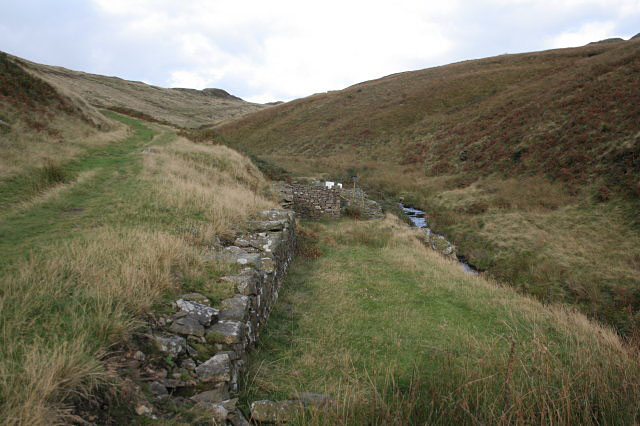
The chimney is a scheduled monument and stands in very good condition, only a few stones missing from the top courses; it is one of only nine such colliery ventilation chimneys surviving in England. The adit mouth and its loading platform survive beside the Dane, with a revetment wall along the track above, and the shaft is capped.
The ventilation chimney, the adit and the platform where the tubs were brought out, revetment walling, the rope trough from the engine bed to the capped shaft, and the probable gin circle beside it.
Redevelopment
None. The site is open moorland in the upper Dane valley, crossed by a footpath.
Nearby mines
- Goyt's Moss Colliery — 1.9 km N, Derbyshire
- Harpur Hill Quarry — 5.6 km E, Derbyshire
- Cowdale Quarry — 7.4 km E, Derbyshire
- Hough Hole Colliery — 9.2 km NW
- Dowlow Works — 9.5 km E, Derbyshire
Straight-line distance, within 15 km. Show on the map.
What's uncertain
Points where sources disagree or the record could not be settled; both accounts are kept. All open questions in the archive.
- The colliery was probably in use with other mines of the Buxton area from 1780 to 1880 and was last worked in 1925. (disputed) 1
- The colliery was abandoned in 1922 and then reopened while the pillars were robbed between 1926 and 1928. (disputed) 2
- The chimney served the boiler of a surface haulage engine, with a rope trough leading from the engine bed to the capped shaft. (disputed) 2
- The chimney was built for a furnace which provided ventilation for one of the colliery's shafts. (disputed) 1
Recorded claims
Individual factual claims, each attached to the source(s) that support it below. Where sources disagree, both are kept.
- The ventilation chimney is one of only nine surviving in England: square, tapering, 8 m tall and 1.3 m wide at the base, of well-mortared freestone with walls about 0.4 m thick. 1,2
- The colliery exploited the Ringinglow Coal, which attained a thickness of about 2 feet 2 inches in this area, the main extraction route being an adit close to the River Dane. 2
- The colliery was probably in use with other mines of the Buxton area from 1780 to 1880 and was last worked in 1925. (disputed) 1
- The colliery was abandoned in 1922 and then reopened while the pillars were robbed between 1926 and 1928. (disputed) 2
- The chimney served the boiler of a surface haulage engine, with a rope trough leading from the engine bed to the capped shaft. (disputed) 2
- The chimney was built for a furnace which provided ventilation for one of the colliery's shafts. (disputed) 1
Photographs & further reading
A short account of the colliery with photographs of the adit, the chimney and the engine house chimney, the abandonment and pillar-robbing dates and the probable gin circle.
View sourceSources
- (primary) Danebower Colliery ventilation chimney, 750m north east of Holt (List entry 1018820) — Historic England
- (secondary) Danebower colliery — Derbyshire Heritage
Record created: 22 September 2026 · Last researched: 22 September 2026