 MineArchive
Coppice Colliery, Shipley
| Also known as | Coppice Pit |
|---|---|
| Location | Shipley, near Heanor, Derbyshire — 53.0019, -1.3585 (exact) |
| Commodity | Coal |
| Type | Coal |
| Worked | 1875-1876–August 1966 |
| Operators | Miller Mundy family (1875–1922, owner) — Sunk by Alfred M. Mundy in 1875-76, later E. M. Mundy (Mapperley Village history, DMM) Shipley Colliery Company (1922–1947, owner) — Took complete control of the mines in 1922 and sank a third shaft in 1926 (Wikipedia, Mapperley Village history) National Coal Board (1947–1966) — 580,000 tons with 1,386 men in 1947 (DMM) |
The Miller Mundy family's Coppice pit at Shipley near Heanor, sunk in 1875-76, employing over 1,600 at its height and closed in August 1966; its land is now part of Shipley Country Park.
Location
Recorded location. The large pin is this mine; the small round markers are the nearest mines on record. Click one for its page. View on full map
History
Coppice Colliery was sunk in 1875-76 by Alfred M. Mundy on the Shipley estate, about seven and a half miles north-east of Derby, and later passed to E. M. Mundy. It worked the Deep Soft and Deep Hard coals, and a No. 2 pit, open by 1900, worked the Waterloo. In 1910 the two pits employed 1,193 and 438. After Captain Miller Mundy's death the Shipley Colliery Company, which his family had founded, bought the hall in 1922 and took complete control of the mines; it sank a third shaft in 1926.
In November 1922 two men were buried by a roof fall in the Coppice pit. Two deputies, Stephen Richards and James Beresford, spent more than three hours freeing them while the roof kept breaking, and in July 1923 both received the Edward Medal at Buckingham Palace. On 28 June 1943, during shotfiring, a loud bump, probably part of the roof giving way, was followed by the shot igniting methane; four men from Heanor died of their burns and two more were badly injured. The colliery passed to the National Coal Board in 1947, when 1,386 men raised 580,000 tons, and Woodside No. 3 was combined with it in 1961. Regarded as uneconomic, Coppice closed in August 1966 after 91 years. The land was reclaimed by opencast working in 1970-74 and opened as Shipley Country Park in 1976.
Geology
The Derbyshire coal measures: the Deep Soft, Deep Hard, Waterloo and Ell seams.
Workings
Coppice Nos. 1 and 2 pits, with a third shaft sunk in 1926 and Woodside No. 3 combined with the colliery in 1961; a railway carried its coal beside the Nutbrook Canal.
Closure
Closed in August 1966 as uneconomic, after 91 years.
What remains
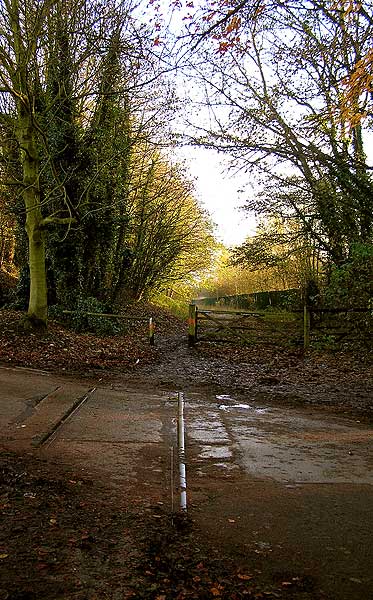
The site is within Shipley Country Park; rails of the line that carried Coppice coal survive embedded in a park road.
Rails of the colliery railway set in a road in Shipley Country Park.
Redevelopment
Reclaimed by the National Coal Board by opencast working in 1970-74 and opened as Shipley Country Park on 26 May 1976, created by Derbyshire County Council as a memorial to mining in the area.
Related mines
- Shipley Colliery — Coppice was one of the Shipley estate's collieries, worked by the Miller Mundy family and then the Shipley Colliery Company.
Nearby mines
- Bailey Brook Colliery — 1.4 miles (2.3 km) N
- Loscoe Colliery — 1.5 miles (2.4 km) N
- Ormonde Colliery — 1.5 miles (2.4 km) N
- Mapperley Colliery — 1.6 miles (2.6 km) S
- West Hallam Colliery — 1.9 miles (3.0 km) SE
Straight-line distance, within 9 miles (15 km). Show on the map.
Further reading
Includes the sinking and closure of Coppice Colliery and managers who moved between the pits.
View sourceThe 1922 Coppice rescue and the 1943 explosion.
View sourceSources
- (secondary) Mapperley Coal Company, part 3 (Mapperley Village history) — Mapperley Village
- (secondary) List of collieries in Derbyshire — Wikipedia
- (primary) Coppice Colliery (Durham Mining Museum) — Durham Mining Museum
- (secondary) Mine accidents (Heanor & District Local History Society) — Heanor & District Local History Society
- (secondary) Shipley Hall (Wikipedia) — Wikipedia
- (primary) BGS mine plan: SHIPLEY, COPPICE, Deep Hard, abandoned 1935 — British Geological Survey
Record created: 5 November 2026 · Last researched: 6 November 2026