 MineArchive
Coniston Copper Mines
| Location | Coppermines Valley, Coniston, Cumbria — 54.3776, -3.0952 (exact) |
|---|---|
| Commodity | Copper |
| Type | Metal |
| Worked | 1590s–early 20th century (residual activity to 1956) |
| Maximum depth | at least 375 m below Deep Level by closure (depth from the surface not confirmed) |
| Operators | Company of Mines Royal (1590–1648), Macclesfield Copper Company, Coniston Electrolytic Company |
Overview
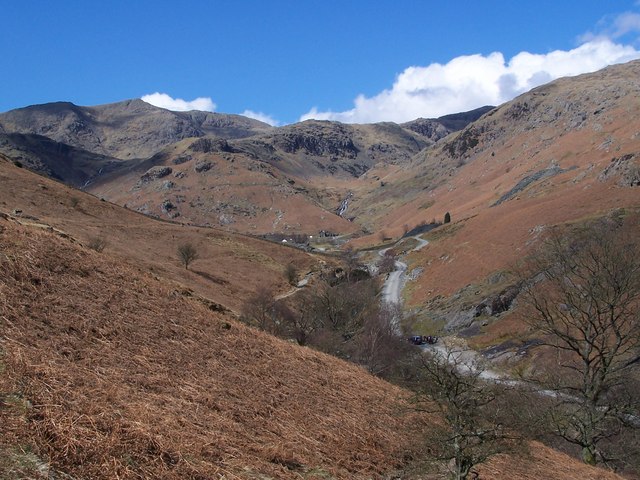
Coniston Copper Mines is a 5 km² landscape of workings above Coppermines Valley, worked from the 1590s Elizabethan Mines Royal through to a 19th-century peak under John Taylor, when it was one of the largest copper mines in the north of England. It is a Scheduled Ancient Monument, recognised as one of the most complete surviving examples of Victorian copper mining outside Devon and Cornwall.
History
Commercial mining at Coniston is first recorded in the 1590s, when the Crown-backed Company of the Mines Royal brought in German miners from the Tyrol and Bavaria to work the Bonsor and Paddy End veins. A 1599 survey found the workings already "in poor production" with "dilapidated workings", suggesting they had been worked for some time before that date; a fuller 1602 survey, and later an 1684 letter recalling the operation from three former miners, give a detailed picture of Elizabethan working practice. Mining ceased around the start of the Civil War in the 1640s.
The site was reopened in the 18th century by Charles Roe's Macclesfield Copper Company, which centralised ore processing onto two large dressing floors. The mine reached its peak under John Taylor and manager John Barratt from the 1820s, employing over 600 people at its height and eventually running 13 waterwheels to power pumps, winches and processing machinery. The Deep Level, driven around 1850, connected the previously separate workings onto a single tramway.
Falling copper prices — undercut by new, cheaper South American ore — pushed the mine into decline through the late 19th century. Primary ore extraction wound down in the early 20th century, though the site was not entirely abandoned: the Coniston Electrolytic Company, a French-run venture, briefly reprocessed waste spoil for residual copper by acid leaching, and the Mandalls Slate Company used one of the Bonsor Mill buildings for dressing slate brought over by aerial ropeway. Small-scale activity of this kind continued until 1956.
Geology
The mines lie in rhyolitic and andesite lava flows interbedded with hardened volcaniclastic dust and ash (British Geological Survey Sheet 38). Mortar stones found at Simon's Nick and East Bonsor resemble those from the prehistoric copper mines at Great Orme in North Wales, and it has been suggested mining here could date back to the Bronze Age — but no datable material evidence for activity before the 1590s is recorded at Coniston, and mortars are simple enough tools to have remained unchanged in design for millennia, so on their own they prove nothing about date.
Geological setting: Veins and Lodes (well documented example)
Workings
Early Elizabethan working was opencast, following veins visible at the surface down into long, narrow open stopes — well preserved today around Simon's Nick, where the open stopes still extend deep into the hillside. Ore was dressed close to where it was won: small semi-circular drystone shelters, roughly 2 m across and only two or three courses high, are thought to have given crushing and sorting workers some protection from the weather. Cobbler's Level, an adit driven to drain the Low Works, was started in 1614 and took three years to complete entirely by hand, since gunpowder was not used at Coniston until 1693. By the time work stopped in the 1640s, Low Works had reached a depth of forty fathoms (about 73 m).
Later working reused and deepened the Elizabethan veins, eventually driving workings to at least 375 m below the Deep Level of around 1850. Ore transport evolved from jack-roll winches and horse gins to an aerial tramway between Paddy End Middle Shaft and the Bonsor dressing floors, said at the time to be the longest continuous winding rope in the country. Processing graded ore by hand — high-grade ore was broken to thumbnail size by women called "bucker" workers — before poorer-grade material went through mechanical stamps, jigs and buddles to separate ore from waste.
Closure
Copper production declined through the late 19th century as cheaper imported ore undercut prices, and had effectively ended by the early 20th century. The site was not immediately abandoned, however: the Coniston Electrolytic Company reprocessed waste spoil at Bonsor Mill for residual copper, and slate dressing and small-scale exploration continued at the site until 1956.
What remains
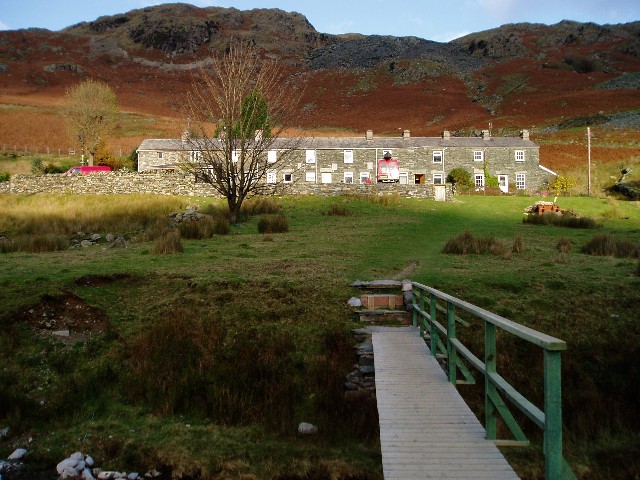
Substantial remains survive across the valley, reflecting the site's near-continuous use over roughly 400 years. A 2012 Time Team archaeological evaluation recorded standing drystone building remains at both the Levers Water/Back Strings area and Cobbler's Level, though dating them precisely proved difficult since the whole complex reuses the same stone across different periods. Around the Back Strings stopes, several small semi-circular ore-dressing shelters and mortar stones survive from the Elizabethan period. Below ground, the eastern end of the 17th-century German workings at Low Works survives in very good condition.
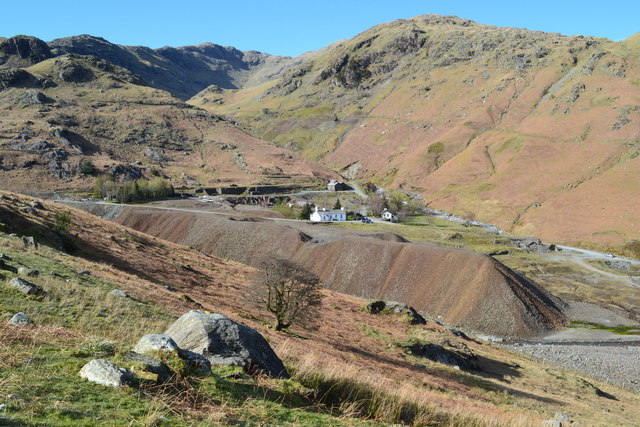
Surviving surface features include the standing walls of at least two Elizabethan-period buildings near Simon's Nick, the remains of the Old Engine Shaft wheel pit, and extensive spoil heaps distinguishing different phases of work — dark, orange-brown spoil from the Elizabethan mines contrasts with the dark grey blasted rock of the 18th- and 19th-century workings. No structural trace of the stamp mill referenced in 17th-century documents has been found at either candidate location.
Redevelopment
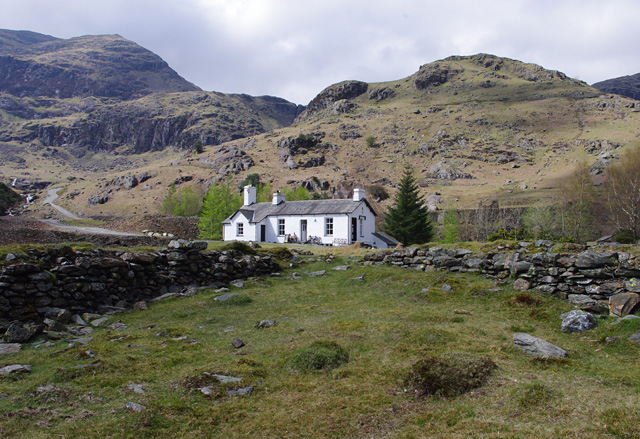
A £455,000 Heritage Lottery Fund grant supported the Coniston Copper Project, which repaired around 150 elements across ten historic structures and opened a visitor heritage centre with self-guided trails through the valley. The former mine manager's house, built in 1830, now operates as the Coniston Coppermines Youth Hostel.
Related mines
- Greenburn Mine — Greenburn was regarded as an outlier of Coniston and was known for parts of the 19th century as New Coniston Mine and Great Coniston Mine.
- Tilberthwaite — Held by the same successive owners as Coniston from the 1850s to 1908: the Barratt family, then Thomas Wynn, then Charles Day.
- Wheal Friendship — The same manager who made his name at Wheal Friendship went on to manage Coniston Copper Mines, Magpie Mine and Greenside Mine.
Nearby mines
- Cove Quarries, Coniston — 1.2 miles (1.9 km) SW
- Tilberthwaite — 1.6 miles (2.6 km) N
- Greenburn Mine — 2.0 miles (3.2 km) N
- Parrock Quarry — 2.5 miles (4.0 km) NE
- Hodge Close Quarry — 2.6 miles (4.2 km) NE
Straight-line distance, within 9 miles (15 km). Show on the map.
What's uncertain
Points where sources disagree or the record could not be settled; both accounts are kept. All open questions in the archive.
- Some accounts suggest mining could date back to the Bronze Age, based on mortar stones resembling those from the prehistoric Great Orme copper mines in Wales, but no datable material evidence for activity this early is recorded at Coniston. (uncertain) 1
- A 2015 underground exploration report describes the deeper workings as an unstable, gradually collapsing environment, with sections of hanging rail line and old wooden "false floors" concealing drops — consistent with the site's general reputation for genuinely hazardous underground conditions away from the surface trails. (uncertain) 2
Recorded claims
Individual factual claims, each attached to the source(s) that support it below. Where sources disagree, both are kept.
- The earliest confirmed commercial mining at Coniston dates to the 1590s, under the Crown-backed Company of the Mines Royal. 1
- Some accounts suggest mining could date back to the Bronze Age, based on mortar stones resembling those from the prehistoric Great Orme copper mines in Wales, but no datable material evidence for activity this early is recorded at Coniston. (uncertain) 1
- Sources give closure dates ranging from 1897 to 1950; a 2016 professional archaeological assessment records that primary copper extraction had wound down by the early 20th century, while a French-run venture reprocessing waste spoil, plus slate dressing, continued at the site until 1956 — likely explaining the range of dates in circulation. 1
- By the time Elizabethan-era work stopped at the start of the Civil War in the 1640s, the Low Works had reached a depth of forty fathoms (about 73 m). 1
- A timber sill beam recovered from a standing building at the Back Strings site during a 2012 Time Team excavation was radiocarbon dated to 1435–1515 with 86.5% probability — a maximum age for the timber, which may have been reused, so the building itself is not necessarily this old. 1
- The site is a Scheduled Ancient Monument (SAM number 38773, National Heritage List for England entry 1003055), reflecting its national importance. 1
- A 2015 underground exploration report describes the deeper workings as an unstable, gradually collapsing environment, with sections of hanging rail line and old wooden "false floors" concealing drops — consistent with the site's general reputation for genuinely hazardous underground conditions away from the surface trails. (uncertain) 2
- The BGS holds 29 catalogued Coniston plan records, several with publicly viewable scans, including plans and cross-sections of the copper mines and a section of the East and West Bonser mines — the same Bonsor veins the Company of the Mines Royal's German miners were brought in to work in the 1590s. 3
Photographs & further reading
The Park Authority's own heritage learning resource, with self-guided trails and detail on geology, mining methods and the mining community.
View sourceAround 70 further freely-licensed photographs of the valley, workings and surviving buildings, beyond the two reproduced on this page.
View sourceA detailed underground trip report descending around 160 m through four levels of workings to Hospital Level, with photos of surviving mineralisation, an old jack roll, and several roof collapses along the route.
View sourceSources
- (primary) Coniston Copper Mines, Coniston, Cumbria: Archaeological Evaluation and Assessment of Results — Wessex Archaeology / Channel 4 Time Team
- (observational) Coniston Coppermine through trip, November 2015 — 28DaysLater forum
- (primary) Coniston Copper Mines plans (BGS catalogue) — British Geological Survey
- (secondary) All About the Coniston Copper Mines — Coppermines & Lakes Cottages Ltd
- (secondary) Coniston Copper Mines — Northern Mine Research Society
- (secondary) Coniston copper mines — Wikipedia
- (secondary) History of Coniston Copper — Lake District National Park Authority
Record created: 19 August 2026 · Last researched: 28 August 2026