 MineArchive
Betws Colliery
| Location | Ammanford, Amman Valley, Carmarthenshire — 51.7903, -3.9662 (exact) |
|---|---|
| Commodity | Coal |
| Type | Coal |
| Worked | From 1974–June 2003 |
| Operators | National Coal Board (1978–1993), Betws Anthracite Company Ltd (1994–2003) |
Overview
Betws, a modern drift mine above Ammanford, was the last deep mine working in the Amman Valley — kept alive for a final decade by a management buyout after British Coal closed it, before its own 2003 closure brought over 250 years of deep coal mining in the valley to an end.
History
Development of Betws New Drift began in 1974, taking over from the older Ammanford Colliery, which closed in 1976; the new drift began production in 1978 and was renamed Betws Colliery, correcting a longstanding anomaly, since both of the collieries known as 'Ammanford' had in fact stood in the neighbouring settlement of Betws. The new drift began with a workforce of around 500 men, drawn from the former Ammanford Colliery and from Graig Merthyr Colliery in nearby Pontarddulais. Between May 1978 and January 1993, when British Coal closed the mine, 21 longwall retreat coal faces were worked. Following the privatisation of the coal industry in 1994, Betws was taken on in a management buyout by the Betws Anthracite Company Ltd, which switched extraction to the older pillar-and-stall method. By the start of the new millennium Betws was the only working pit left in the Amman Valley, employing around 100 men. The mine survived a further decade under its new owners before finally closing in June 2003, ending more than 250 years of deep coal mining in the valley.
Geology
The mine worked Carboniferous anthracite coal seams of the western South Wales Coalfield, the same high-quality, low-volatile anthracite that made the Amman Valley one of Wales's principal anthracite-producing districts.
Geological setting: Coal Formation and Rank (historical documentary reference), Sedimentary Beds and Seams (well documented example)
Workings
The mine was entered by drift rather than shaft, driven into the hillside above Ammanford; 21 longwall retreat coal faces were worked under British Coal ownership between 1978 and 1993, before the mine's post-privatisation owners switched to the older pillar-and-stall method.
Closure
Betws Anthracite Company Ltd's decade-long management buyout ended in June 2003, when the mine finally closed, bringing over 250 years of deep coal mining in the Amman Valley to an end.
What remains
Unknown.
Nearby mines
- Bodyst Uchaf Colliery — 0.9 miles (1.4 km) NW
- Glynmoch Colliery — 1.2 miles (1.9 km) NE
- Ammanford Colliery — 1.3 miles (2.0 km) W
- Wernos Colliery — 1.5 miles (2.4 km) W
- Glanamman Colliery — 1.6 miles (2.5 km) NE
Straight-line distance, within 9 miles (15 km). Show on the map.
Recorded claims
Individual factual claims, each attached to the source(s) that support it below. Where sources disagree, both are kept.
- The new drift began with a workforce of around 500 men in 1978; 21 longwall retreat coal faces were worked between 1978 and 1993. 1
- Following privatisation in 1994, Betws Anthracite Company Ltd took the mine on in a management buyout, switching to the pillar-and-stall method and keeping it working until June 2003. 1
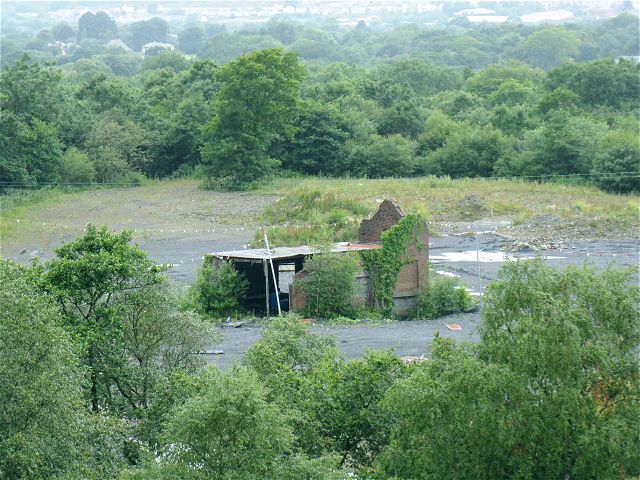
- The colliery's Pentre Washery — the coal preparation plant that once stood over the railway sidings — has been demolished, but a substantial retaining wall with the remains of its coal chutes still stands, visible from the adjacent spoil heap. 1
Sources
- (secondary) History of Coal Mining in the Amman Valley, Carmarthenshire — GENUKI
- (primary) Betws mine plan — British Geological Survey / The Coal Authority
- (secondary) Ammanford Area — Northern Mine Research Society
Record created: 24 August 2026 · Last researched: 28 August 2026