 MineArchive
Ammanford Colliery
| Also known as | Ammanford No. 1 Colliery, Ammanford No. 2 Colliery, Gwaith Isa’r Betws, Gwaith Uchaf Betws |
|---|---|
| Location | Betws, Ammanford, in the Amman valley, Carmarthenshire — 51.7950, -3.9950 (approximate) |
| Commodity | Anthracite |
| Type | Coal |
| Worked | 1890–10 September 1976 |
| Maximum depth | Worked latterly by slant; no depth figure is recorded. |
| Operators | Henry Herbert (1890–1924), United Anthracite Collieries Limited (1924–1947), National Coal Board (1947–1976) |
Overview
Two anthracite collieries on Betws Mountain rather than one. Ammanford No. 1, the Top Works or Red Vein — Gwaith Isa’r Betws — was sunk by the mining engineer Henry Herbert in 1890, and Ammanford No. 2, the Bottom Works or Little Vein, followed in 1891. Both passed to United Anthracite Collieries Ltd in 1924, and when the new owners refused to abide by old customs — the seniority rule among them — the Anthracite Strike of 1925 began here. Fifty-eight miners were imprisoned, and No. 1 was closed in reprisal. The Ammanford Slant was replaced by the Betws New Mine in 1975 and closed on 10 September 1976.
History
Henry Herbert, a mining engineer, sank Ammanford No. 1 on Betws Mountain in 1890 to work the Red Vein; it was known as the Top Works, or Gwaith Isa’r Betws. In 1891 a second slant was driven nearby and became Ammanford No. 2, the Bottom Works or Little Vein — Gwaith Uchaf Betws. Both became part of United Anthracite Collieries Ltd in 1924.
In 1925 the new owners of No. 1 refused to abide by old customs, including the seniority rule, and the Anthracite Strike began at Ammanford at the end of July. There were riots at Ammanford No. 2 and at Betws and disturbances across the district — 30 July 1925 saw rioting over a wide area, and in the town itself 200 Glamorgan police were ambushed by strikers at Pontamman Bridge in what became known as the Battle of Ammanford. Fifty-eight miners were imprisoned. After the strike, United Anthracite Collieries closed Ammanford No. 1 in reprisal.
Working continued on the ground for another half-century. The Ammanford Slant was replaced by the Betws New Mine, driven in 1975 on the site of the old Ammanford No. 1 pit, and the old colliery closed on 10 September 1976 — still filling its coal by shovel on the old longwall system, probably the last pit in the country to do so.
Geology
The South Wales anthracite district in the Amman valley, worked here for the Red Vein at the Top Works and the Little Vein at the Bottom Works.
Workings
Two collieries on Betws Mountain, worked by slants: No. 1, the Top Works, sunk 1890, and No. 2, the Bottom Works, from 1891. A "spake" carried the men to and from the coal face from 1890. The Ammanford Slant was superseded in 1975 by the Betws New Mine, driven on the site of the old No. 1 pit.
Closure
Ammanford No. 1 was closed by United Anthracite Collieries in reprisal after the 1925 strike. The Ammanford Slant was replaced by the Betws New Mine in 1975 and closed on 10 September 1976; on closure it was still filling its coal by shovel on the old longwall system, probably the last pit to work in that hand-filled way.
What remains
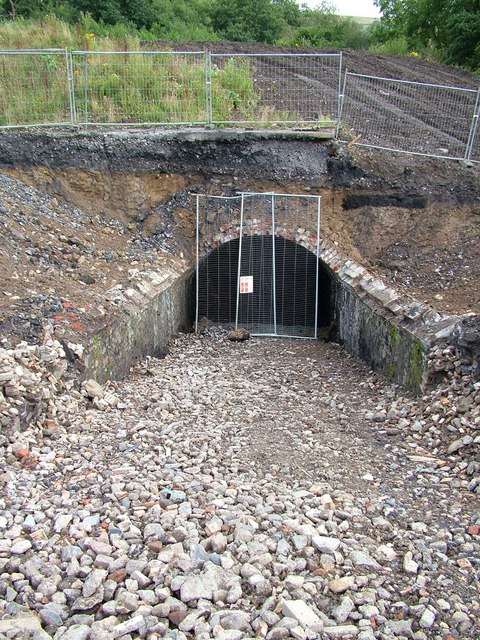
No description of the present-day colliery site is recorded; the Betws New Mine succeeded it on the same ground.
Some former Ammanford Colliery buildings are described by the local history source cited, but their present state is not known.
Nearby mines
- Wernos Colliery — 0.2 miles (0.3 km) W
- Tir-y-Dail Colliery — 0.5 miles (0.8 km) NW
- Bodyst Uchaf Colliery — 0.5 miles (0.9 km) E
- Talyclyn Colliery — 0.5 miles (0.9 km) NW
- Park and Blaina Colliery — 0.7 miles (1.2 km) W
Straight-line distance, within 9 miles (15 km). Show on the map.
Disasters & major incidents
-
Ammanford Colliery roof fall, 1910
22 December 1910 · Collapse / Roof Fall · 2 fatalities
Two men were killed three days before Christmas 1910 when three sets of double timber collapsed on a road under repair at Ammanford Colliery. -
Ammanford Colliery explosion, 1935
18 September 1935 · Explosion · 2 fatalities
Two repairers boring in the stone of a cross-measure heading at Ammanford Colliery on 18 September 1935 were killed by an unexplained explosion and found dead by the fireman.
Recorded claims
Individual factual claims, each attached to the source(s) that support it below. Where sources disagree, both are kept.
- Ammanford No. 1, known as Gwaith Isa’r Betws — the Top Works or Red Vein — was sunk by Henry Herbert in 1890. In 1891 a second colliery was opened, Ammanford No. 2, known as Gwaith Uchaf Betws, the Bottom Works or Little Vein. 1
- Ammanford No. 2 became part of United Anthracite Collieries Ltd in 1924. 1
- In 1925 the new owners of Ammanford No. 1 refused to abide by old customs, including the seniority rule, which sparked off the Anthracite Strike. Riots took place at Ammanford No. 2 and at Betws among other places, and 58 miners were imprisoned. After the strike, Ammanford No. 1 was closed by United Anthracite Collieries in reprisal. 1
- In 1925 anthracite miners took control of the town for ten days, and 200 Glamorgan police were ambushed by strikers at Pontamman Bridge in what became known as the Battle of Ammanford. 2
- The Ammanford Slant was replaced by the Betws New Mine in 1975 and closed on 10 September 1976. On closure it was still filling its coal by shovel on the old longwall system of coal extraction, probably the last pit to use the hand-filled way. 1
Photographs & further reading
A detailed local history of both Ammanford pits and their successor at Betws, covering Henry Herbert’s sinkings, the 1925 strike and its reprisals, and the surviving colliery buildings.
View sourceSources
- (secondary) Ammanford Colliery and Betws Colliery — terrynorm.ic24.net (Ammanford local history)
- (secondary) Ammanford — Wikipedia
Record created: 8 September 2026 · Last researched: 8 September 2026