 MineArchive
Gypsum
| Category | Commodities |
|---|---|
| Commodity page | Gypsum → |
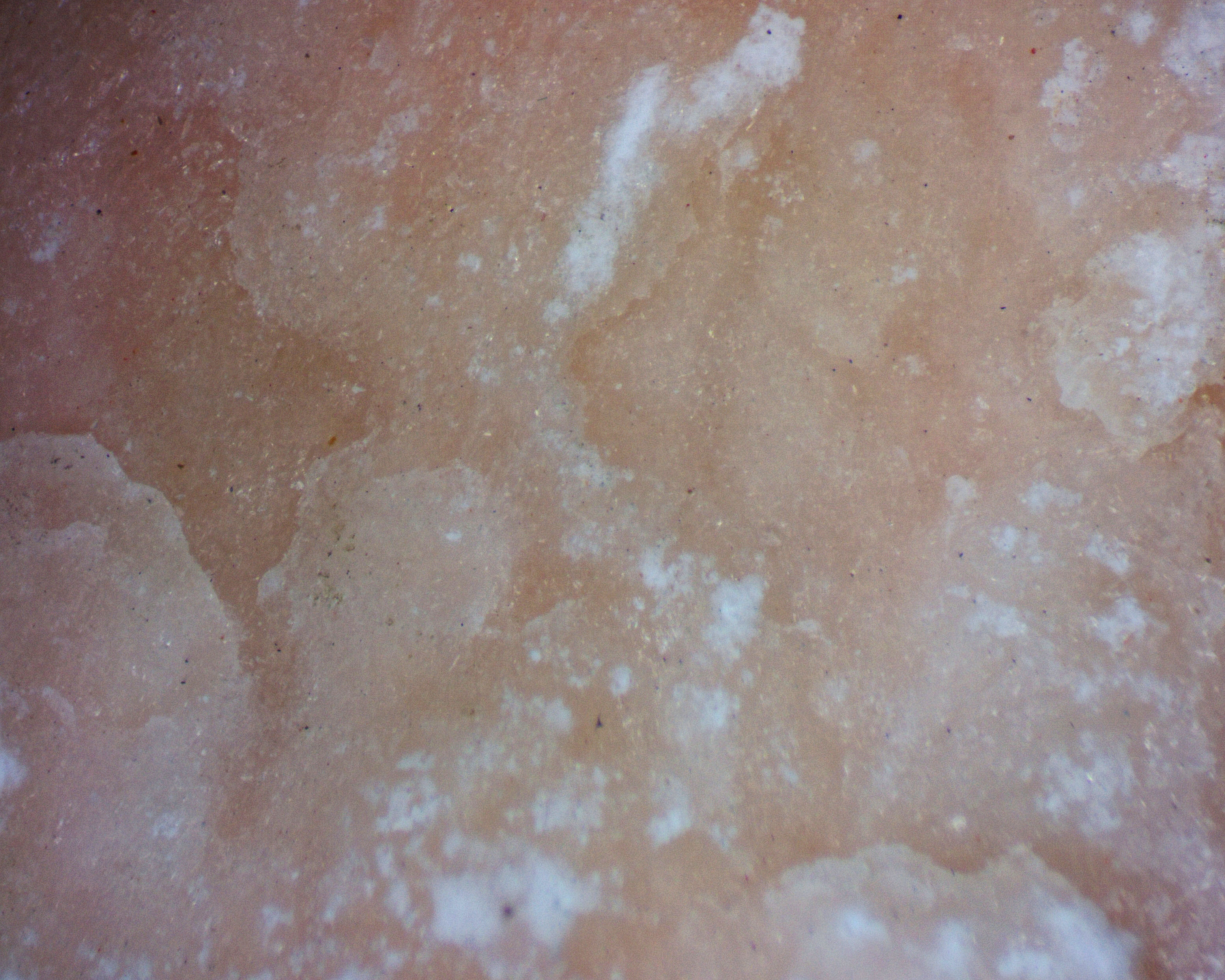
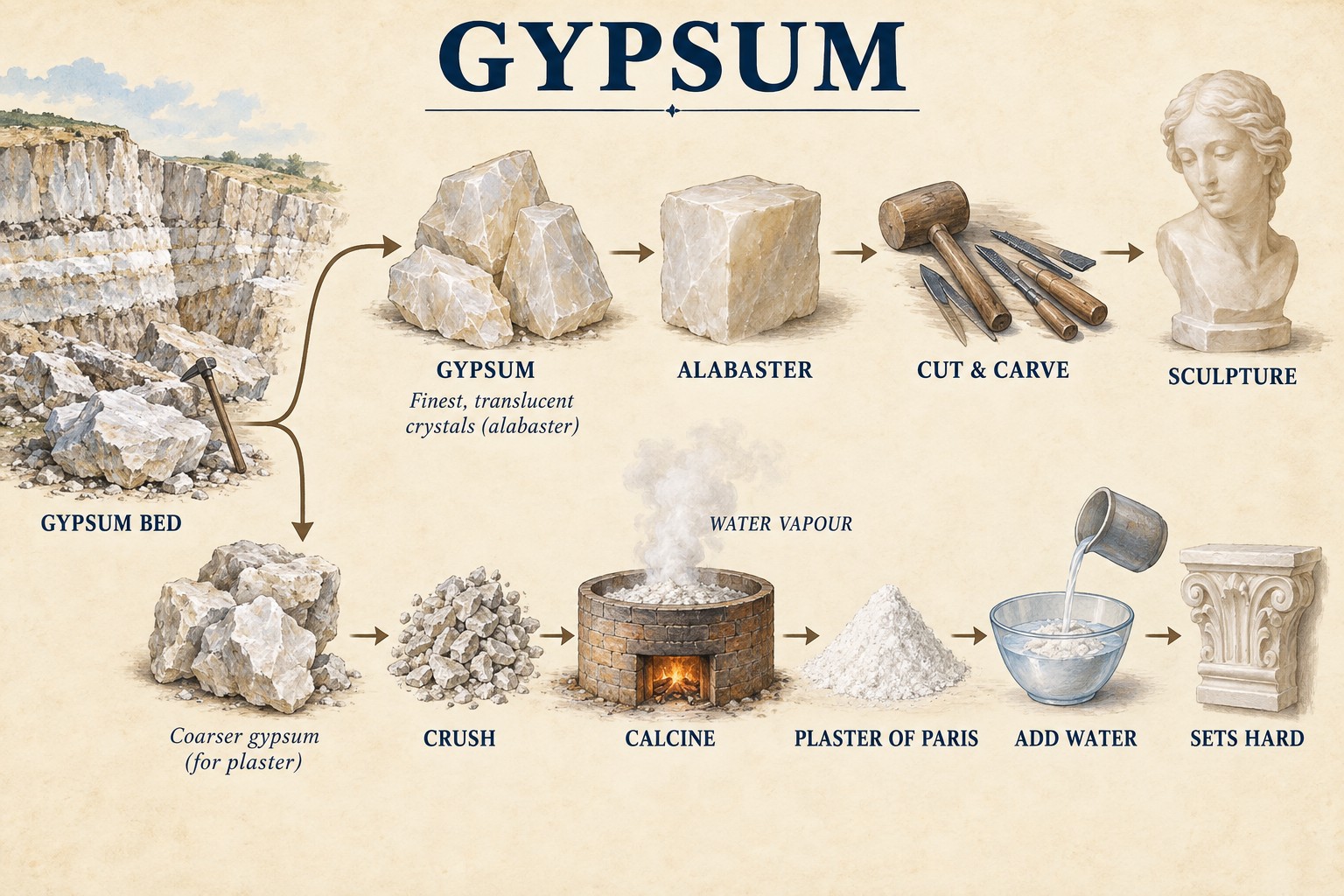
A soft sulphate mineral formed by the evaporation of ancient seawater; its finest, translucent form, alabaster, was long prized for sculpture, while coarser gypsum is calcined into plaster of Paris or used directly in cement.
Historical usage
Gypsum and its alabaster variety have been worked since antiquity — ancient Egyptians used it to plaster mud-brick walls and to build the pyramids. In England, Chellaston in Derbyshire became the principal source of medieval alabaster, supplying the Nottingham carving workshops whose devotional sculptures were exported across Europe at their 1360-1460 peak, a trade largely destroyed by the 1550 Act removing Catholic imagery from churches. Plain gypsum extraction at Chellaston continued long after, finally ceasing in 1978.
How it worked
Alabaster, gypsum's finest translucent form, could be carved directly with simple tools; coarser gypsum is calcined — heated to drive off water — to make plaster of Paris, or ground and added to cement to slow its setting time.
Why it was used
Alabaster's softness let it be carved quickly and cheaply into detailed devotional figures, fuelling the medieval English sculpture export trade. Calcined gypsum's fast-setting, low-shrinkage properties make it ideal for casting moulds and ornamental plasterwork, and mixing it into cement controls how quickly the cement sets and hardens.
Value over time
Alabaster's value swung entirely with religious fashion: prized and exported across Europe at its medieval peak, the trade collapsed after the 1550 Act stripped Catholic imagery from English churches, saw a modest Victorian revival, then declined for good after the Second World War as good-quality stone grew scarce. Plain gypsum, valued for cement and plaster rather than carving, kept Chellaston's pits working long after the alabaster trade ended, closing only in 1978.
Hazards & challenges
Gypsum dust is a mild respiratory irritant rather than a major occupational hazard in its own right, though gypsum-based plasterboard work carries a distinct modern risk where the dust contains asbestos fibres from other building materials rather than the gypsum itself.
Risks & limitations
Alabaster's whole medieval market depended on demand for Catholic devotional imagery, which made it acutely vulnerable to the 1550 Act removing such imagery from English churches — a single piece of legislation collapsed the trade almost overnight, something a purely secular building material would not have faced.
Regional variation
Chellaston in Derbyshire and Tutbury in Staffordshire were medieval England's two principal alabaster sources, though Chellaston supplied the larger share of the stone sent to Nottingham's carving workshops.
Related terminology
Mines associated with this term
5 examples chosen from 13 linked records — the term page is not an index.
- Fauld — Staffordshire (well documented example)
Fauld began as an ordinary Staffordshire gypsum mine, its drift workings feeding a plaster works at the tunnel mouth, until the RAF requisitioned it in 1937. - Long Meg Mine — Cumbria (well documented example)
Named 10 times in this record, first in the summary: “Long Meg was a gypsum and later anhydrite mine in Cave Wood Valley just north of Little…” - Bantycock Quarry — Nottinghamshire (well documented example)
Named 12 times in this record, first in the summary: “An opencast gypsum quarry at Balderton, south of Newark-on-Trent, working thin seams of…” - Barrowmouth Gypsum and Alabaster Mine — Cumbria (well documented example)
A bed up to nine metres thick in the cliff above Saltom Bay, possibly the hydrated equivalent of the Fleswick Anhydrite. The compact fine-grained form of it is alabaster, which is what the earlier workings were really after. - Brightling and Mountfield Gypsum Mines — East Sussex (well documented example)
Four seams of gypsum found by a borehole sunk to look for coal — the failed experiment that founded a mining industry still working today.
See every mine that worked gypsum →
Disasters associated with this term
Included only where MineArchive's own research gives a reasonable evidential basis, with the nature of the relationship stated — not every disaster where this term might plausibly apply.
- RAF Fauld explosion, 1944 (contextual relationship)
The depot that exploded was a disused gypsum mine — worked-out mine chambers being dry, stable and hidden, which is exactly why the RAF stored thousands of tonnes of ordnance in them.
Sources
- (secondary) Nottingham alabaster — Wikipedia
- (secondary) What is Gypsum Used For? Dangers in Construction — High Speed Training
Record created: 22 August 2026 · Last researched: 22 August 2026