 MineArchive
RAF Fauld explosion, 1944
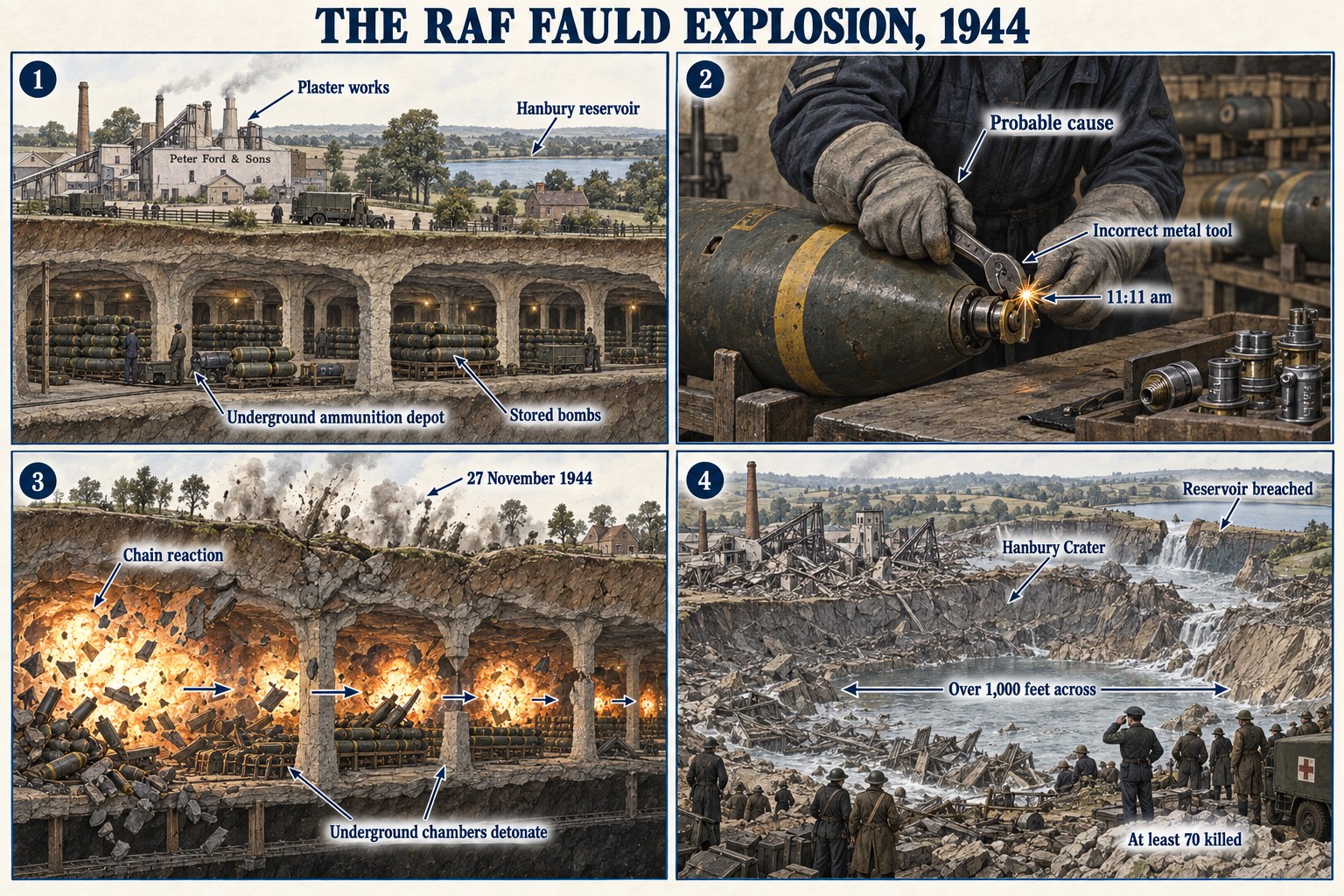
An accident during routine ordnance handling at the RAF's underground ammunition depot, built into a disused Staffordshire gypsum mine, detonated thousands of tonnes of stored explosives — the largest explosion in British history, killing at least 70 people and leaving a crater over 1,000 feet across.
| Date | 27 November 1944 |
|---|---|
| Mine | Fauld |
| Region | Staffordshire |
| Primary type | Explosion |
| Associated types | Flooding / Inundation, Rescue |
| Fatalities | 70 (At least 70 people are confirmed to have died, including RAF personnel, civilian mine and plaster-works workers, Italian prisoners of war employed at the depot, and farm workers at neighbouring Upper Castle Hayes Farm; a further 18 people were never found and remain listed among the dead, with some official figures citing up to 90 killed, missing or injured in total. Around 200 cattle also died.) |
| Injuries | 12 people were reported injured in addition to the fatalities. |
| Context | During active mining (Fauld's original gypsum mine had been disused and was repurposed by the RAF in 1937 as an underground ammunition depot; the explosion occurred while that depot was in active military use, not during mining itself.) |
Cause
The official 1944 inquiry, kept secret until 1974, found the explosion probably began when a worker attempted to remove a detonator from a live bomb using an incorrect metal tool rather than the specified wooden batten, causing a spark that ignited the initial detonation and triggered a chain reaction through a further 3,800 tons of stored bombs.
Contributing factors
The inquiry identified severe wartime staff shortages, gaps in the chain of command, the presence of 189 inexperienced Italian prisoners of war among the workforce, equipment shortages, inadequate training, and safety shortcuts taken under wartime production pressure as contributing factors.
What happened
At 11:11am on 27 November 1944 the underground depot, holding between 3,500 and 4,000 tonnes of high explosive ordnance, detonated in a chain reaction. The blast obliterated Peter Ford & Sons' plaster works and mill directly above the depot and breached the nearby Hanbury reservoir, sending around 450,000 cubic metres of water flooding through the wreckage. The explosion created a crater, later named Hanbury Crater, around 100 feet deep and over 1,000 feet across, and caused damage to buildings within a 10-mile radius.
Rescue & recovery
One diver was killed during search and rescue operations in the flooded wreckage following the reservoir breach.
Investigation & inquiry
A secret official inquiry was conducted in 1944 but its findings were not made public until 1974.
Memorials & commemoration
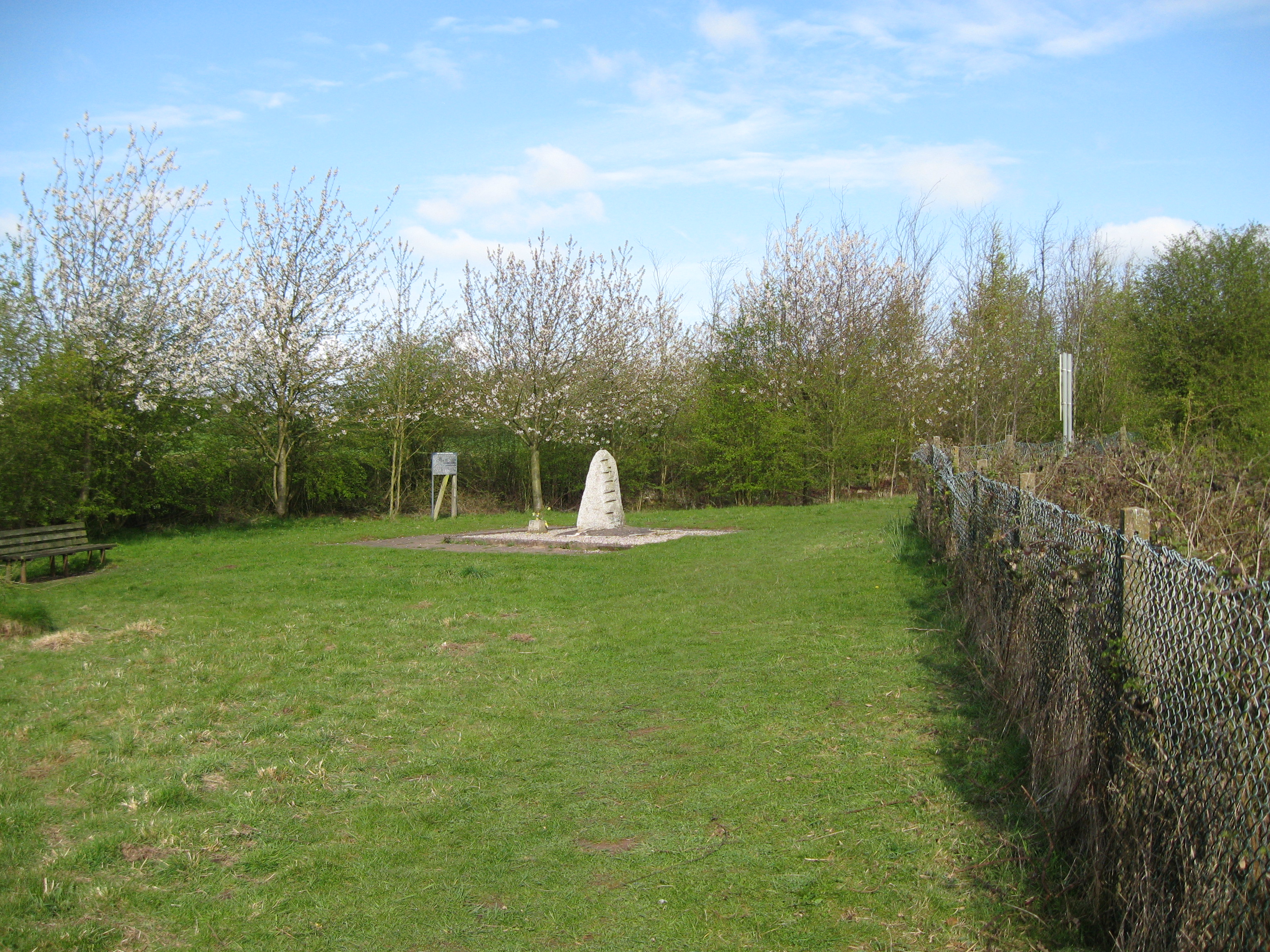
Memorial stones mark the site, including one donated by Italy in 1990 in memory of the Italian prisoners of war killed, and a further memorial was erected for the 70th anniversary in 2014; a public trail today leads to the crater from the Cock Inn at Hanbury, which was itself damaged by debris from the explosion.
Recorded claims
Individual factual claims, each attached to the source(s) that support it below. Where sources disagree, both are kept.
- At least 70 people are confirmed to have died, with a further 18 never found; official figures cite up to 90 killed, missing or injured in total.
- The secret 1944 inquiry, not released until 1974, found the explosion probably began when a worker used an incorrect metal tool rather than a wooden batten to remove a live detonator, causing a spark.
- The blast detonated between 3,500 and 4,000 tonnes of high explosive ordnance and breached the nearby Hanbury reservoir, releasing around 450,000 cubic metres of water; the resulting crater measures around 100 feet deep and over 1,000 feet across.
Related terminology
Mining terms this disaster is structurally linked to, with the nature of the relationship.
- Gypsum (contextual relationship)
The depot that exploded was a disused gypsum mine — worked-out mine chambers being dry, stable and hidden, which is exactly why the RAF stored thousands of tonnes of ordnance in them.
Sources
- (secondary) RAF Fauld explosion — Wikipedia
- (secondary) The Fauld explosion of the Second World War — Commonwealth War Graves Commission
Record created: 24 August 2026 · Last researched: 24 August 2026