 MineArchive
Workington Colliery
| Also known as | Jane Pit, Isabella Pit, The Drowned Colliery, Chapel Bank Colliery, Buddle Pit |
|---|---|
| Location | Workington, west Cumberland, Cumbria — 54.6342, -3.5586 (approximate) |
| Commodity | Coal |
| Type | Coal |
| Worked | from From the 1730s |
| Maximum depth | Unknown. |
| Operators | John Christian Curwen and family (?–1850), Irving & Co. (1860–?) |
Overview
A West Cumberland colliery on the Solway coast, worked by the Curwen family through the Isabella, Union, Lady, Buddle and Jane pits, with workings driven as much as 1,500 yards out under the sea. On 28 July 1837 the sea broke through into them and drowned 27 men and boys — a disaster that had been openly predicted in the town. Jane Pit's castellated engine house and chimney survive as a preserved ruin.
History
The Curwen family of Workington Hall worked coal on their estate on the Cumberland coast, the workings running out beneath the Solway. An explosion of firedamp in the Isabella Pit on 21 September 1833 killed thirteen, among them three Brennan brothers (see Disasters, below).
Until about ten months before the disaster of 1837, the colliery had been managed by Matthias Dunn. After he left, a considerable robbing of the pillars under the sea was carried on — the danger of it, Galloway records, was a matter of common talk about the town, and disaster was foretold by many. A number of colliers left the work. There was correspondence between men on the spot and Dunn, who thought the danger imminent enough to put the matter to a north of England coal-owner and get him to write to Mr Curwen about the risk being run. Nothing was done. On the evening of 28 July 1837 a crush followed and the sea burst in, submerging the Isabella, Union and Lady pits and drowning 27 (see Disasters, below). Had it happened in the daytime, more would have died.
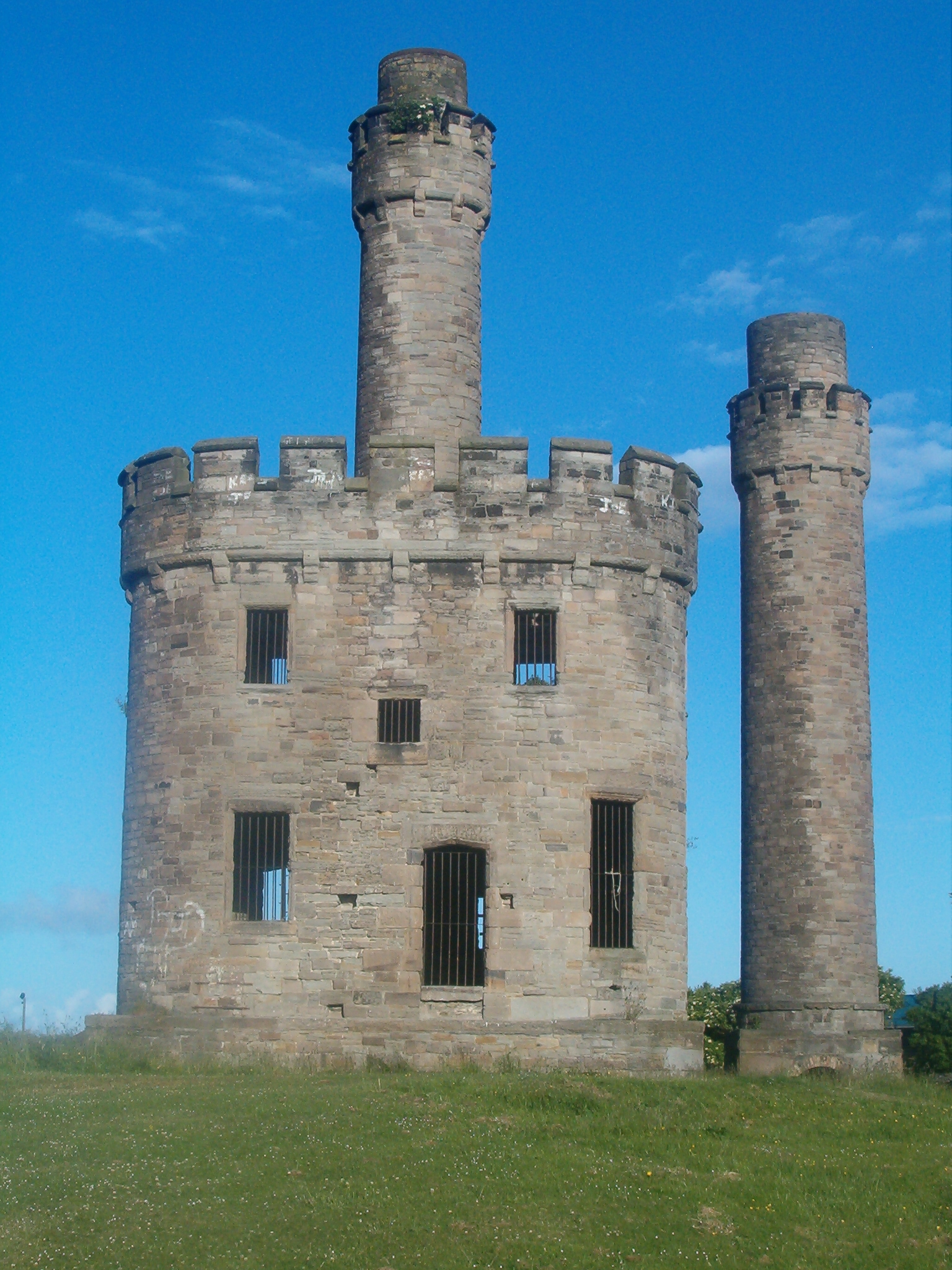
The colliery continued afterwards, recorded under Irving & Co. in the 1860s and raising coal through the Buddle, Isabella and Jane pits. Jane Pit, sunk in the 1840s, was built in a castellated Gothic style — engine house and chimney alike — and its ruins are preserved.
The Curwens had been sinking pits on the estate since the 1730s, Union, Moorbanks and Hunday among the first; Buddle Pit followed in 1837 and Jane Pit in 1843, and the discovery of a new seam under the sea in 1846 brought a second boom. One modern account dates Jane Pit's final closure to 1875 and has the sea breaking in that year with the loss of 100 miners; the mining historian Galloway places the inundation in 1837 with 27 drowned, and no loss on that scale is recorded in 1875. The British Geological Survey's abandonment plans call the workings 'Chapel Bank or the Drowned Colliery' and cover the Isabella, Union, Old Engine and Lady pits in the Bannock seam and the John, Hope, Elizabeth, Church, Charles and Banklands Engine pits in the Main and Little Main.
Geology
The colliery worked the Coal Measures of the Cumberland coalfield, which run out beneath the Solway Firth — the same undersea geology that Whitehaven's collieries exploited further down the coast. Working under the sea was normal here and not in itself dangerous; what mattered was the thickness of cover left above the workings and whether the pillars supporting it were left standing. At Workington by 1837 the cover was down to about 150 feet and the pillars were being taken out.
Workings
A group of pits on the coast — Isabella, Union, Lady, Buddle and Jane — whose workings were driven out under the Solway. By 1837 they had been carried 1,500 yards out to sea and were rising towards it, leaving only about 150 feet of strata between the workings and the sea bed; it was the robbing of pillars in that ground that let the water in. Jane Pit's surviving engine house and chimney are castellated, an unusually ornamental treatment for colliery buildings.
Closure
The closure date is not known. The Isabella, Union and Lady pits were rendered unusable by the 1837 inundation; other pits on the site worked on, and the colliery is recorded under Irving & Co. in the 1860s. Jane Pit, the last of the site's engine houses to survive, closed in 1875.
What remains
The preserved ruins of Jane Pit survive at Workington — the castellated engine house and chimney standing in open ground.
Jane Pit's castellated engine house and chimney, preserved as a ruin.
Related mines
- Clifton Colliery, Great Clifton — Neighbouring west Cumberland pits either side of Workington.
Nearby mines
- Solway Colliery — 0.2 miles (0.4 km) NW
- St Helen's Colliery, Siddick — 1.8 miles (3.0 km) N
- Clifton Colliery, Great Clifton — 3.0 miles (4.8 km) NE
- Lowca Colliery — 3.7 miles (6.0 km) S
- Gillhead Colliery — 3.9 miles (6.3 km) NE
Straight-line distance, within 9 miles (15 km). Show on the map.
Disasters & major incidents
-
Isabella Pit explosion, Workington, 1833
20 or 21 September 1833 · Explosion · 13 fatalities
In September 1833 an explosion of firedamp in the Isabella Pit of the Curwens' Workington Colliery killed thirteen people, among them three Brennan brothers and three boys of ten. -
Isabella Pit inundation, Workington, 1833
November 1833 · Flooding / Inundation · 4 fatalities
Four young miners drowned when water broke into the Isabella Pit of the Curwens' Workington Colliery in November 1833, two months after an explosion in the same pit had killed thirteen. -
Workington Colliery explosion, 1835
6 February 1835 · Explosion · 5 fatalities
Five miners, the youngest 21 and the oldest 68, were killed by an explosion at the Curwens' Workington Colliery on 6 February 1835. -
Workington Colliery Inundation, 1837
28 July 1837 · Flooding / Inundation · 27 fatalities
On the evening of 28 July 1837 the sea burst into the workings of Workington Colliery, which had been driven 1,500 yards out under it with only about 150 feet of strata above. The Isabella, Union and Lady pits were submerged and 27 men and boys drowned, along with a comparable number of horses. The danger had been common talk in the town for months, and the owner had been written to about it.
What's uncertain
Points where sources disagree or the record could not be settled; both accounts are kept. All open questions in the archive.
- An explosion of firedamp at the Isabella Pit on 21 September 1833 killed thirteen, among them three Brennan brothers, the youngest aged fourteen. (uncertain) 2
- The colliery worked through the Buddle, Isabella and Jane pits, with the Union and Lady pits also named among those lost in 1837. (uncertain) 3,1
- The colliery belonged to Mr Curwen at the time of the 1837 inundation and is recorded under Irving & Co. in the 1860s. (uncertain) 3,1
Recorded claims
Individual factual claims, each attached to the source(s) that support it below. Where sources disagree, both are kept.
- By 1837 the workings had been carried 1,500 yards out under the sea and were rising towards it, until only about 150 feet of strata intervened. 1
- An explosion of firedamp at the Isabella Pit on 21 September 1833 killed thirteen, among them three Brennan brothers, the youngest aged fourteen. (uncertain) 2
- The colliery worked through the Buddle, Isabella and Jane pits, with the Union and Lady pits also named among those lost in 1837. (uncertain) 3,1
- The colliery belonged to Mr Curwen at the time of the 1837 inundation and is recorded under Irving & Co. in the 1860s. (uncertain) 3,1
- The British Geological Survey's catalogue holds abandonment plans for Workington colliery's Isabella, Union, Old Engine and Lady pits in the Bannock seam (NW1365), for 'Workington (Chapel Bank or the Drowned Colliery & Bank Lands)' in the Metal Band, Moor Banks, Little Main, Yard Band, Four Feet and Main Band seams (NW1536), and for the John, Hope, Elizabeth, Church, Charles and Banklands Engine pits (NW1369). 4
- The Curwen family of Workington Hall opened four pits between 1730 and 1740, among them Union Pit, Moorbanks Pit and Hunday Pit; Buddle Pit was founded in 1837 and Jane Pit opened in 1843, and a new seam under the sea found in 1846 brought a second boom. DigVentures' account has the sea breaching the mine in 1875 with the loss of 100 miners and Jane Pit closing for good; its engine house and chimneys, a scheduled monument, are among the best surviving examples of the 19th-century castellated style, and the pit is a rare one with both a steam engine house and a horse-gin circle. 5
Photographs & further reading
The colliery's pits and owners, its catalogue of abandoned-mine plans, and the two disasters recorded there with the names of those killed.
View sourceSources
- (primary) Robert L. Galloway, Annals of Coal Mining and the Coal Trade (1898), on the Workington inundation of 1837 — Durham Mining Museum, quoting Galloway
- (primary) Durham Mining Museum: Colliery Disaster, 21 September 1833 (Isabella Pit, Workington) — Durham Mining Museum
- (primary) Durham Mining Museum: Workington Colliery — Durham Mining Museum
- (primary) Mine plans: Workington / Isabella / Union / Old Engine / Lady, Bannock seam (NW1365); Workington (Chapel Bank or the Drowned Colliery & Bank Lands) (NW1536) (BGS Mine Plans catalogue) — British Geological Survey
- (secondary) Jane Pit: background (DigVentures) — DigVentures
Record created: 3 September 2026 · Last researched: 24 September 2026