 MineArchive
Clifton Colliery, Great Clifton
| Also known as | William Pit, Great Clifton, Lowther Pit, Great Clifton, Clifton Colliery, Workington |
|---|---|
| Location | North of Great Clifton, between Workington and Cockermouth, west Cumberland, Cumbria — 54.6541, -3.4926 (approximate) |
| Commodities | Coal, Fireclay |
| Type | Coal |
| Worked | By 1635 (colliery returned from 1860)–20 February 1959 |
| Operators | I. and W. Fletcher and Company (1860–?), West Cumberland Iron and Steel Company Limited (1880–?), Clifton Coal Company (1894–?), Allerdale Coal Company Limited (1910–1947), National Coal Board (1947–1959) |
Overview
The Clifton colliery on the north side of Great Clifton, east of Workington, whose William and Lowther pits fed the Allerdale Coal Company's coke ovens for seventy years. Worked by the Fletchers in the 1860s and the West Cumberland Iron and Steel Company in the 1880s, it grew under Allerdale to over a thousand men in the 1930s and 250,000 tons a year in 1940, and the National Coal Board closed it on 20 February 1959. Three men died in an explosion at the William Pit in August 1914 after a district went three days uninspected with the fan stopped.
History
Coal was being mined in Great Clifton by 1635, and the colliery was said to be worth £100 a year in 1688. The Durham Mining Museum returns Clifton Colliery under I. and W. Fletcher and Company in the 1860s, the West Cumberland Iron and Steel Company in the 1880s, when the 1880 list gives it under that company, a Clifton Coal Company in the 1890s and the Allerdale Coal Company Limited, registered at Great Clifton, from the 1910s. Its two main pits stood north of the village, the Lowther Pit with coke ovens at Coldfitz Wood and the William Pit, beside which the board school was built in 1883, and the company's William Fletcher Memorial Institute provided a reading room at Chapel Brow by 1903. Coking coal was the staple throughout, with fireclay and, in 1910, ironstone. Employment rose from 336 in 1894 to 549 in 1905, 801 in 1915, 924 in 1925 and 1,062 in 1930, and the 1940 return gives 1,085 employed and 250,000 tons. On 4 August 1914 an explosion in the Lickbank seam of the William Pit killed three men at work on a pit-off-work day; the district had not been inspected for three days and the fan had stood for twelve hours, and the agent, manager and under-manager pleaded guilty at Workington in October to the breach of the Coal Mines Act. In October 1915 a contractor, John McVay, was killed by a fourteen-foot stone after a shot in a dip level, and the manager and a deputy were prosecuted at Workington in March 1916 for failing to secure the roof. The museum's index of local newspaper headlines runs from 1838 to the 1930s. The National Coal Board took the colliery over in 1947 with 800 employed, and it closed on 20 February 1959 with 55 on the books in 1960; opencast working followed on the township in the 1970s.
Geology
Cumberland coalfield Coal Measures; the Lickbank and Little Main seams are named in the 1914 and 1915 accident accounts, with fireclay and, in 1910, ironstone also returned.
Geological setting: Sedimentary Beds and Seams (historical documentary reference)
Workings
Two main pits, William (NY040299) and Lowther, with coke ovens at Coldfitz Wood. Electric pumping by 1914, when the fan could be stopped on idle days; longwall gateroads in the Lickbank. Employment from the Lists of Mines: 336 in 1894, 436 in 1900, 549 in 1905, 629 in 1910, 801 in 1915, 816 in 1921, 924 in 1925, 1,062 in 1930, 1,030 in 1935, 1,085 in 1940, 817 in 1945, 800 in 1947, 798 in 1950, 790 in 1955, 55 in 1960. Output 250,000 tons in 1940.
Closure
Closed by the National Coal Board on 20 February 1959; the reason is not given in the sources read.
What remains
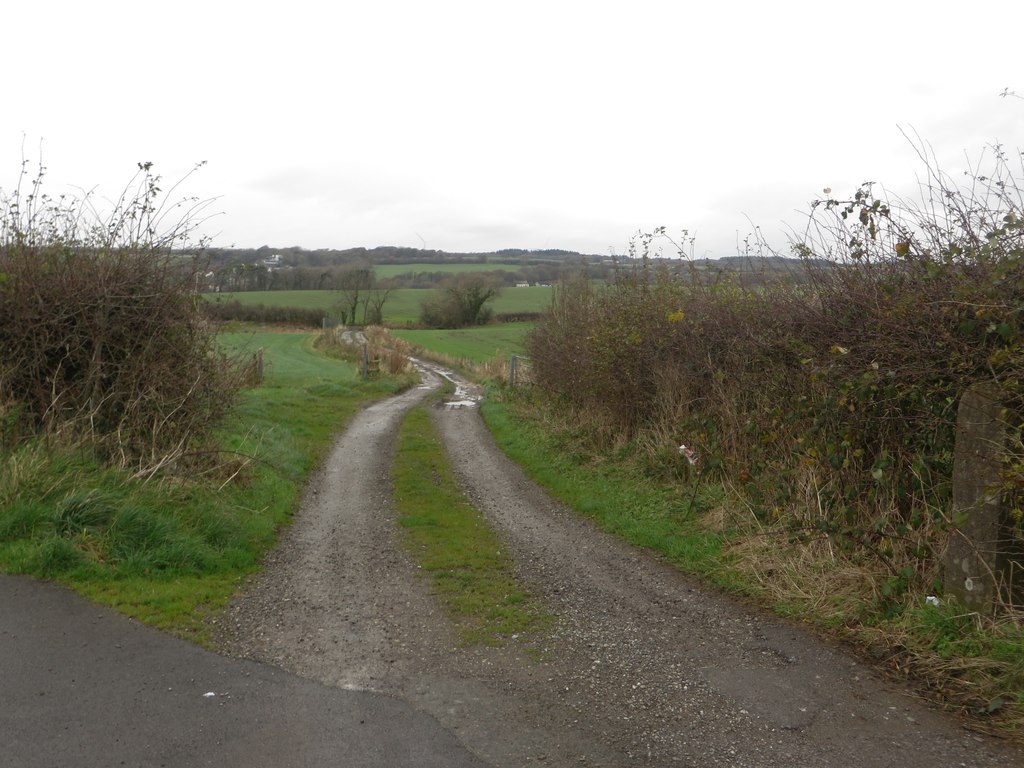
The pit sites north of the village are farmland; the 1883 board school beside the William Pit is now a dwelling. Opencast working crossed the township in the 1970s.
The former board school near the William Pit; nothing of the pits is reported in the sources read.
Related mines
- Buckhill Colliery — Both Allerdale Coal Company pits; Buckhill's coal came to the company's Clifton coke ovens.
- Workington Colliery — Neighbouring west Cumberland pits either side of Workington.
Nearby mines
- Buckhill Colliery — 2.7 km NE
- Gillhead Colliery — 2.9 km N
- Flimby Colliery — 3.9 km N
- Workington Colliery — 4.8 km SW
- Risehow Colliery — 4.9 km N
Straight-line distance, within 15 km. Show on the map.
Disasters & major incidents
-
Clifton Colliery explosion, 1914
4 August 1914 · Explosion · 3 fatalities
About 8 a.m. on Tuesday 4 August 1914, with the pit off work, an explosion of firedamp in the Lickbank seam of the William Pit killed the deputy Isaac Smith, the examiner James Wright, who were repairing a gateroad, and the pumpman John Wilkinson at his electric pump, and injured a fourth man. No one had inspected the district since the Friday, the fan had stood for twelve hours on the Saturday, and a leaking pump motor sat in a badly placed pump-house through which the return air could circulate. The manager could not say what fired the gas; the agent, manager and under-manager pleaded guilty at Workington on 28 October 1914 to the breach of section 64 of the Coal Mines Act.
Recorded claims
Individual factual claims, each attached to the source(s) that support it below. Where sources disagree, both are kept.
- Coal mined by 1635; the museum returns the colliery from 1860 and closes it on 20 February 1959. 1,2
- I. and W. Fletcher, the West Cumberland Iron and Steel Co., the Clifton Coal Co., the Allerdale Coal Co. Ltd and the National Coal Board. 3,4,1
- 336 employed in 1894, 801 in 1915, 1,062 in 1930, 1,085 in 1940 and 800 in 1947. 1
- The main pits were the Lowther Pit, with coke ovens at Coldfitz Wood, and the William Pit, beside which the board school was built in 1883. 1,2
- Three men were killed in the Lickbank seam of the William Pit on 4 August 1914 after the district went three days uninspected with the fan stopped; the agent, manager and under-manager pleaded guilty. 5
Photographs & further reading
Owners, output and employment from 1860 to 1960, the William Pit grid reference and the 1951 coalfield map.
View sourceThe inspector's report on the William Pit explosion with the three names and the prosecution.
View sourceThe museum's index of local press headlines on the colliery from 1838 to the 1930s.
View sourceSources
- (primary) Clifton Colliery — Durham Mining Museum — Durham Mining Museum
- (secondary) Clifton, Great — Cumbria County History Trust — Cumbria County History Trust
- (secondary) List of coal mines UK 1880 — Coalmining History Resource Centre
- (primary) Allerdale Coal Co., Ltd. — Durham Mining Museum company page — Durham Mining Museum
- (primary) Clifton Colliery explosion, 4 August 1914 — Durham Mining Museum (inspector's report extract) — Durham Mining Museum
- (primary) Newspaper articles about Clifton Colliery — Durham Mining Museum index — Durham Mining Museum
- (primary) Prosecution of colliery manager and deputy at Workington, 23 March 1916 — Durham Mining Museum newspaper transcription — Durham Mining Museum
Record created: 12 September 2026 · Last researched: 12 September 2026